Tujunga Canyon — History & Facts
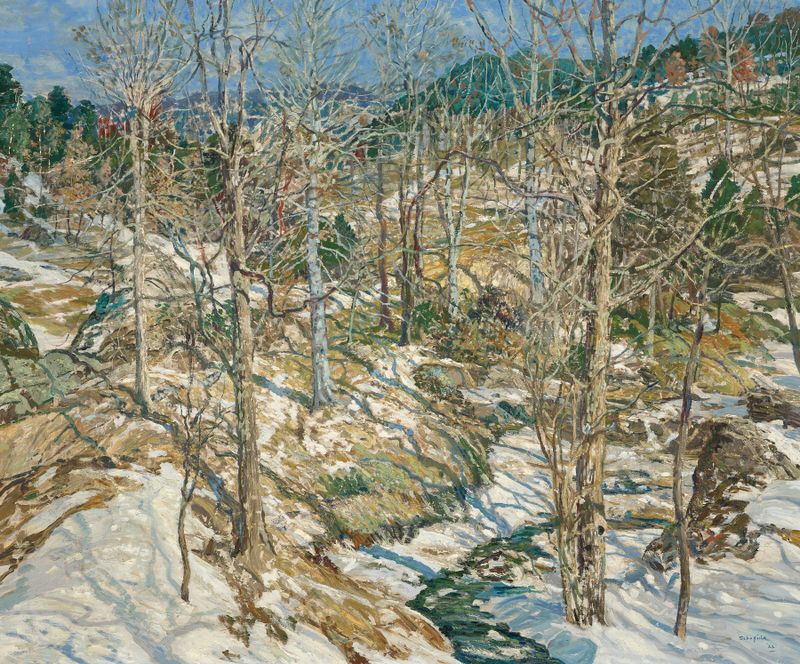
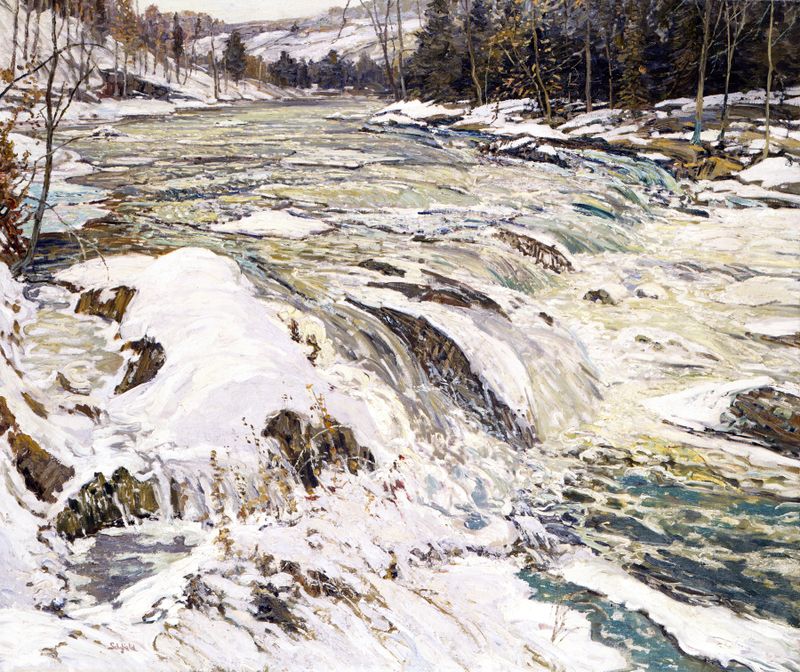
In moments of quiet reflection, the canvas becomes a sanctuary for loss, a space where grief transforms into beauty. Look to the left where deep greens of the canyon converge with soft yellows of the sunlit sky. The brushstrokes breathe life into the landscape, inviting you to traverse the undulating hills and serene trails. Notice how the light dances across the surface of the water, shimmering with flickers of gold, while shadows linger beneath the overhanging foliage, creating a delicate balance between joy and melancholy. Within this tranquil setting lies a tension between the lush vegetation and the vast, open sky.
The winding path invites contemplation, urging us to reflect on our own journey through loss. The vibrant palette juxtaposes the weight of absence, highlighting how nature endures despite the emotional void. Each brushstroke tells a story, resonating with the viewer’s own experiences of longing or memory. In the years 1934-1935, Schofield painted Tujunga Canyon while living in California, amidst the Great Depression’s economic turmoil.
This period marked a significant shift in American art, as artists sought to capture the essence of the landscape and their inner struggles. With a renewed focus on regionalism, he channeled his feelings into this piece, reflecting both the natural beauty of the canyon and a deeper personal connection to loss and resilience.