River Landscape — History & Facts
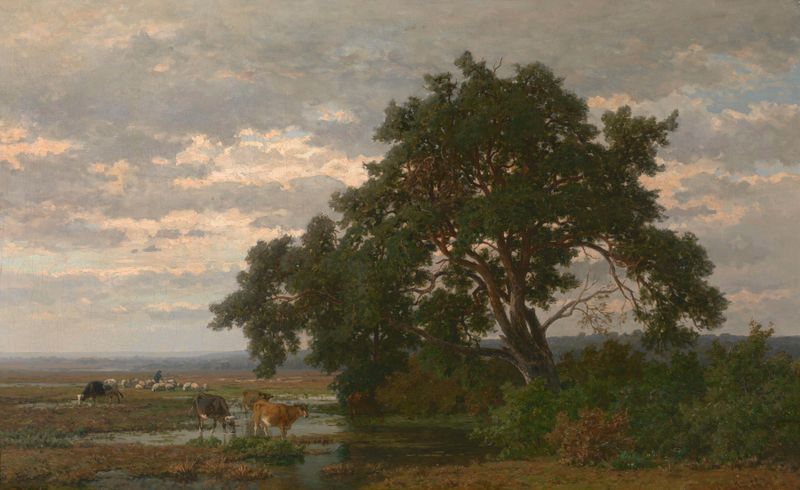
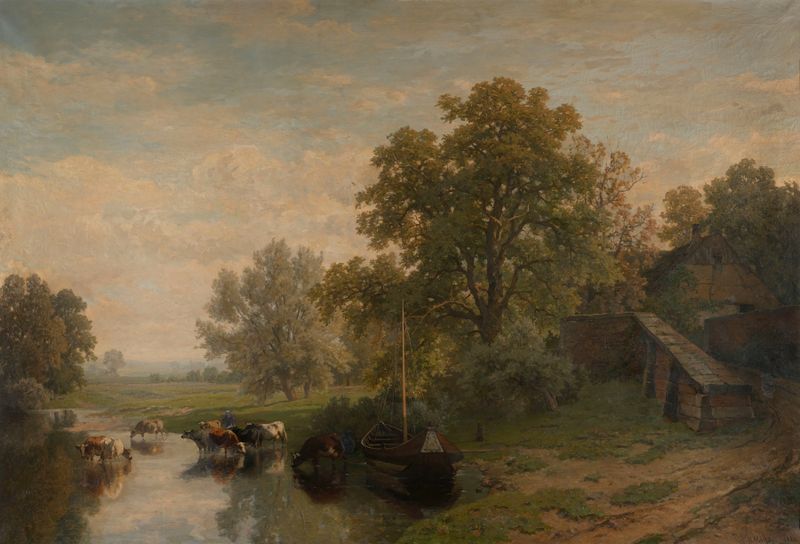
In River Landscape, the brush dances with destiny, capturing the ephemeral essence of a moment that whispers of the past. Focus first on the horizon, where the river meets the sky, an enchanting gradient of soft blues and gentle whites. The water’s surface glistens with flecks of sunlight, guiding your gaze through the serene landscape. Look closely at the intricately detailed foliage along the riverbanks, where varied greens evoke a sense of life and tranquility, while the distant mountains add a rugged contrast, grounding the ethereal scene in reality.
Every stroke harmonizes, creating a soothing, almost meditative rhythm. Yet beneath its serene surface lies a complexity of emotions. The river, a symbol of time’s relentless flow, suggests an inevitability that contrasts with the stillness of the natural world. The lush vegetation flourishes, hinting at the persistence of nature, while the fading light in the sky signifies the transitory nature of moments.
Each element speaks to a hidden narrative of both flourishing and decay, reminding us of the ever-present interplay of life and fate. Created in 1849, River Landscape emerged during a period of profound transformation in the art world, marked by the rise of Romanticism and a growing appreciation for nature. At this time, Frans Keelhoff was exploring the intricacies of light and shadow, seeking to evoke emotion through his landscapes. Living in Europe, he was influenced by the shifting tides of societal change, which encouraged artists to delve deeper into personal expression and the sublime beauty of the natural world.