River scene — History & Facts
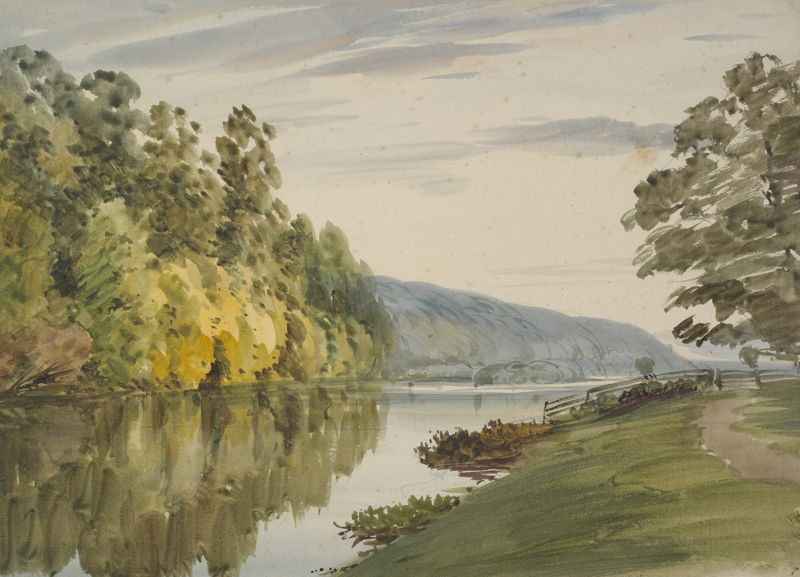
When did color learn to lie? The vibrancy of blues and greens in this 19th-century artwork washes over the canvas like a deceitful tide, inviting viewers into a world that masks its darker truths beneath a serene surface. Look to the left at the shimmering water, where the reflections dance under a seemingly innocent sky. The gentle brushstrokes create a seamless flow, guiding the viewer’s eye toward the lush banks adorned with flowering foliage. Notice how the light falls upon the rippling surface, both illuminating and obscuring the depths below, hinting at unseen currents that swirl just beneath the calm exterior.
This interplay of color and light sets a tone that is lush yet laden with unspoken tension. As you delve deeper, the emotional undercurrents emerge. The vibrant colors convey a sense of peace, yet there’s an unsettling stillness that suggests betrayal — the kind that lurks in placid waters, ready to engulf the unwary. The juxtaposition of beauty and potential danger serves as a poignant reminder of nature’s duality, reflecting life’s own precarious balance between allure and treachery.
Each element in the composition speaks to the inner conflicts that can arise in moments of tranquility. John Gendall painted this piece during the 19th century, amidst a blossoming art world that embraced Romanticism and the exploration of nature. At this time, he was focused on capturing the essence of the English landscape, seeking to convey both its beauty and its complexities. His work emerged from a period marked by rapid industrialization, which juxtaposed the serene with the mechanical, framing the tension that runs through this seemingly idyllic river scene.