The Thames near Chertsey — History & Facts
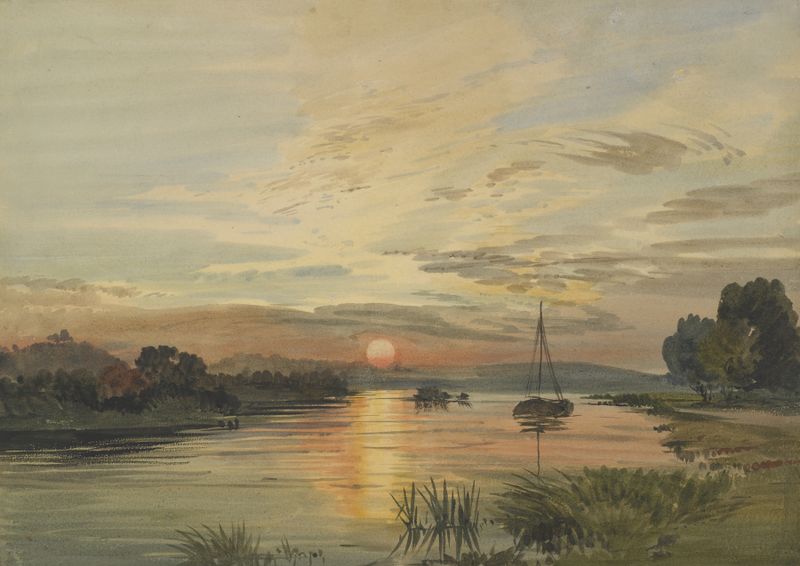
Could a single brushstroke hold eternity? In The Thames near Chertsey, John Gendall captures a fleeting moment that resonates with echoes of loss, inviting us to linger on the delicate transience of life and nature. Look to the left at the shimmering water, where soft ripples dance beneath the gentle caress of light. The artist expertly employs a palette of greens and blues, blending them seamlessly to evoke both the lush landscape and the tranquil river. Notice how the trees, rendered with precise detail, seem to cradle the scene, while the wispy clouds above echo the soft, flowing movement of the water below.
Every stroke reveals the artist's intention to manifest a serene, reflective atmosphere that draws the viewer in. Yet within this calm lies a deeper tension. The horizon, with its muted tones, hints at the passage of time and the inevitability of change. The shadows cast by the trees whisper of fleeting memories, while the stillness of the water suggests a moment stilled in memory—both beautiful and melancholic.
Each element interacts to narrate the stories of what was, and what may never return, urging us to contemplate our own experiences of loss and nostalgia. In 1827, Gendall worked in a period marked by a burgeoning Romantic interest in nature's beauty and fragility. Living in England and influenced by the artistic currents of his time, he sought to reflect the profound connection between humanity and the natural world. His work speaks to a moment when the Romantic movement flourished, capturing the essence of the English landscape while grappling with themes of impermanence and emotional depth.