River Scene with Rocky Hills in Background — History & Facts
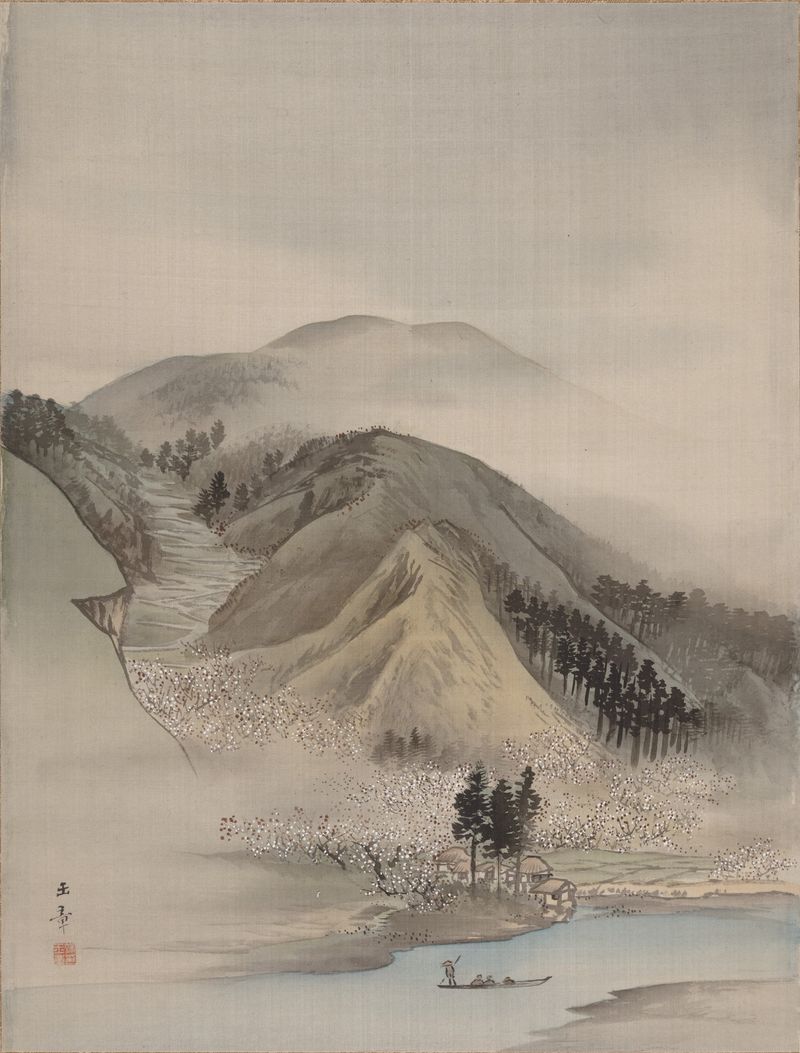
Is this a mirror — or a memory? In River Scene with Rocky Hills in Background, the stillness of the water reflects not just the landscape but the profound isolation that can echo within a soul. The tranquil surface hints at a deeper emotional landscape, inviting viewers to ponder the solitude woven into the fabric of existence. Look to the left at the gentle curve of the river, where the water flows serenely, a soft azure that dances with the whisper of the wind. Notice how the rocky hills rise dramatically in the background, their muted earth tones grounding the composition against the vibrant sky.
The deliberate brushstrokes create a sense of movement in the water while preserving the stillness that envelops the scene, a careful balance that Gyokushō achieves through his expert handling of color and form. Delve deeper into the painting and you’ll uncover layers of meaning. The juxtaposition of the serene river and imposing hills speaks to the duality of nature — its beauty concealing loneliness. The sparse elements of the composition evoke a sense of isolation, as if the viewer is drawn into a personal reverie, reflecting on life’s ephemeral moments.
Each stroke suggests a quiet dialogue between the viewer and the landscape, encouraging introspection in the face of vastness. Created between 1887 and 1892, this work emerged during a pivotal era for the artist in Japan, where traditional techniques were beginning to merge with Western influences. Gyokushō, known for his mastery in capturing landscapes, was navigating his own artistic journey while Japan was opening up to new ideas and expressions in art. This period of transition not only shaped his identity as an artist but also allowed him to explore themes of solitude and connection within the natural world.