
River View with a Junk (near Rajmahal) — History & Facts
In the tranquil expanse of a river scene, the calm surface belies the tumultuous past and present that whisper beneath. It beckons us to consider the unseen narratives of violence and upheaval, hidden in the serene folds of nature's beauty. Focus first on the gentle undulation of the water, where a lone junk creates ripples that disrupt the otherwise placid flow. Notice how the soft hues of blue and green merge with the delicate brushstrokes of the sky, imparting a sense of harmony while evoking a tension that is palpable.
The composition leads our gaze toward the distant shore, where the silhouette of trees stands sentinel; their dark forms contrast sharply with the bright clouds above, hinting at the duality of peace and conflict. Look closely at the intricate details of the junk's sails, frayed yet resilient, symbolizing the endurance of those who navigate these waters. The juxtaposition of the graceful river and the jagged coastline serves as a metaphor for the struggle between tranquility and turmoil. Within this tranquil moment, the viewer cannot ignore the latent violence of history that lingers like shadows just beneath the surface, forever altering the relationship between humanity and nature. Samuel Davis painted this scene between 1777 and 1808 during a period when British colonial expansion was reshaping landscapes and lives in India.
Settling in India, he documented its vistas, influenced by the romanticism of the time yet often reflecting the tensions of colonial power dynamics. The artwork stands as a testament to his environment, a serene façade masking the complexities of an era marked by conflict and transformation.
More Artworks by Samuel Davis
Browse all →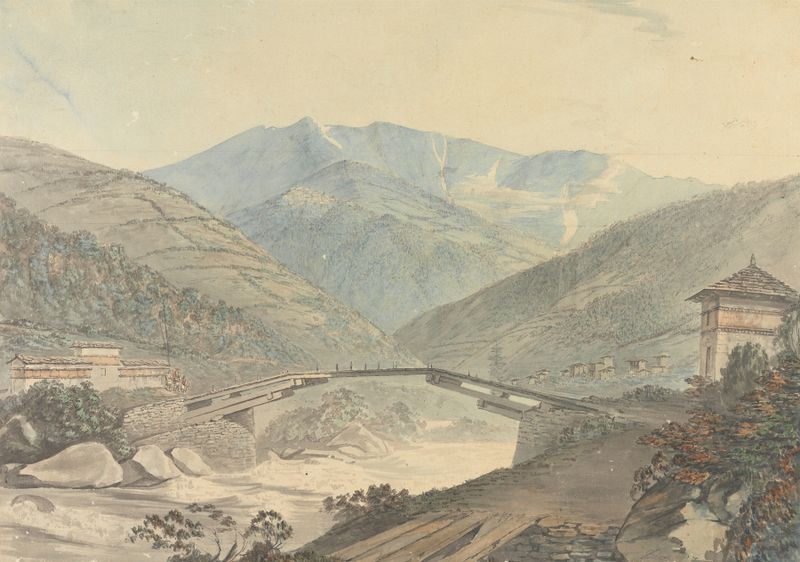
View near Tassisudon [Tashicho Dzong] in Bhutan
Samuel Davis
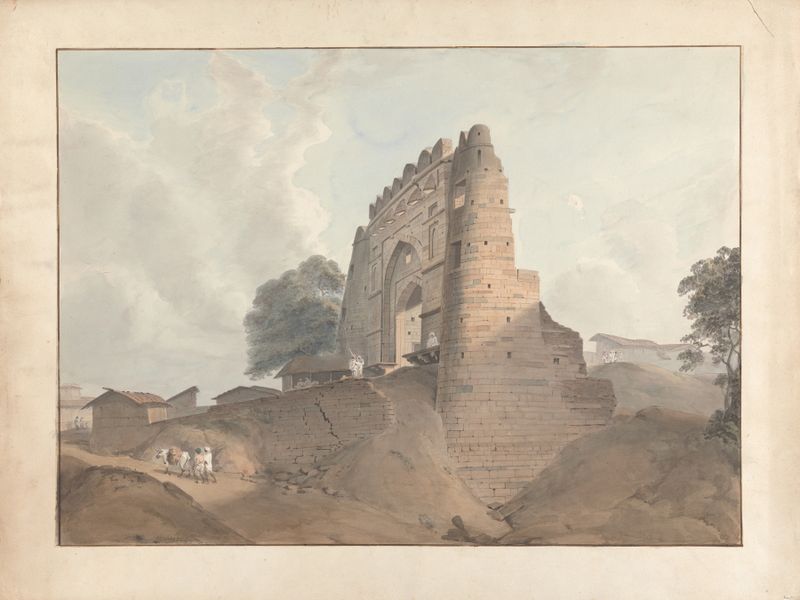
Gate of the Old Fort at Old Benares
Samuel Davis
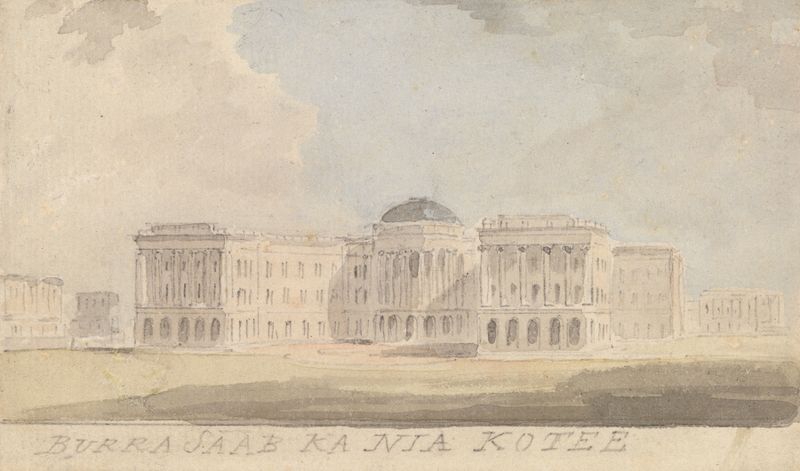
New Government House at Calcutta
Samuel Davis
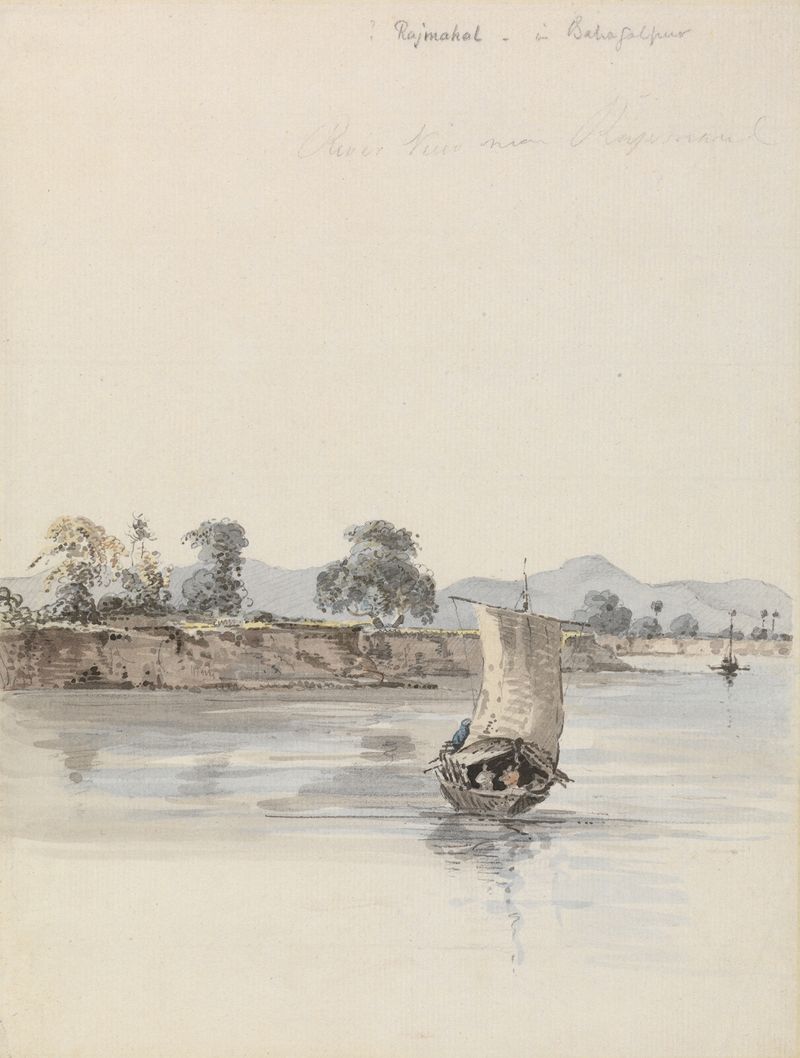
River View near Rajmahal
Samuel Davis
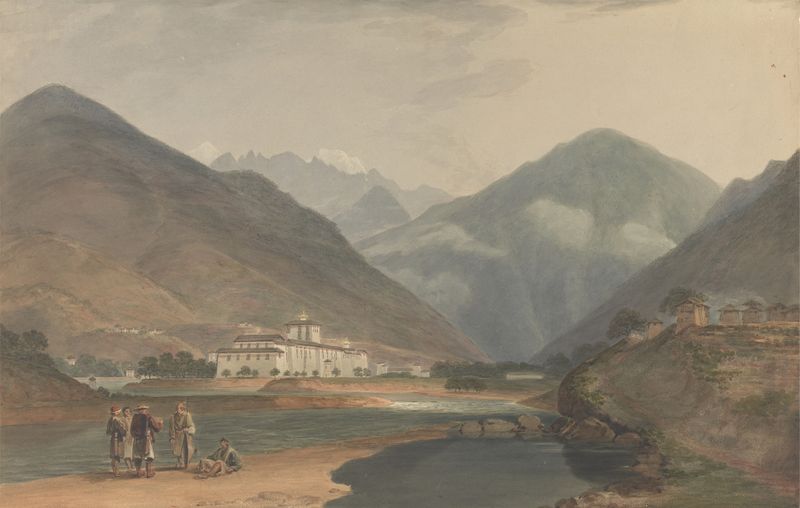
The Former Winter Capital of Bhutan at Punakha Dzong
Samuel Davis
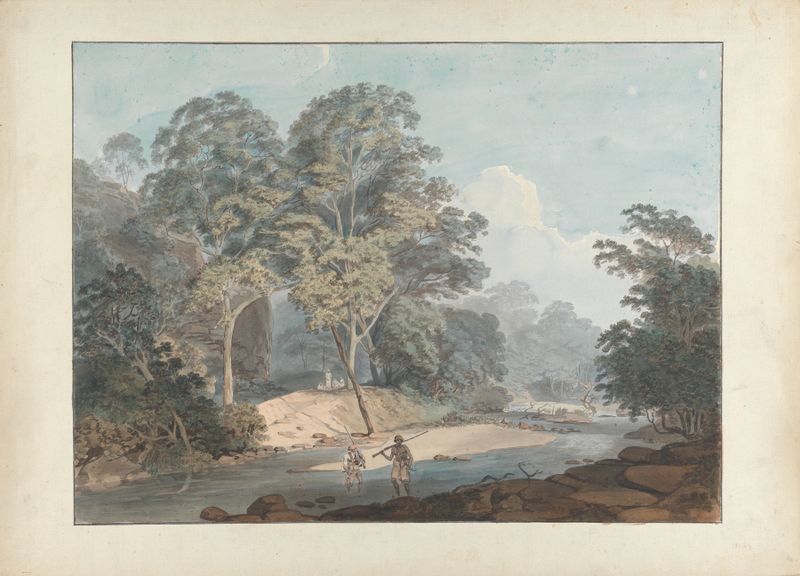
Rocky River Scene with Sepoys
Samuel Davis
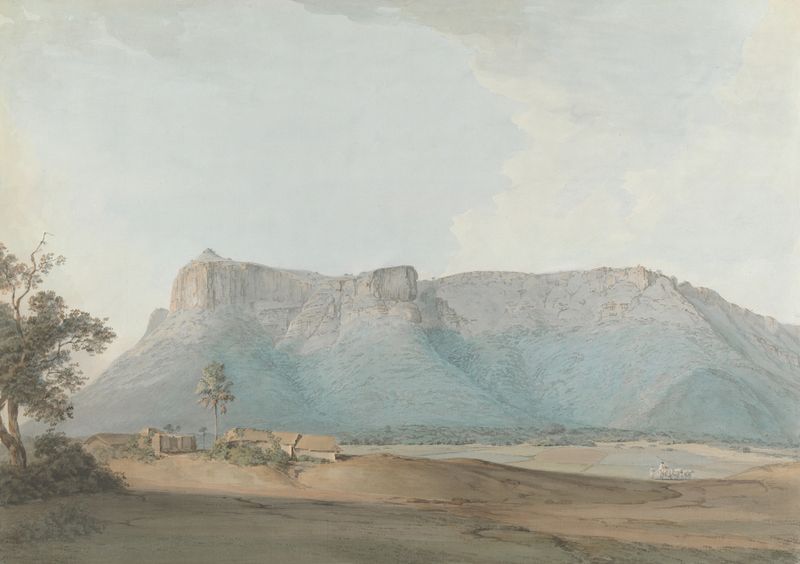
Rhotas from Akberpore
Samuel Davis
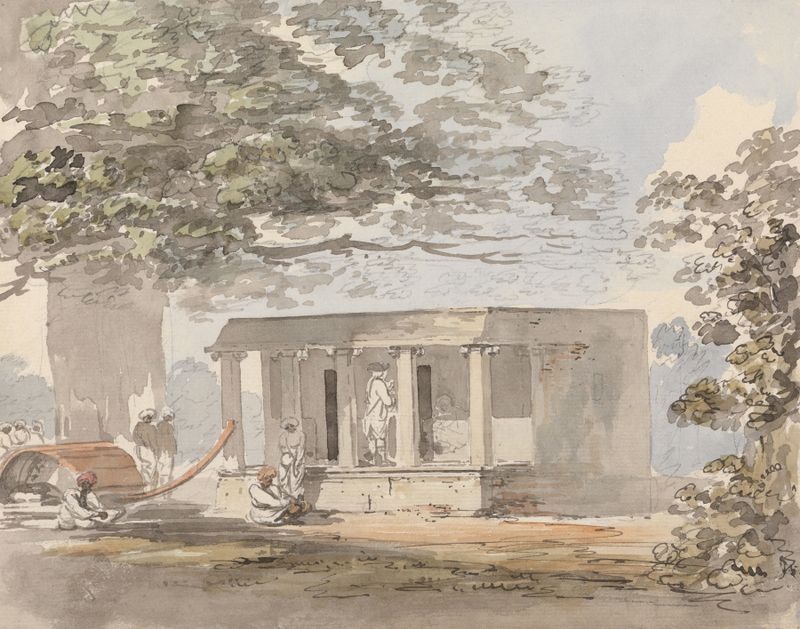
A European Gentleman Entering a Bungalow in India
Samuel Davis
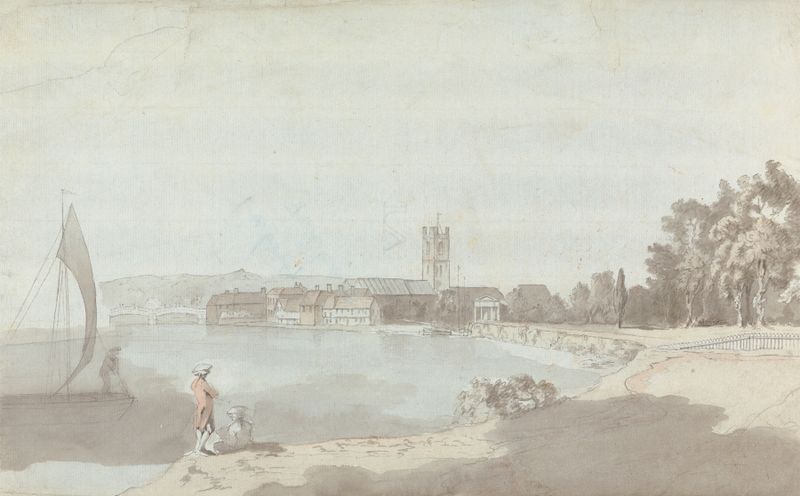
West Country Town by a River
Samuel Davis
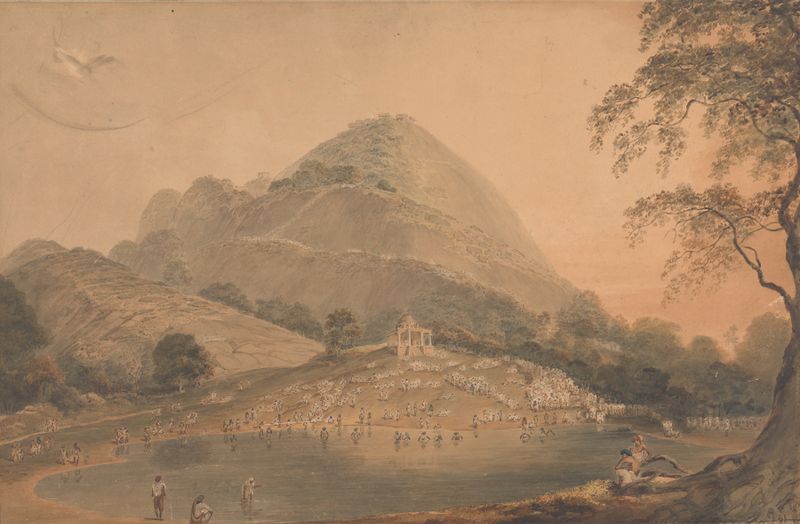
The Annual Resort of Hindoos to Mundar Hill near Bhagulpore [Bhagalpur]
Samuel Davis





