
View near Tassisudon [Tashicho Dzong] in Bhutan — History & Facts
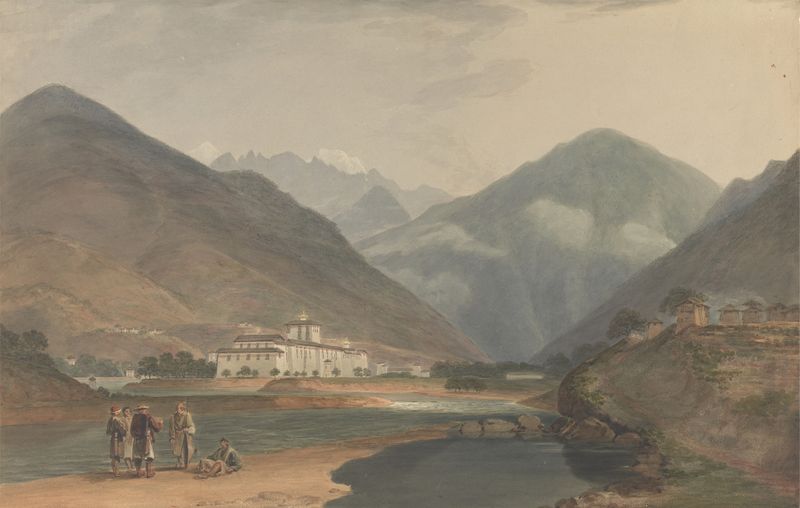
In the intricate dance of time, landscapes become both a refuge and a reminder of what is fleeting. Look to the left at the majestic mountains, their peaks kissed by gentle clouds, suggesting a world beyond human reach. Notice the soft, muted palette that envelops the scene, with ochres and greens reminiscent of a bygone era. The composition expertly leads your eye through a winding path that meanders past the impressive Tashicho Dzong, inviting contemplation of both the structure and its surroundings.
Every brushstroke conveys a reverence for nature, with delicate details that whisper stories of the past. Amidst the tranquility, a tension lies in the juxtaposition of human craftsmanship against the vastness of nature. The Dzong, a symbol of stability and permanence, stands resolute, yet the fragile foliage hints at the inevitable decay that time imposes. Each element, from the rippling water to the rugged terrain, encapsulates the transient beauty of existence, a reminder that even the most serene moments are steeped in temporal awareness. Samuel Davis painted this scene in 1783 while traveling through Bhutan, capturing the essence of a land unexplored by many.
This period marked a growing fascination in Europe with the East, as artists sought to immerse themselves in unfamiliar cultures and landscapes. Davis, influenced by the Romantic ideals of reverence for nature and the sublime, found in this view a profound connection to the passage of time and the enduring beauty that lies within it.
More Artworks by Samuel Davis
Browse all →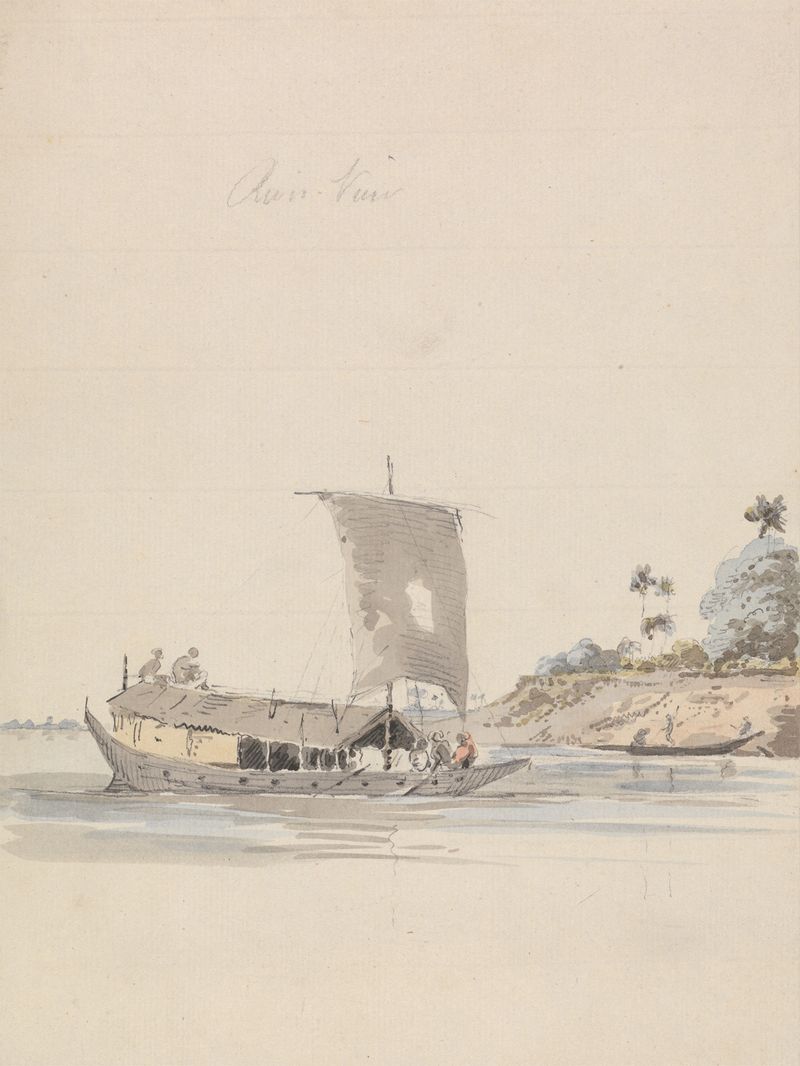
River View with a Junk (near Rajmahal)
Samuel Davis
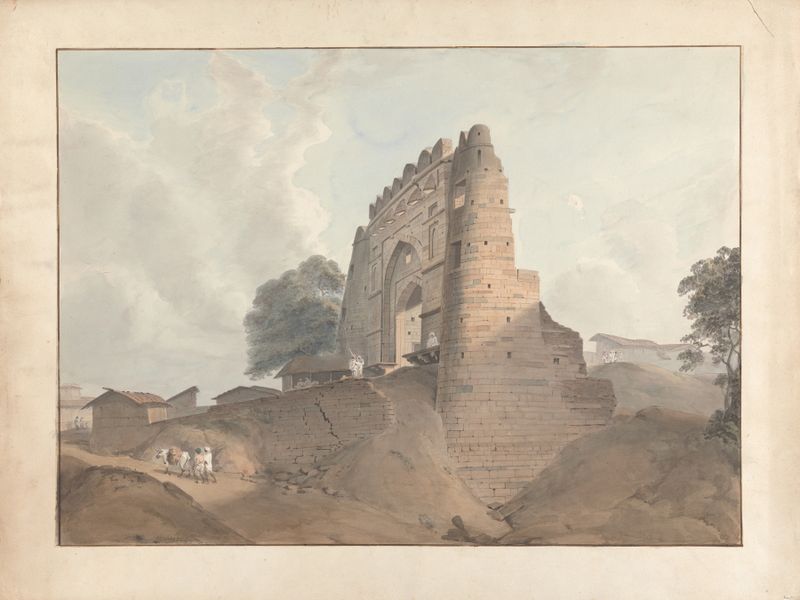
Gate of the Old Fort at Old Benares
Samuel Davis
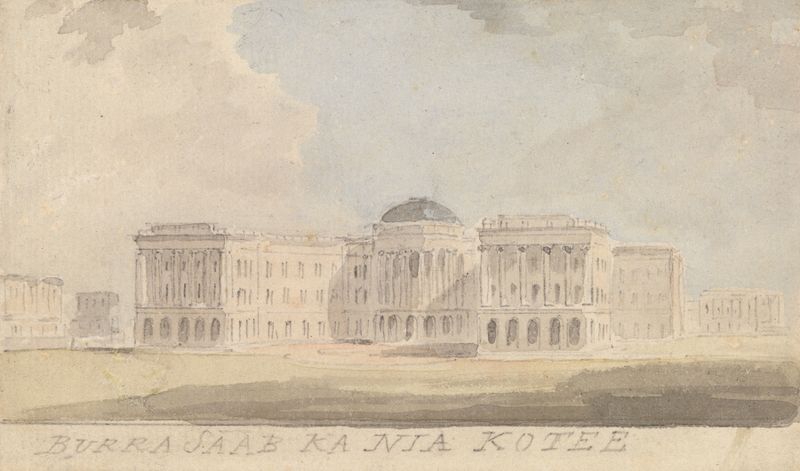
New Government House at Calcutta
Samuel Davis
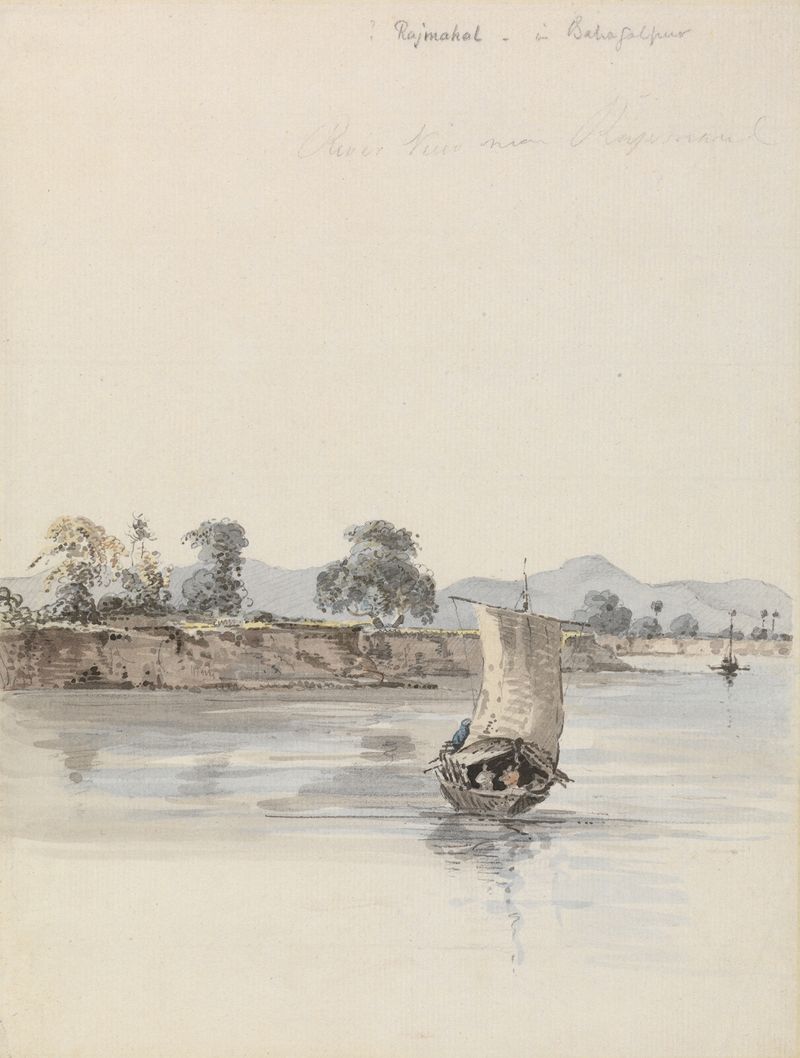
River View near Rajmahal
Samuel Davis
The Former Winter Capital of Bhutan at Punakha Dzong
Samuel Davis
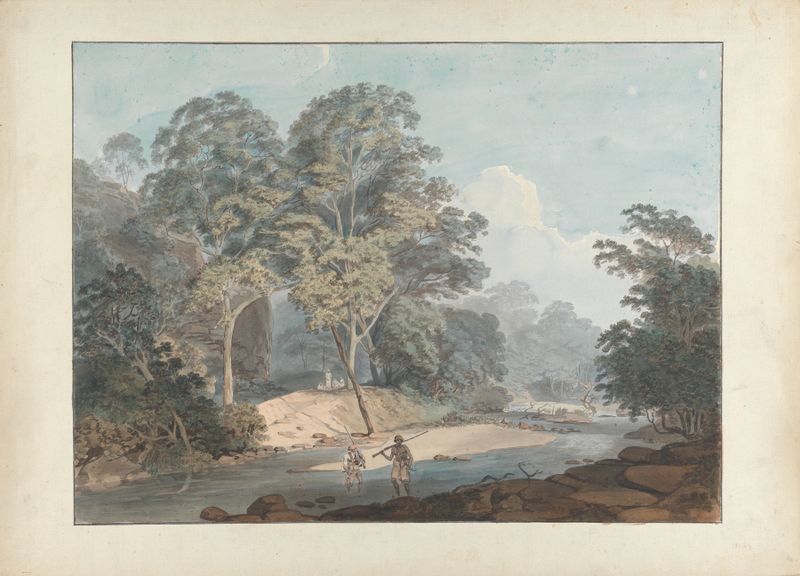
Rocky River Scene with Sepoys
Samuel Davis
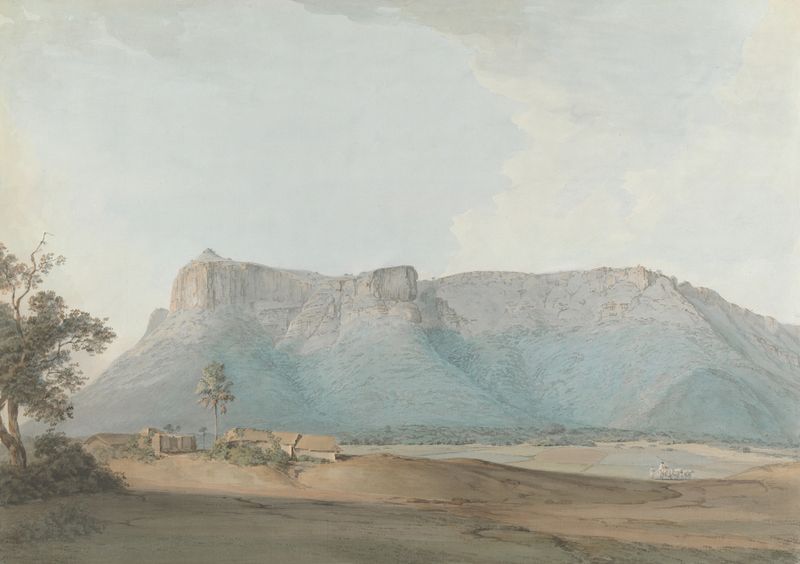
Rhotas from Akberpore
Samuel Davis
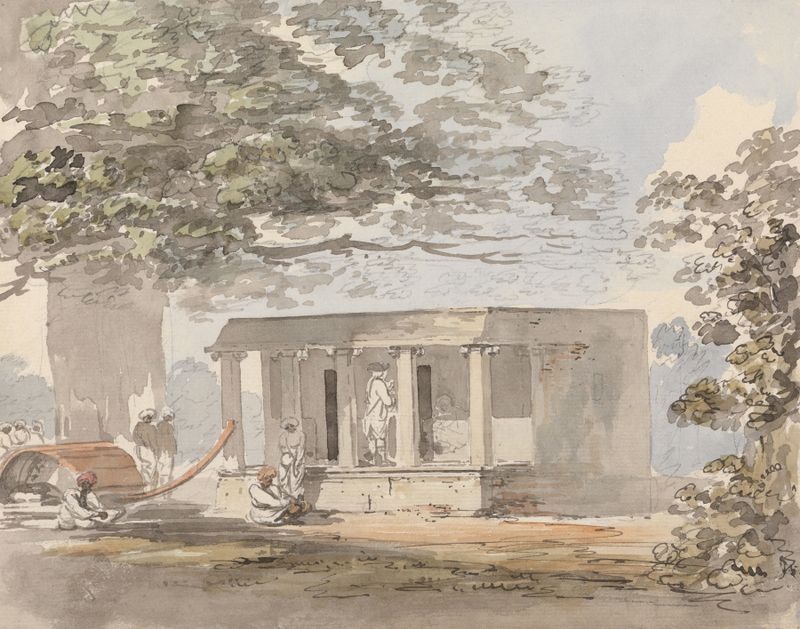
A European Gentleman Entering a Bungalow in India
Samuel Davis
West Country Town by a River
Samuel Davis
The Annual Resort of Hindoos to Mundar Hill near Bhagulpore [Bhagalpur]
Samuel Davis





