
Rocky River Valley — History & Facts
In every stroke lies the weight of legacy, a reflection of moments that linger in the heart and memory. Look to the foreground where the river flows, its shimmering surface alive with hues of cerulean and emerald. The water seems to capture the sky's whisper, mirroring the clouds that float lazily above. Focus on the carefully rendered trees that frame the scene — their dark, rich greens contrast with the luminous backdrop, creating a sense of depth and tranquility.
The soft brushwork evokes movement, as if the wind is dancing through the leaves, inviting viewers to step into this serene moment. Delve deeper into the painting’s emotional landscape and you’ll find a dialogue between nature and the human experience. The winding river symbolizes life’s journey, flowing steadily yet unpredictably, while the towering mountains in the distance stand as steadfast witnesses to time’s passage. This duality encapsulates not only the beauty of the moment but also the inevitable cycles of change, encapsulating nostalgia and hope.
Each element resonates with the idea of legacy, suggesting both what is left behind and what endures. James C. Kulhanek painted Rocky River Valley in 1958, during a time when the American landscape was undergoing significant transformation. Emerging from the influence of post-war optimism, he sought to capture the spirit of the natural world, reflecting a deep-rooted appreciation for the environment.
As he immersed himself in the peacefulness of rural life, Kulhanek’s work became a testament to the beauty of legacy, both personal and shared, connecting viewers to the serenity of the land they inhabit.
More Artworks by James C. Kulhanek
Browse all →
Under Full Sail
James C. Kulhanek
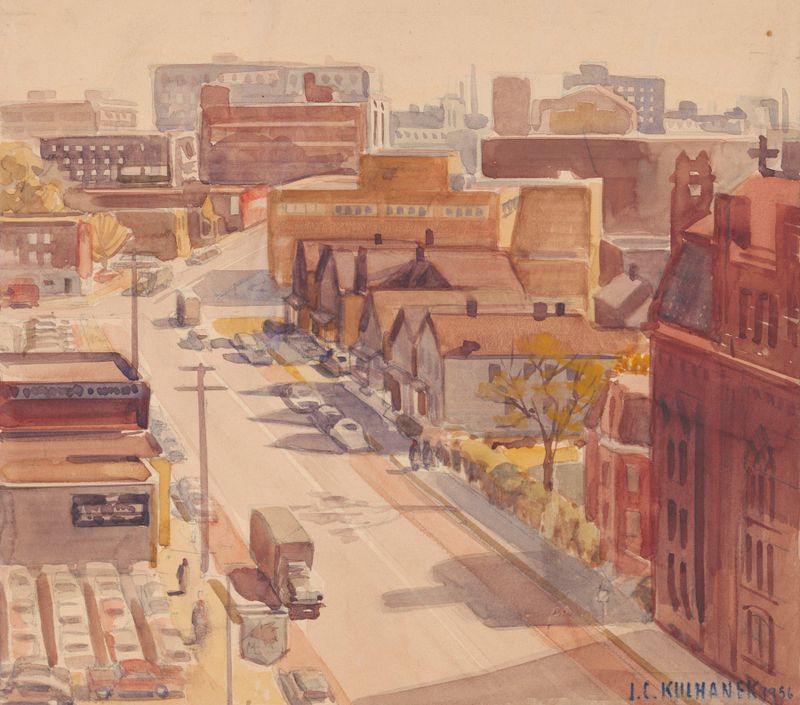
E18th street Looking South from Plain Dealer Building Cleveland Ohio
James C. Kulhanek
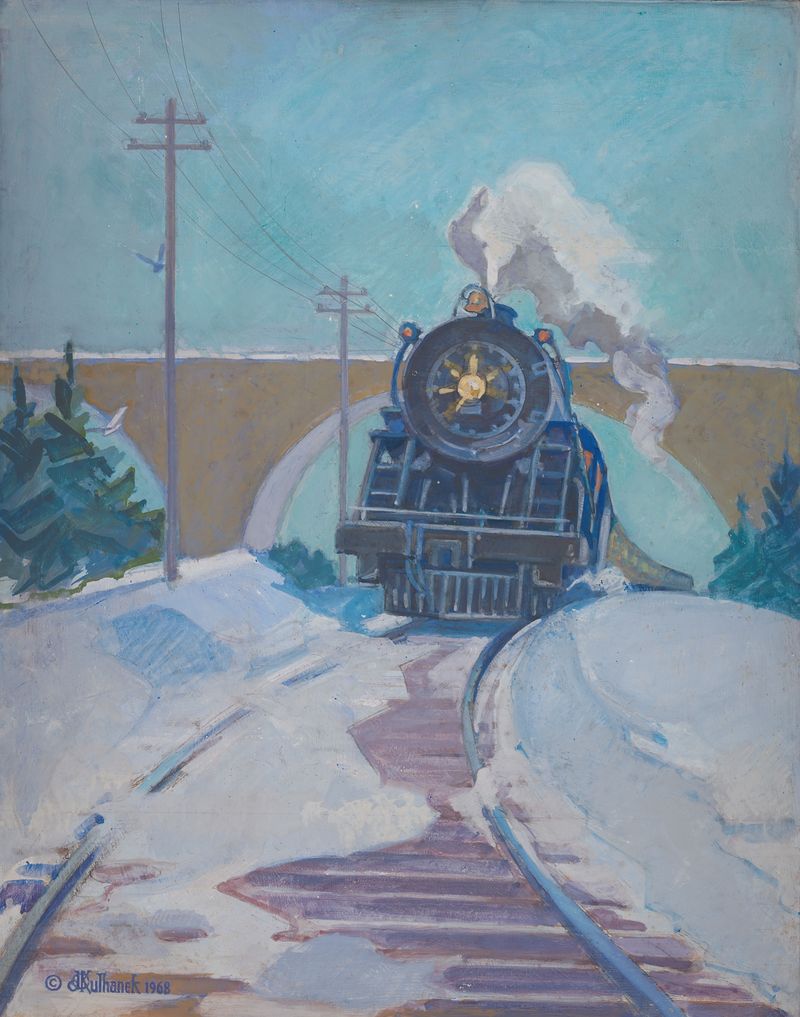
Winter Express
James C. Kulhanek
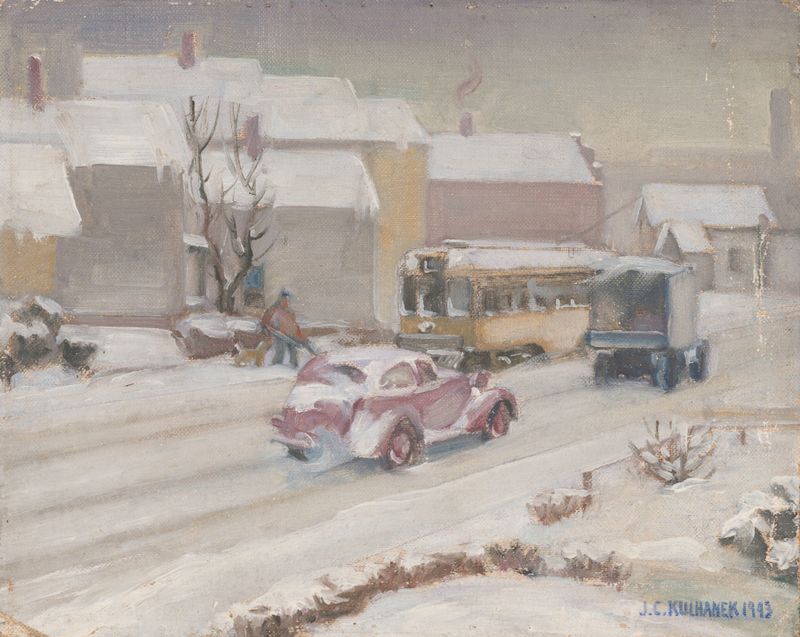
Fulton Road, Cleveland, Ohio
James C. Kulhanek
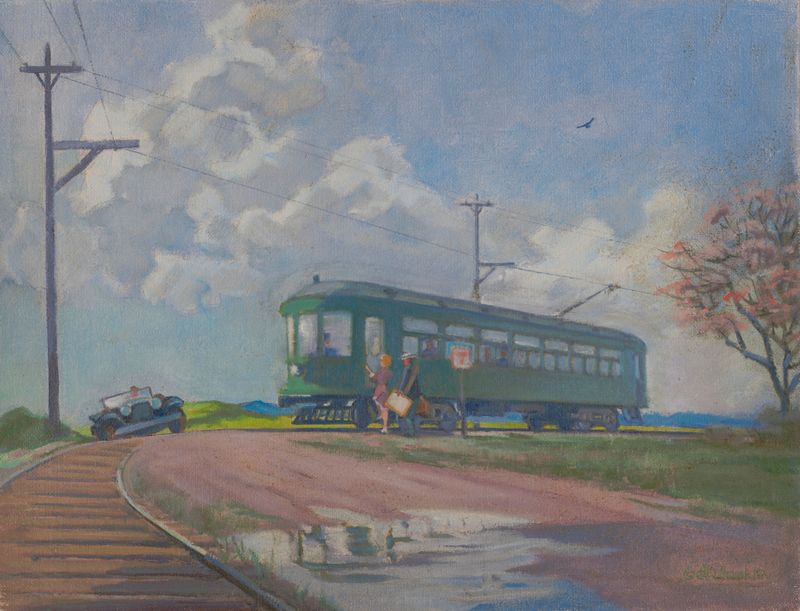
Interurban Stop
James C. Kulhanek
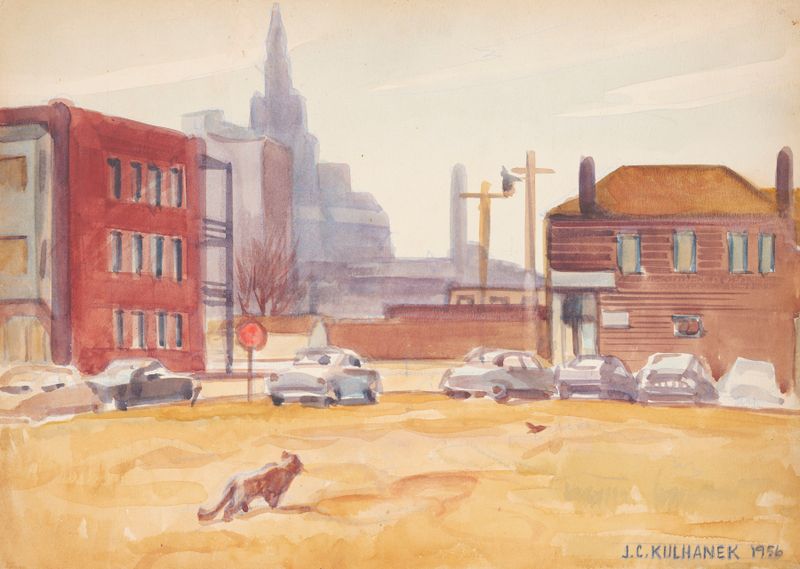
Cleveland Skyline
James C. Kulhanek
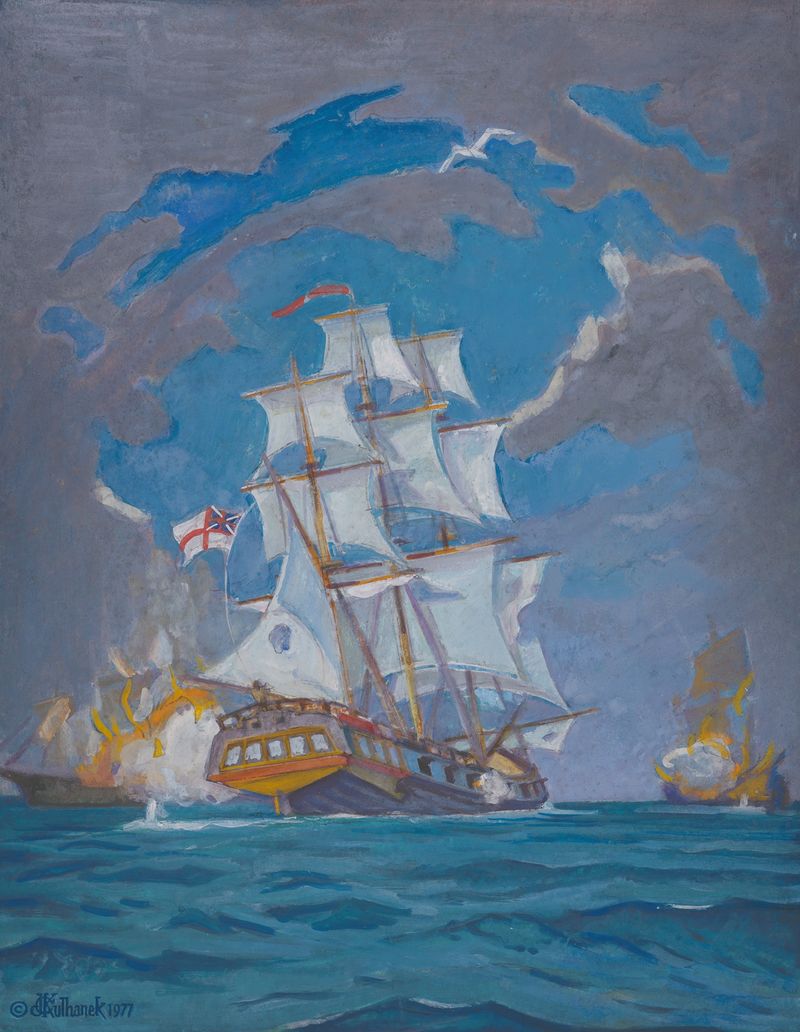
Rule Britannia
James C. Kulhanek

Provincal Jewel
James C. Kulhanek

Northern Ohio Food Terminal
James C. Kulhanek

Whistle Stop
James C. Kulhanek





