Roe Deer in an Idyllic Wooded Landscape — History & Facts
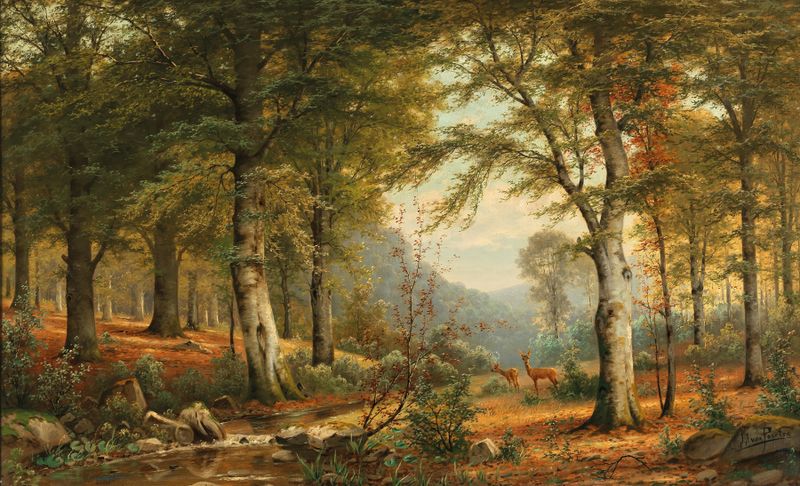
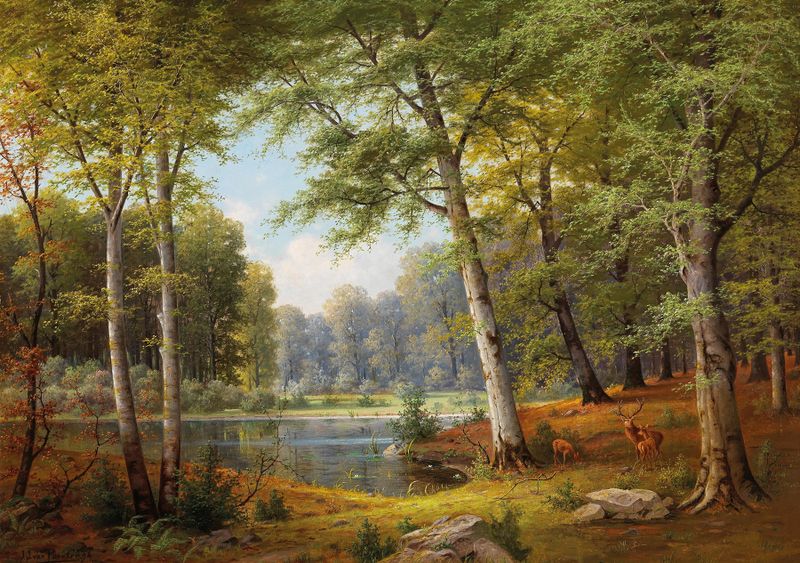
In the stillness of nature, revelation unfolds, inviting us to witness a serene moment suspended in time. Look to the left at the graceful figure of the roe deer, delicately poised among the dappled sunlight filtering through the treetops. The artist's gentle brushstrokes blend earthy greens and soft browns, creating a harmonious backdrop that emphasizes the deer’s elegance. Notice how the light caresses the deer’s fur, illuminating its delicate features while casting intricate shadows on the forest floor, drawing our gaze deeper into this idyllic paradise. The interplay of calm and alertness is palpable; the deer stands as a symbol of vulnerability in a world that thrives on the edge of chaos.
The lush surroundings, vibrant yet tranquil, evoke a sense of peace, contrasting with the inherent dangers that accompany such beauty. Every leaf and blade of grass seems to whisper secrets about the balance of life, while the untouched wilderness serves as a reminder that nature thrives in its own rhythm. Jacobus Johannes van Poorten painted this work during an uncertain era marked by artistic exploration and the rise of Romanticism in the 19th century. He found inspiration in the lush landscapes of his homeland, producing art that celebrated nature’s untouched beauty.
In creating this piece, he expressed a longing for a connection to the natural world, a theme that resonated deeply during a time of industrial change in Europe.