A Wooded Landscape with a Creek and a Bridge — History & Facts
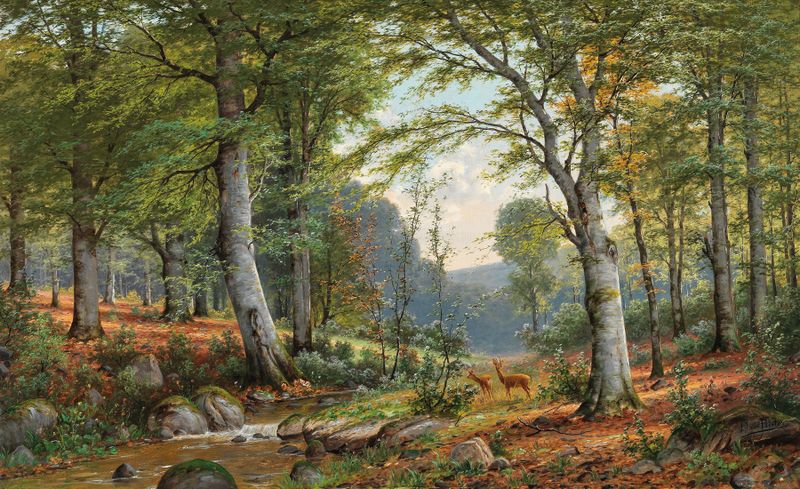
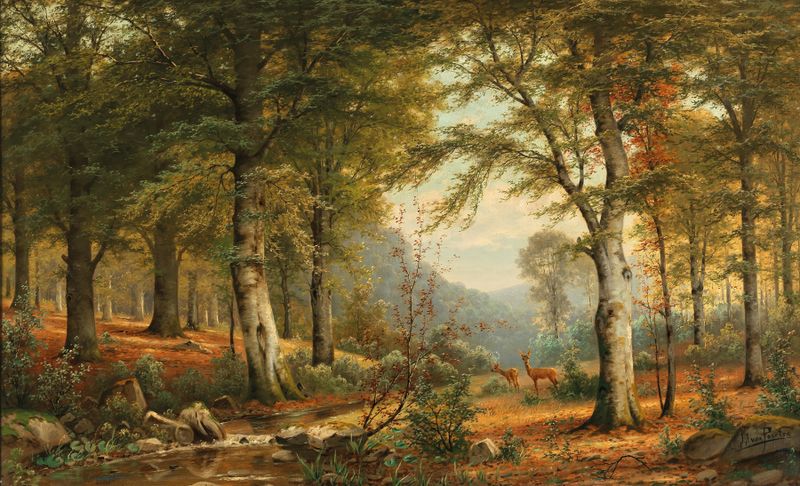
In this illuminated woodland, echoes of the past whisper through the leaves, inviting us to step into a serene realm of nostalgia. Look to the left at the gentle curve of the creek, its waters gleaming like liquid glass under dappled sunlight. The bridge, positioned elegantly across the water, leads the eye deeper into the landscape’s embrace, where soft greens and earthy browns meld in harmonious layers. The artist employs subtle brush strokes that capture the rustling of foliage and the delicate play of light, creating a sense of tranquility and a fleeting moment suspended in time. Beneath the surface of this idyllic scene lies a poignant contrast between the stillness of nature and the passage of time.
The way the water flows suggests change, while the sturdy bridge symbolizes connection and continuity. Each element of the landscape resonates with memories—perhaps of childhood wanderings or quiet reflections—implying that even in stillness, life moves forward, evoking a bittersweet sense of longing. Jacobus Johannes van Poorten created this work in the late 19th century, a period marked by a growing interest in realism and the romanticized portrayal of landscapes. Living in the Netherlands, he was influenced by the natural beauty around him, as well as the broader artistic movements of his time.
The absence of a precise date suggests a personal journey rather than a specific historical moment, allowing viewers to experience their own reflections within the peaceful confines of this wooded retreat.