
Rue de village — History & Facts
In this stillness, life unfurls beyond words, inviting contemplation in silence. Look to the left at the gentle curve of the road, flanked by clusters of trees that whisper secrets to one another. The soft brushstrokes create a textured landscape, with muted greens and warm earth tones blending seamlessly. Notice how the light filters through the leaves, creating dappled patterns on the cobblestones, guiding the viewer’s gaze down the tranquil path.
The composition is masterfully balanced, evoking a serenity that beckons one to wander deeper into this village scene. Yet, beneath this placid exterior lies a quiet tension; the untouched road hints at absence, as if time has paused in reverence. The absence of figures evokes solitude, suggesting stories untold and lives lived in moments of silence. The interplay of light and shadow speaks to the transience of time, capturing the delicate beauty of an ordinary day that feels extraordinary in its simplicity. Created in 1923, this work emerged during a period when Gustave Loiseau was immersed in the Impressionist movement.
Living in France, he sought to capture the essence of the landscapes around him while grappling with the changing artistic landscape of the time. This era was marked by a renewed interest in the natural world and a longing for authenticity, which Loiseau embraced in his depictions of rural life, grounding his art in the palpable silence of the moment.
More Artworks by Gustave Loiseau
Browse all →
Rue de village en Normandie
Gustave Loiseau
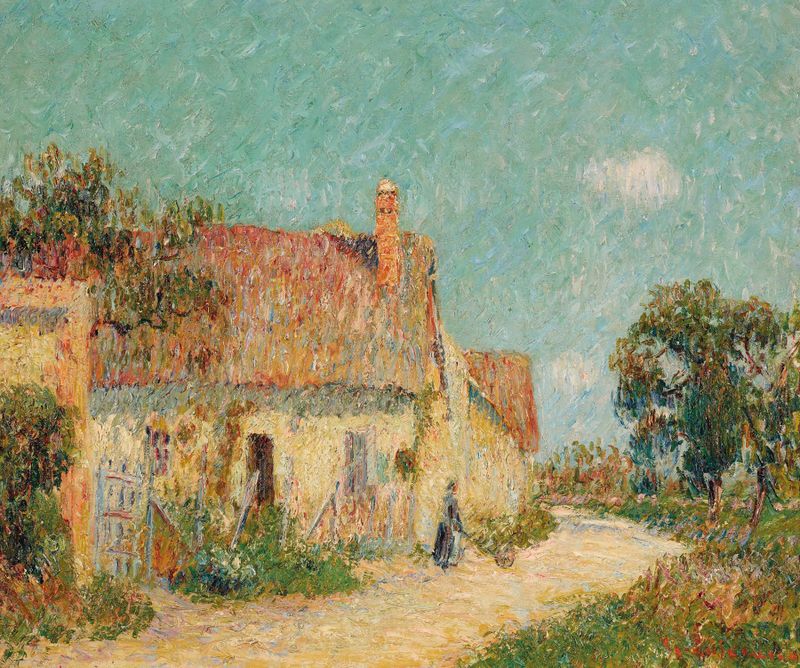
Chaumière en Normandie
Gustave Loiseau

Paysage d’Hiver à Chaponval
Gustave Loiseau
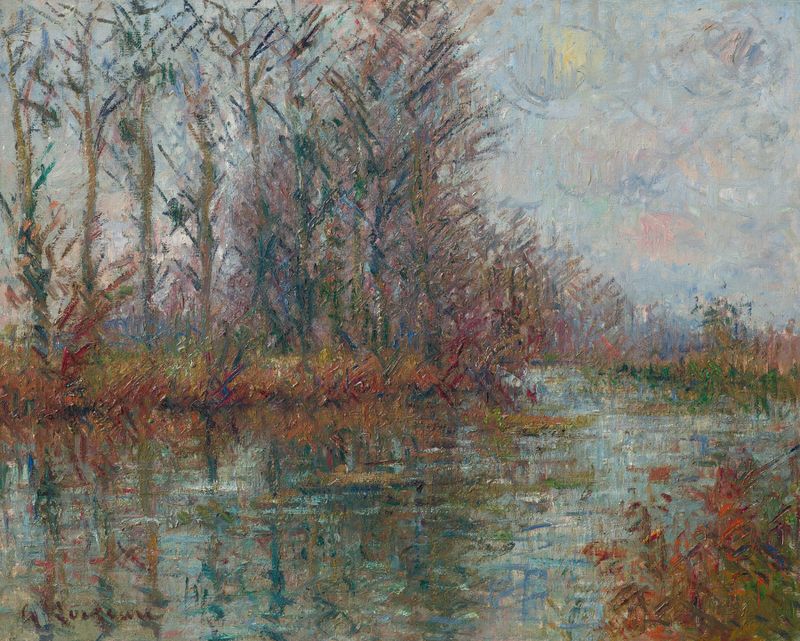
Tournant de rivière, L’Eure
Gustave Loiseau

Pont Marie, Paris
Gustave Loiseau

Le Bras De Mer
Gustave Loiseau

Le Pont Suspendu À Triel
Gustave Loiseau

Bord de la rivière
Gustave Loiseau
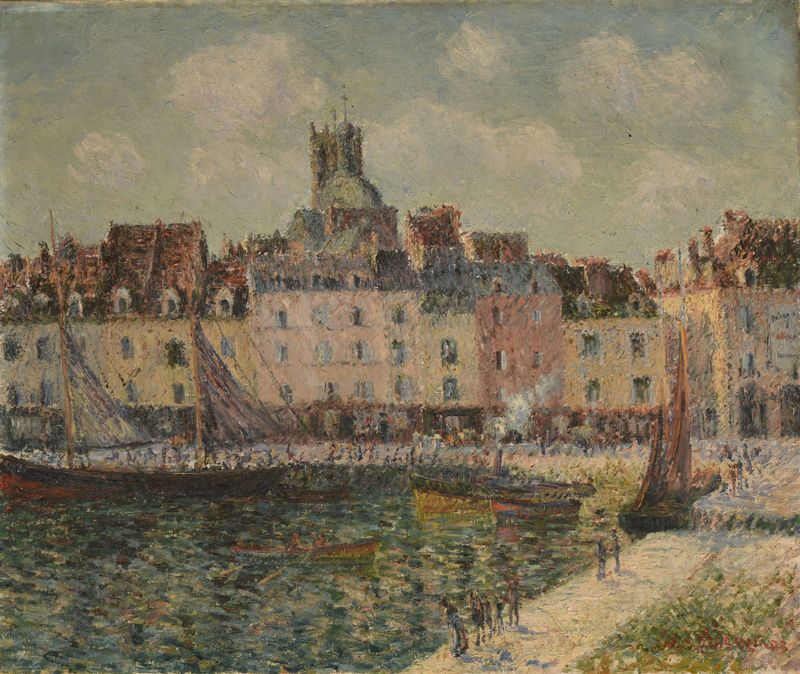
Le Quai Duquesne à Dieppe
Gustave Loiseau

Rocher la Teignouse, Cap Fréhel
Gustave Loiseau





