
Rue Eugène Moussoir at Moret; Winter — History & Facts
Could beauty survive in a century of chaos? As winter's chill blankets the scene, a poignant silence envelops Rue Eugène Moussoir, where the weight of snow transforms ordinary life into something ethereal. Look to the center, where a narrow street vanishes into the white embrace of winter. The soft, muted palette of whites and soft grays conveys stillness, while quaint houses peeking through the delicate snow create a sense of intimacy. Notice how the light falls upon the rooftops, casting gentle shadows that hint at the warmth hidden within each home—a subtle contrast to the coldness surrounding them.
This careful orchestration of color and composition immerses the viewer in a moment suspended in time. Yet, hidden beneath the serene exterior lies a tension of loss and solitude. The thick layers of snow serve as a barrier, creating an invisible distance between the houses and the outside world. Each untouched footprint hints at abandonment, raising questions about those who once inhabited these spaces.
In the context of winter, the tranquil beauty belies an underlying fragility, evoking memories of warmth and community lost to time. In 1891, Sisley painted this scene during a challenging period of his life in France. Despite struggling with financial instability and the ramifications of Impressionism's evolving landscape, he captured the essence of fleeting beauty in nature. This work reflects his enduring commitment to the art form, even as the world around him grappled with the complexities of modernity and change.
More Artworks by Alfred Sisley
Browse all →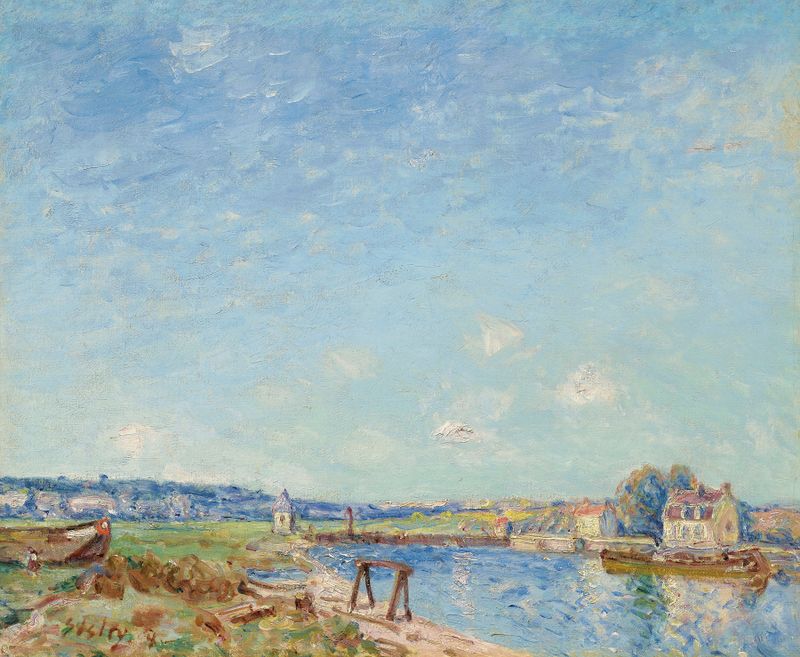
Le Loing à Saint-Mammès
Alfred Sisley
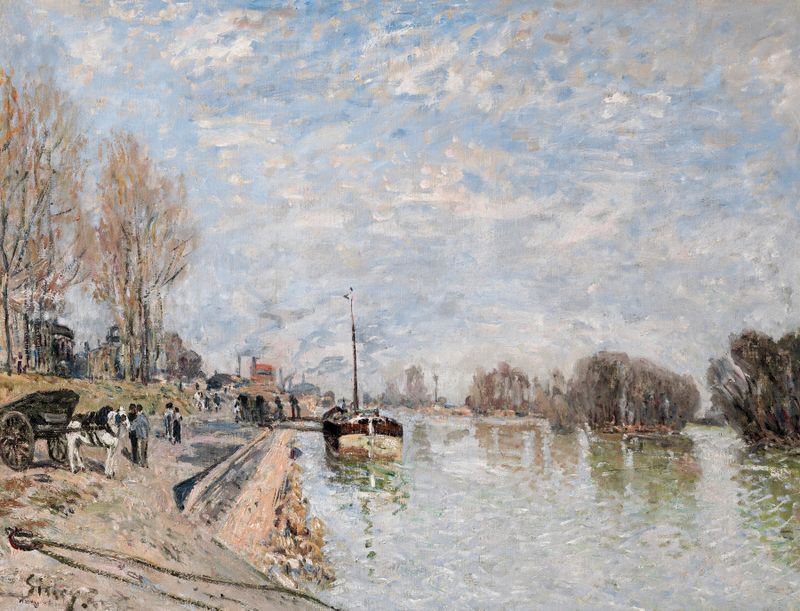
La Seine à Suresnes
Alfred Sisley
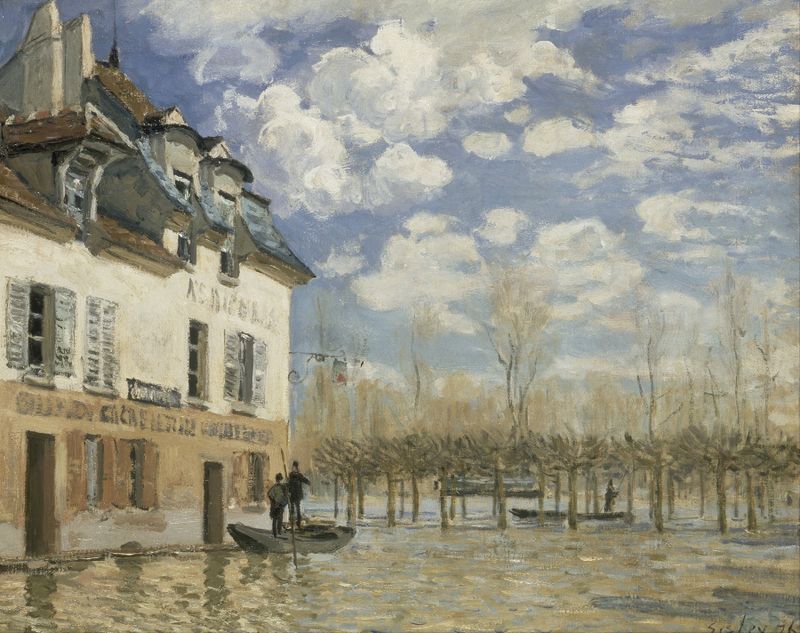
Boat in the Flood at Port Marly
Alfred Sisley
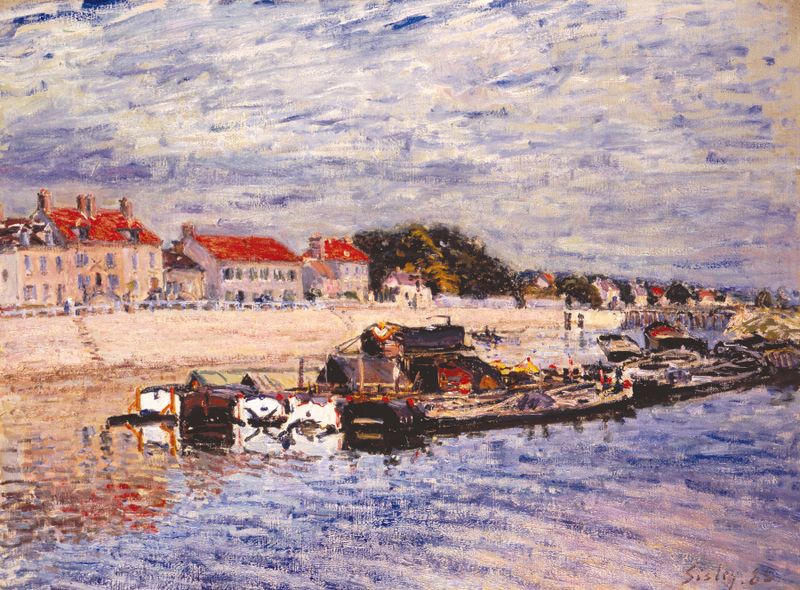
Barges on the Loing at Saint-Mammès
Alfred Sisley

L’allée des peupliers au bord du Loing
Alfred Sisley

Molesey Weir, Hampton Court
Alfred Sisley
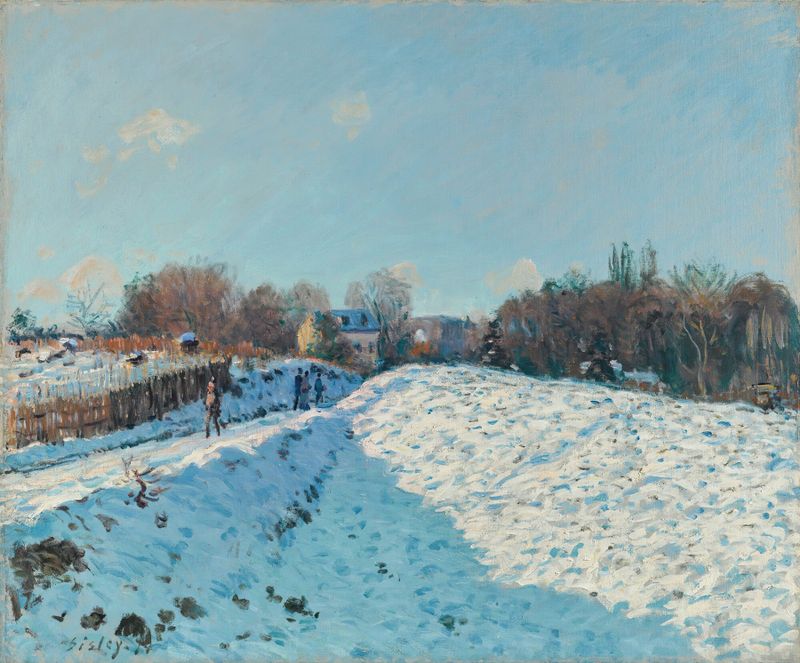
Effet De Neige À Louveciennes
Alfred Sisley
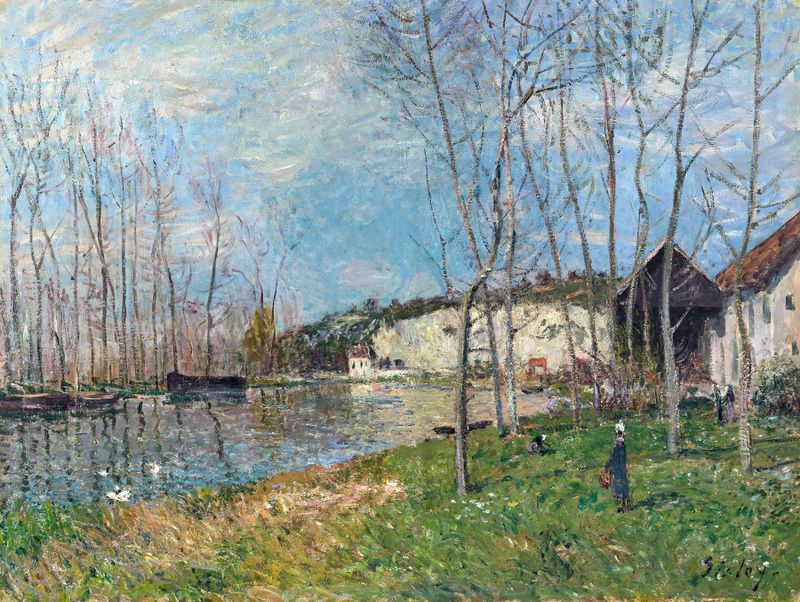
Printemps au bord du Loing
Alfred Sisley
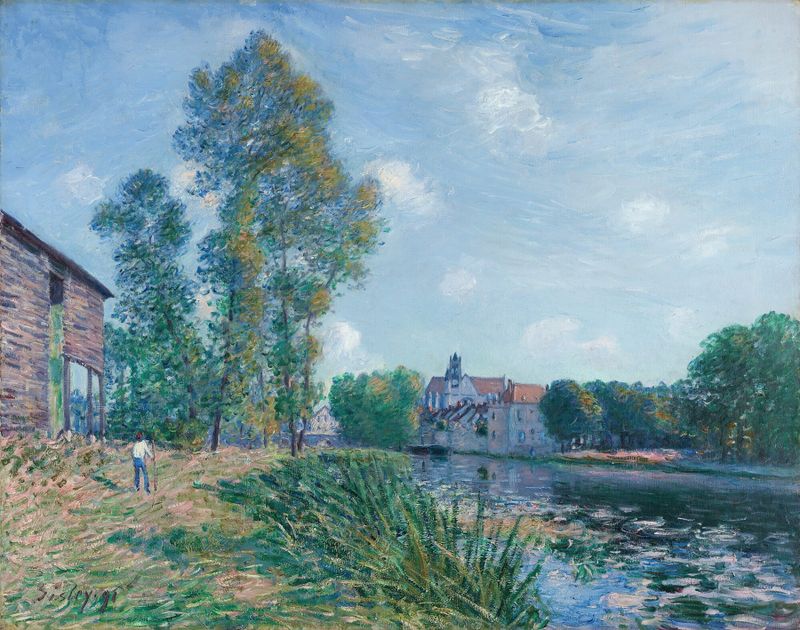
Le Loing À Moret, En Été
Alfred Sisley
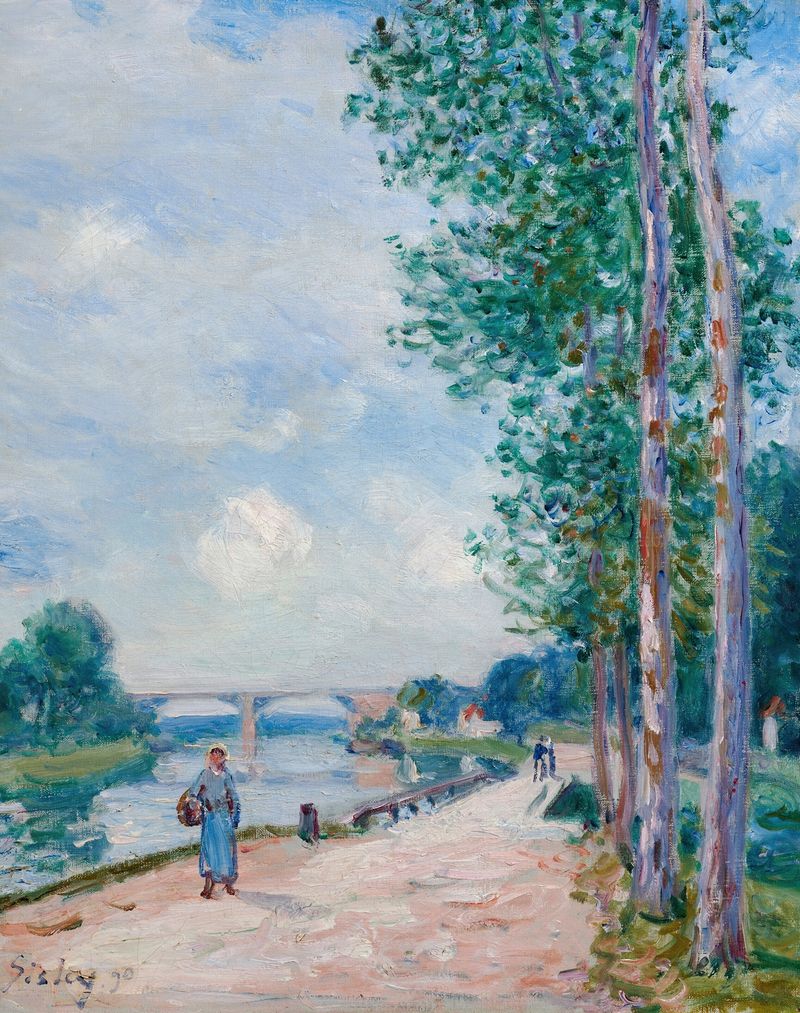
Les bords du Loing près de Moret
Alfred Sisley





