Ruine der Burg Are über dem Ahrtal mit rastenden Wanderern — History & Facts
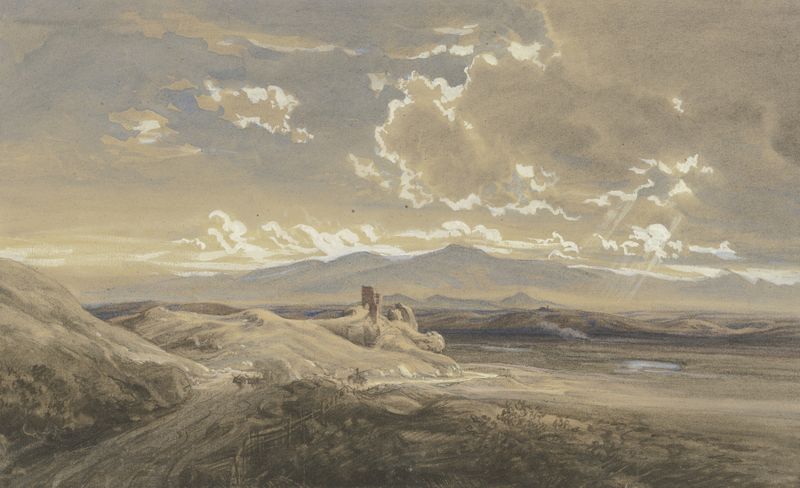
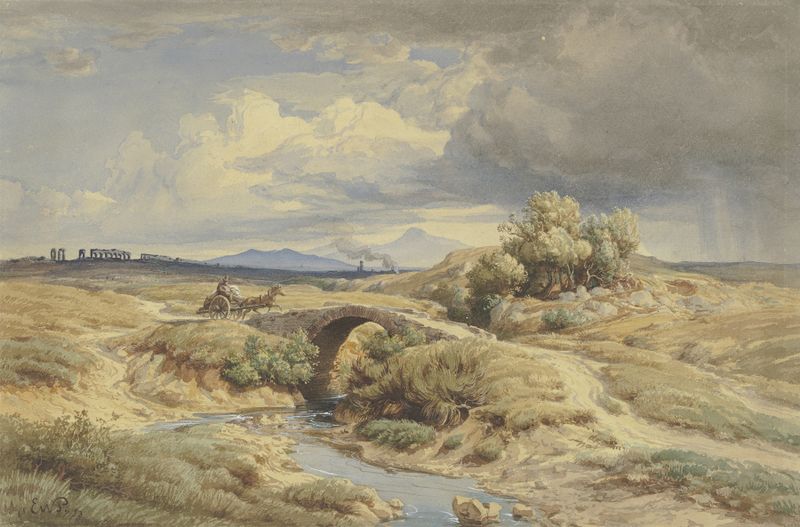
Where does light end, and longing begin? In the interplay of shadow and illumination, we find the essence of our fragile mortality, captured in a moment that echoes through time. Look to the left at the crumbling ruins of the Burg Are, rising majestically against the horizon, draped in the warm embrace of golden sunlight. The painter employs a soft yet vibrant palette, blending earthy browns and greens with the azure sky above, invoking a sense of tranquility alongside the decay. Just below this ancient fortification, the two wanderers rest — their stillness a contrast to the dynamic landscape, inviting you to consider not just their journey, but the pathways of history that brought them here. Beyond the immediate beauty, the juxtaposition of sturdy stone and the ephemeral presence of the hikers speaks to the passage of time.
One can sense a tension between permanence and transience, as the castle stands as a testament to resilience while the figures embody the fleeting nature of life. The gentle slope of the hills leads the eye into the distance, suggesting both adventure and the inevitability of mortality. Each element harmonizes, evoking a contemplative mood that lingers long after viewing. In 1835, while in Germany, the artist turned his gaze towards the Ahr Valley, a region steeped in history.
The Romantic movement was unfurling in art, emphasizing emotion and nature, mirroring his own explorations of the landscape and human connection to it. This work reflects not only a fascination with the past but also an engagement with the evolving relationship between humanity and the environments they inhabit.