Rustende en wandelende personen in boomrijk landschap — History & Facts
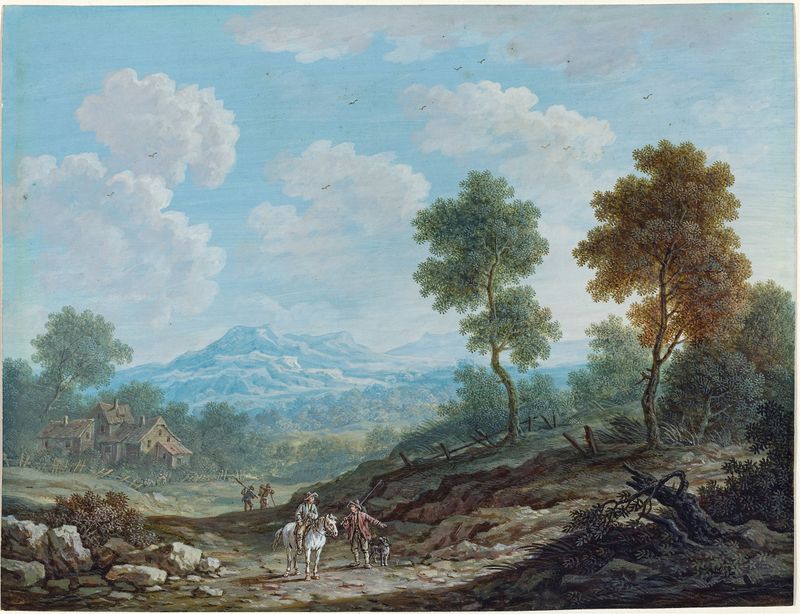
What if beauty was never meant to be finished? In Rustende en wandelende personen in boomrijk landschap, the stillness of nature whispers of moments suspended in time, inviting contemplation and connection. Look to the left where a group of figures pauses beneath the arching trees. Their gentle gestures and relaxed postures transport you into a serene woodland, where soft greens and earthy browns dominate the palette. Notice how the dappled sunlight filters through the leaves, illuminating their faces with a warm, inviting glow.
The careful layering of brushstrokes creates a textured depth, suggesting the rustling of leaves and the quiet hum of life that exists just beyond the canvas. Delve deeper into the painting’s subtleties, where the juxtaposition of movement and stillness reveals profound themes. The wandering figures symbolize the passage of time—some are caught in moments of rest, while others move forward, reflecting the dual nature of existence. The towering trees stand as silent witnesses to this transient interplay, embodying the idea that life, much like nature, is an ongoing journey, ever-evolving yet eternally beautiful. Johann Christoph Dietzsch created this piece between 1720 and 1769 during a period marked by a growing interest in landscape painting, particularly in Germany.
As he explored this genre, he absorbed influences from his contemporaries and the rich natural world around him. His works often reflected the intricate relationship between humanity and nature, painting a vivid picture of 18th-century life while inviting viewers to pause, reflect, and appreciate the beauty of the present moment.