
Rustic Landscape — History & Facts
Did the painter know this moment would outlive them? The tranquility of the countryside, framed by a palette of earthy tones, carries a whisper of violence beneath its serene surface. Focus on the left where a sun-drenched meadow unfolds, leading the eye toward a distant, shadowy wood. The strokes are intentionally broad, evoking the ruggedness of the terrain while capturing the soft touch of light that dances across the landscape. Notice how the vibrant greens contrast sharply with the darker browns, suggesting both growth and decay — a reminder of nature's duality.
The clouds, swirling above, hint at an impending storm that adds an uneasy tension to the otherwise peaceful scene. The juxtaposition of light and darkness hints at deeper narratives woven into the canvas. The lush fields, teeming with life, can be read as a celebration of rural beauty; however, the encroaching shadows suggest an underlying threat — a reminder that violence, both natural and human, is never far from such idyllic settings. Small details, like the bent trees and roiling clouds, form a silent chorus that echoes the fragility of this moment, urging viewers to consider what lies beneath the surface. Created in 1830, this work reflects a period of transition in France, where the Romantic movement was giving way to more realistic depictions of nature.
The artist, emerging from a context of social and political upheaval, drew inspiration from both the beauty and brutality of the landscape. This painting captures not only a moment in time but also the complex relationship between humanity and the natural world, which was increasingly being challenged by industrialization.
More Artworks by French School
Browse all →
Architectural Landscape with Belisarius Receiving Alms
French School
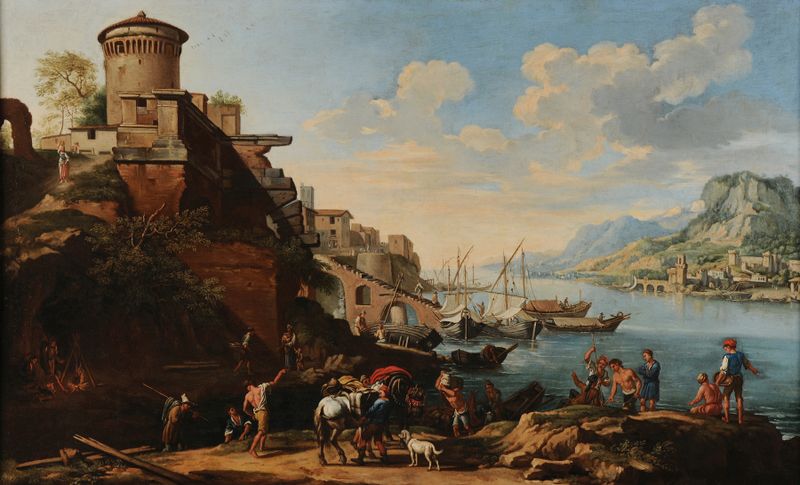
Paysage
French School

The Ponte Salario with Laundresses
French School

Still Life with Eggs and a Leg of Mutton
French School

The Carousal (Scene from Faust?)
French School

The Cave Of Neptune At Tivoli
French School

Portrait of a Lady
French School

A river landscape with figures by ruins
French School
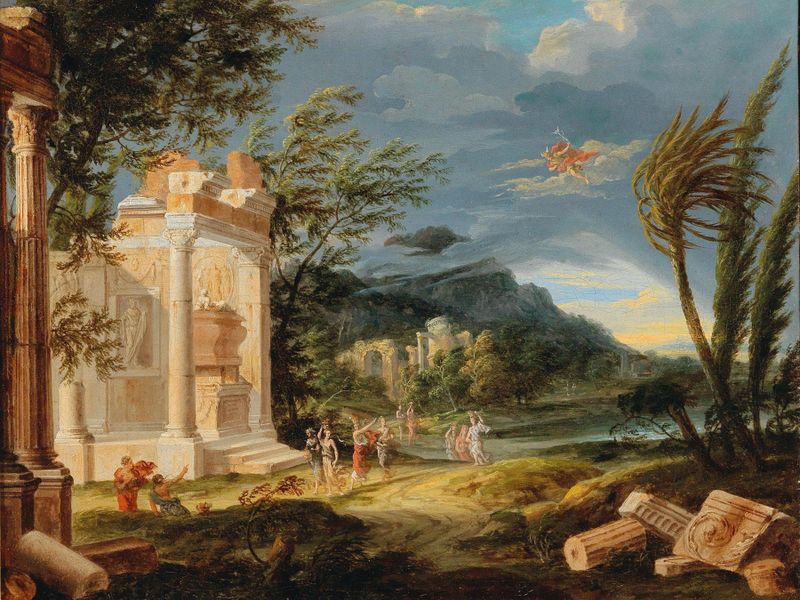
Stormy Landscape with figures and Hermes
French School

Portrait of an Artist
French School





