
Rye field in the Jura — History & Facts
When did color learn to lie? Beneath the surface of vibrancy, decay whispers its somber secrets, waiting to be unveiled in the light. Look to the left at the undulating hills draped in a golden wave of rye, each stalk bending under the weight of a late summer sun. The brushstrokes pulse with life, inviting the viewer to wander through the lush expanse. Notice how the rich, earthy tones harmonize with the azure sky, creating a striking contrast that emphasizes the fleeting beauty of nature.
The carefully balanced composition draws your gaze toward the horizon, where the land meets the sky in a gentle embrace, inviting contemplation. Yet, a closer inspection reveals hints of weariness embedded in the scene. Shadows, soft yet pervasive, creep along the edges of the field, suggesting that life is not without its burdens. The velvety textures of the rye contrast starkly with the hints of brown that signal both harvest and decay.
This duality prompts introspection about abundance and its inevitable decline, a meditation on the transient nature of existence captured in a moment of pastoral bliss. In 1863, during a time of personal challenges and evolving artistic identity, the painter was exploring the interplay of light and color in the Swiss landscape. While embracing realism, he was also influenced by the emerging Impressionist movement, which sought to convey the emotional weight of the natural world. This piece reflects a pivotal moment in his career, where he captured beauty while hinting at the impermanence that underlies all life.
More Artworks by Frank Buchser
Browse all →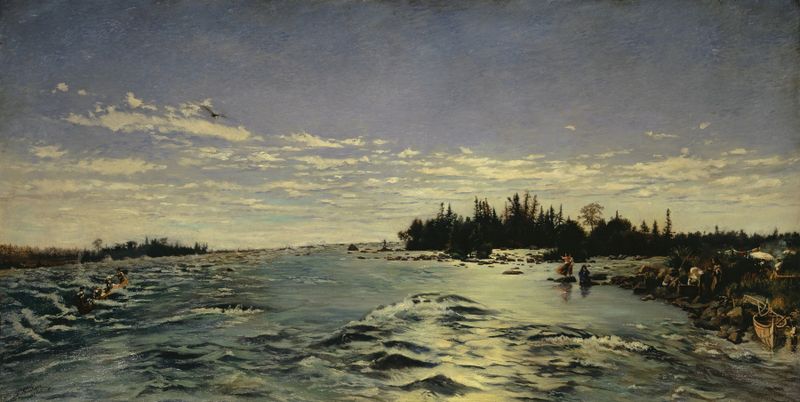
The Rapids of Saint Marys River
Frank Buchser
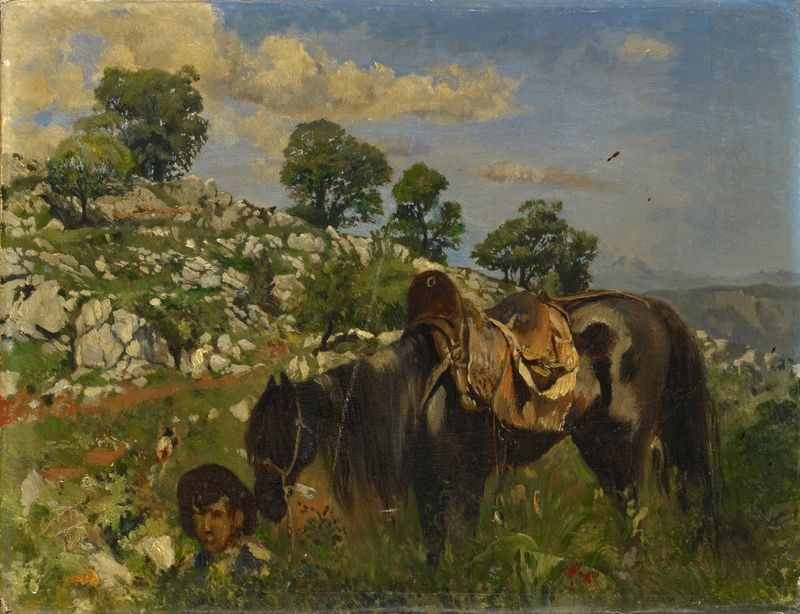
Rider in High Grass
Frank Buchser
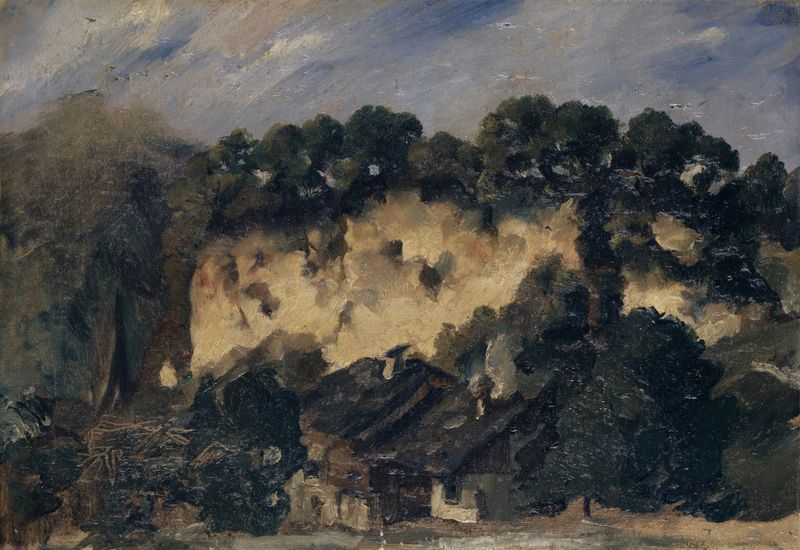
Houses by a Quarry
Frank Buchser

Passage at the Platte River
Frank Buchser
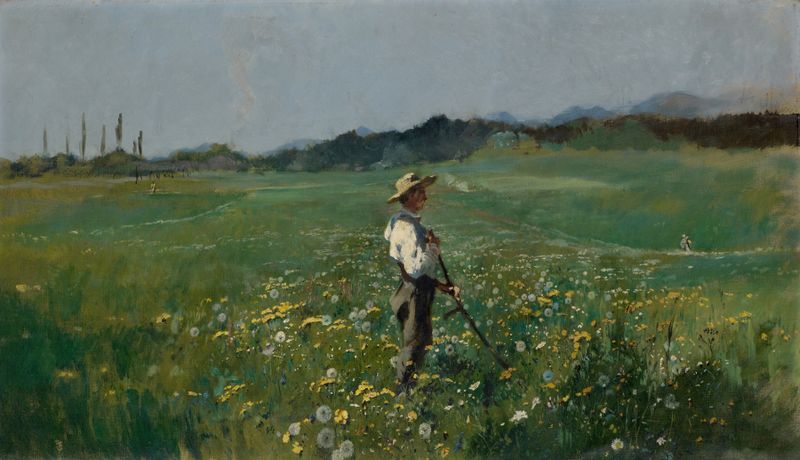
Reaper in a Flowery Meadow
Frank Buchser
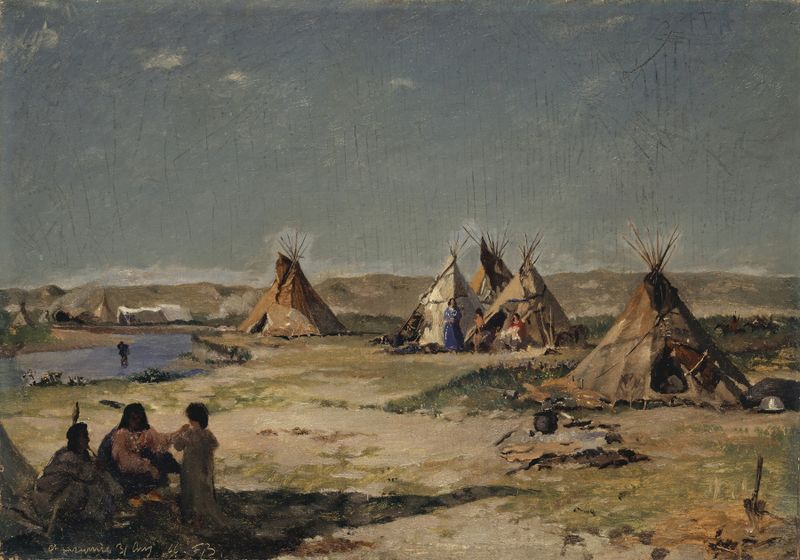
Tent Camp of the Indians at the Laramie
Frank Buchser
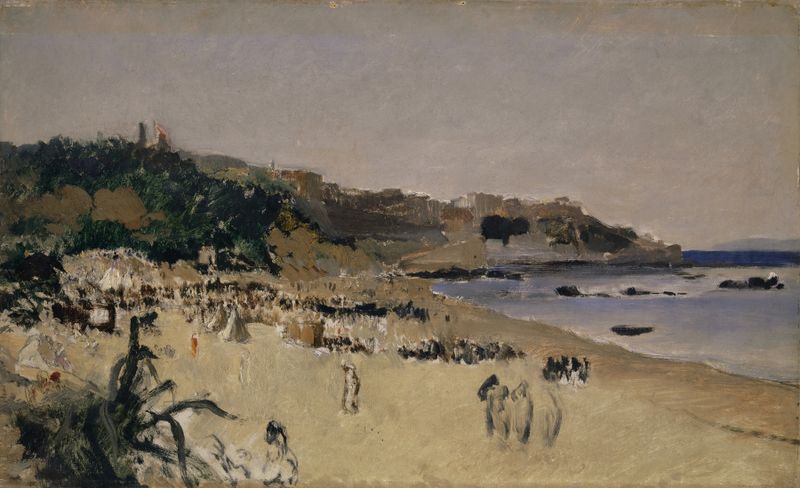
On the Beach at Tangier
Frank Buchser
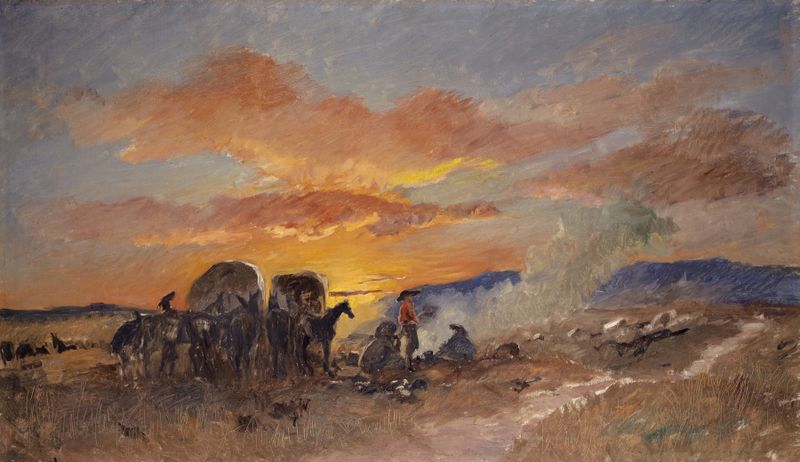
Campfire at Sunrise in the Laramie Plains
Frank Buchser

Landscape with Giant Corn in the Foreground
Frank Buchser
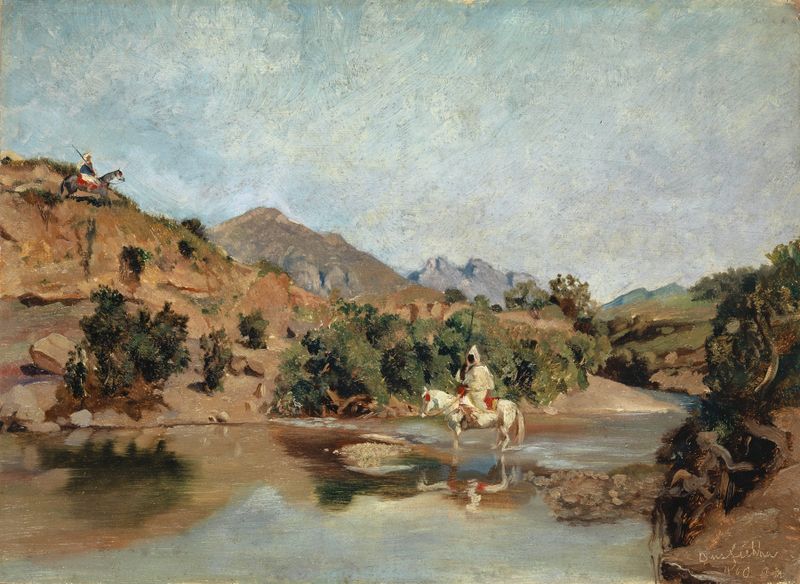
Moroccan Rider Crossing the Ford at Wad Boswicha
Frank Buchser





