
Sailing on the Fjord — History & Facts
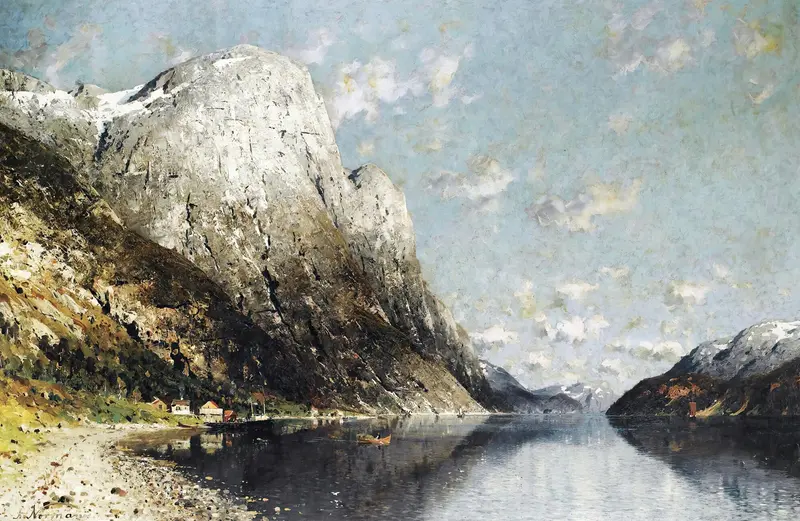
What draws the eye first in Sailing on the Fjord is the sheer scale of the mountains, their jagged peaks rising almost impossibly steep from the water’s edge, dwarfing the tiny cluster of houses and the lone white sail that glides quietly across the calm surface. The painter sets the drama not in storm or peril, but in the quiet conversation between human life and the overwhelming presence of nature. Sunlight glances off the snow patches clinging to the rock, and the reflected blues and whites ripple gently in the fjord below, leading the viewer’s gaze from the distant haze at the left toward the lived-in shore at the right.
The little sailboat, its mast catching the light, becomes a point of movement and hope, a reminder that these waters are both highway and home. Works like this, painted in the late 19th or early 20th century, belong to a moment when artists across Scandinavia and northern Europe turned their gaze to the grandeur of their own landscapes. The fjord, with its impossible cliffs and mirror-like waters, became a symbol of national identity and a favored subject for painters seeking to capture both the beauty and the challenge of northern life. Adelsteen Normann, known for his fjord scenes, painted during a period when travel and tourism were opening these remote places to the wider world, and such images often served as invitations or souvenirs for those who longed for the north.
Though little is recorded about the specific journey of this painting, its presence in a modern online collection lets us step into that world for a moment—one foot on the rocky shore, the other already sailing out into the blue.
More Artworks by Adelsteen Normann

North Norwegian Coastal landscape
Adelsteen Normann
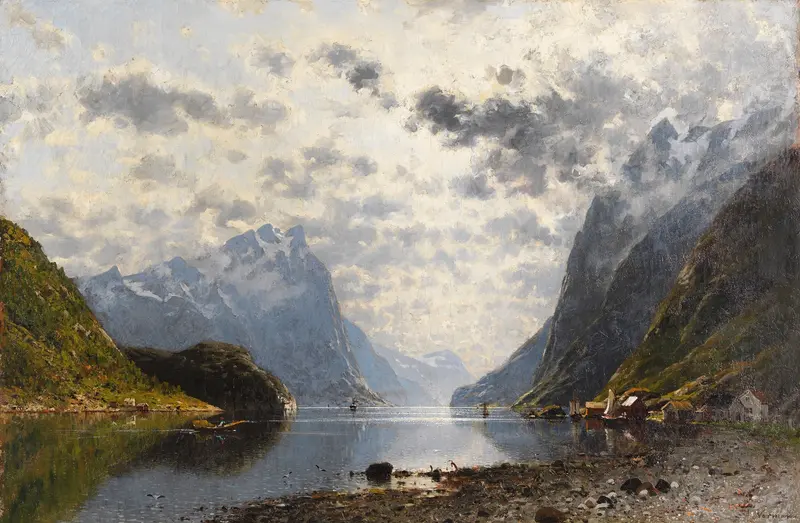
Norwegische Fjordlandschaft
Adelsteen Normann
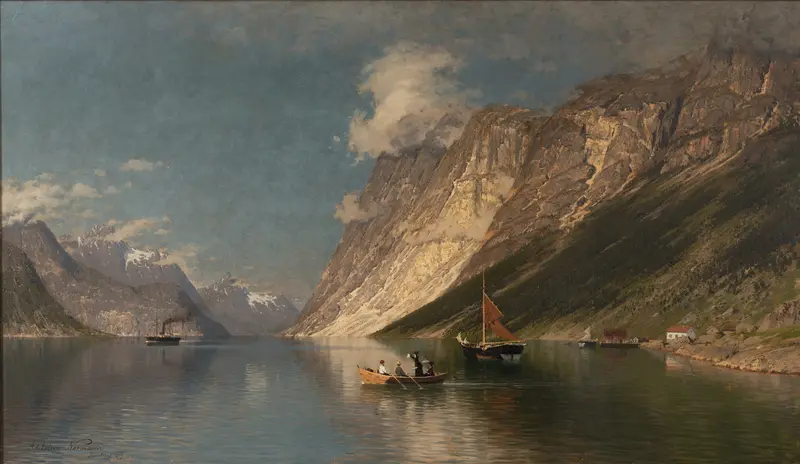
The Romsdal Fiord
Adelsteen Normann
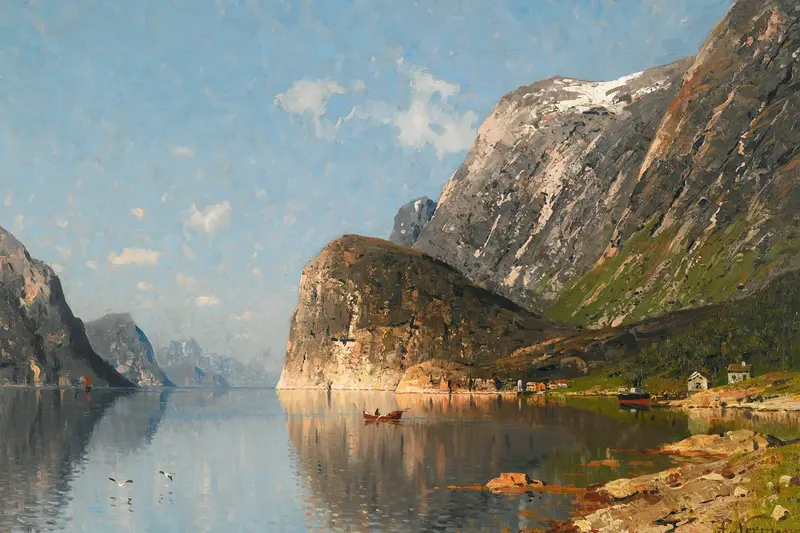
A Norwegian fjord
Adelsteen Normann
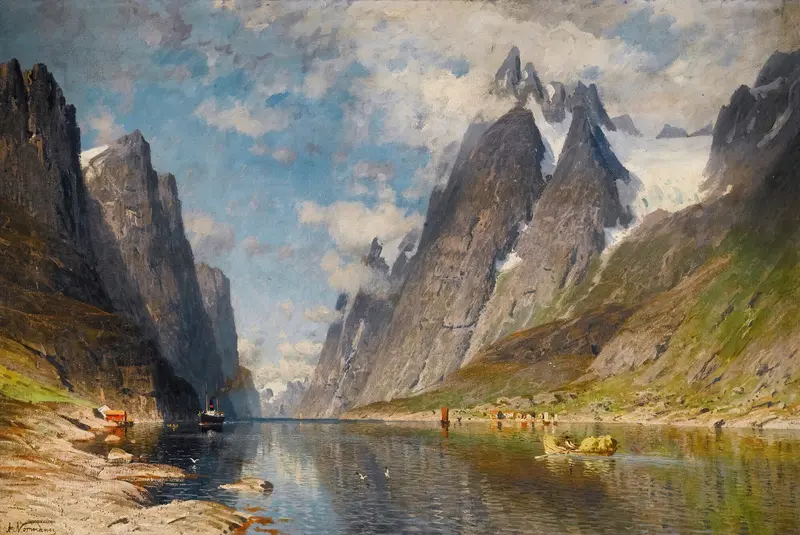
A Norwegian fjord
Adelsteen Normann
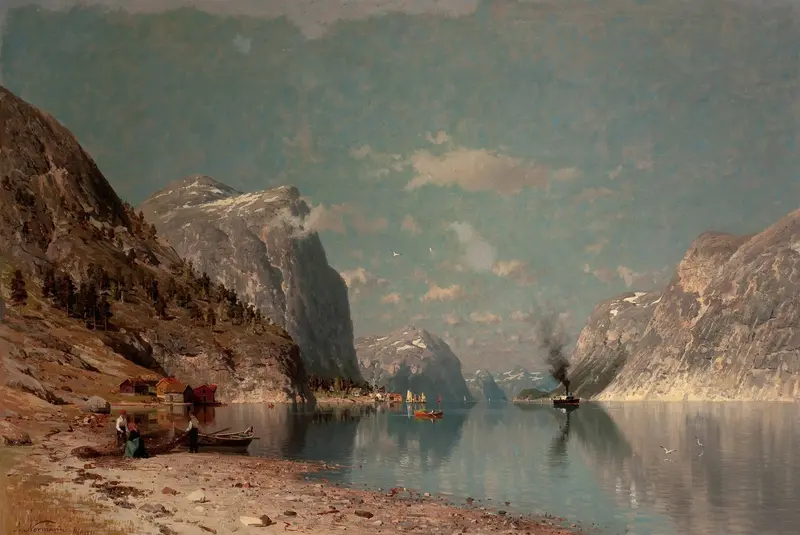
Landscape with Fjords
Adelsteen Normann
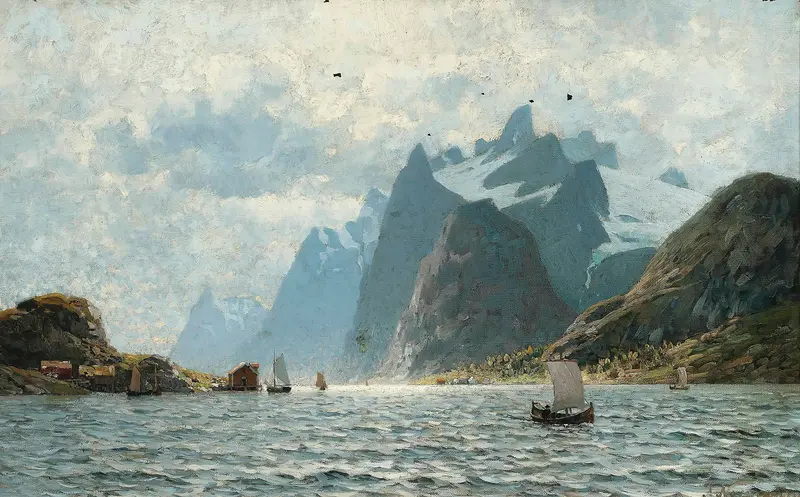
Fishing Vessels On A Norwegian Fjord
Adelsteen Normann
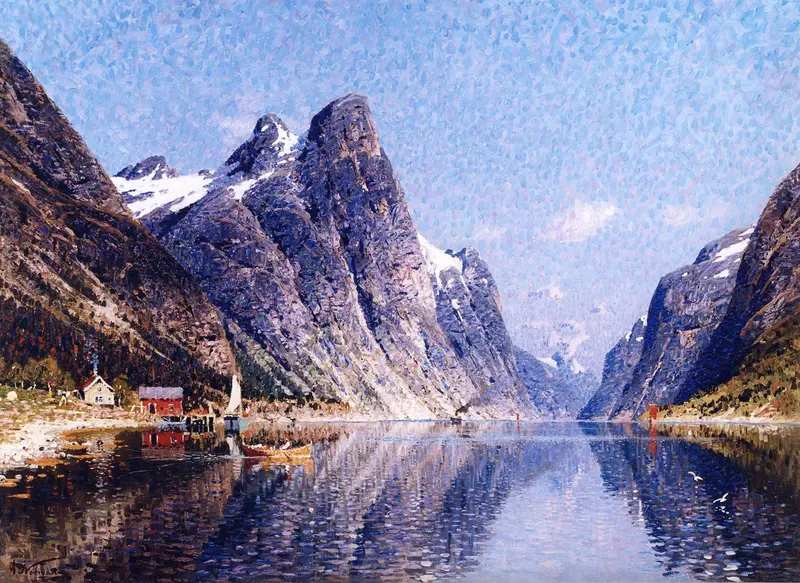
A Norwegian Fjord Scene
Adelsteen Normann
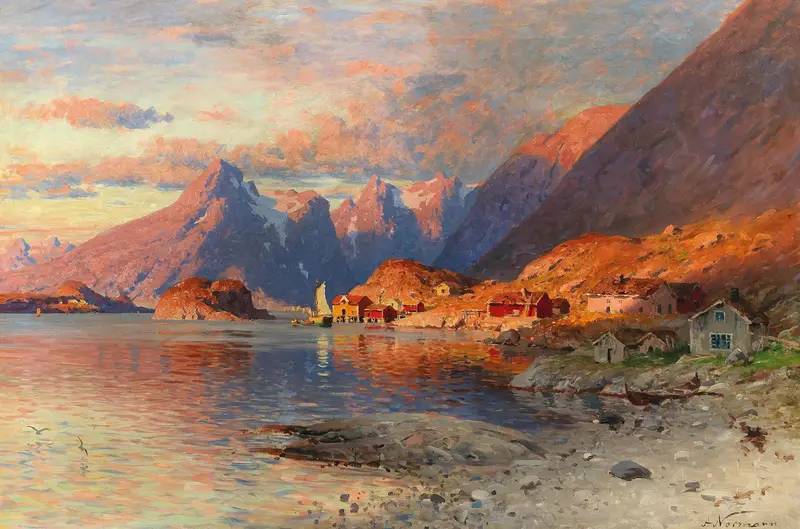
A Fjord Landscape at Sunset
Adelsteen Normann
Fjord
Adelsteen Normann





