Sailing Vessels at Sea — History & Facts
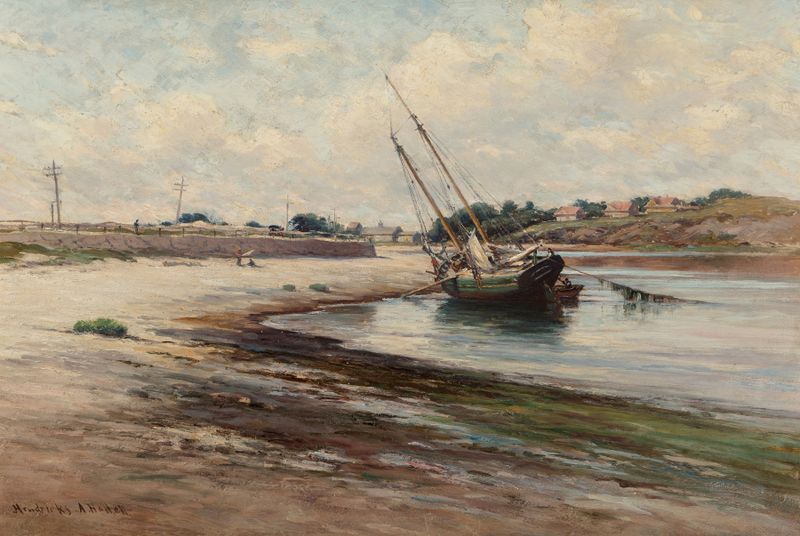
Can paint confess what words never could? In Sailing Vessels at Sea, beauty emerges as a silent witness to the interplay between man and nature, evoking a sense of wonder that transcends language. Look to the horizon where the delicate silhouettes of ships glide across the canvas, their sails catching the gentle breeze. Notice how the artist employs a spectrum of blues and greens to create a soothing seascape, inviting the viewer's gaze towards the rhythmic waves that dance beneath the vessels. The dynamic brushstrokes convey movement, while the subtle tonal variations in the sky hint at the transition of day to dusk, suggesting both tranquility and the unknown. Within this serene moment lies a deeper exploration of freedom and adventure.
The vessels, though small against nature's vastness, embody human ambition and the desire to explore the uncharted. The contrast between the lively sea and the calm sky reflects the tension between chaos and peace, reminding us of our own journeys through life's unpredictable waters. Here, beauty is not merely aesthetic; it becomes a bridge to introspection. Hendricks A.
Hallett painted Sailing Vessels at Sea during a period marked by the rise of maritime trade and exploration. Although the exact date remains uncertain, it is evident that Hallett was inspired by the enchanting relationship between sea and sail, a theme that resonated in the art world of the late 19th century. Artists sought to capture the sublime in nature, reflecting both the growing fascination with the ocean and humanity's quest for connection with the vastness of the world.