
Saint-Etienne des Tonneliers a Rouen — History & Facts
In that delicate balance between memory and impermanence lies the essence of transcendence, where the ephemeral meets the eternal. Look closely at the hazy outlines of the cathedral in Saint-Etienne des Tonneliers a Rouen. The viewer's gaze is drawn first to the towering spires, reaching desperately towards the heavens, cloaked in soft shades of gray and blue. The delicate brushwork creates a sense of movement, almost as if the building itself breathes with the passing clouds.
Subtle variations in light reflect the time of day, casting a serene yet melancholic glow that envelops the scene. Hints of contrast whisper through the artwork: the solidity of stone against the fleeting shadows, the urban structures that crowd around the sacred monument. Each stroke embodies a dialogue between permanence and decay, urging us to contemplate what endures in our lives. What stories linger in the air of this old city? As we explore the intricacies of the painting, we sense the artist's yearning to capture moments that drift away, yet remain imprinted in our collective memory. Auguste Brouet painted this piece before 1925, during a time when the art world was embracing new ideas and movements.
Living in Paris, he was influenced by the burgeoning modernist trends while still honoring traditional subjects. Brouet sought to immortalize the beauty of familiar places, capturing the essence of an era that grappled with change, reminding us of the layers of history that exist within every brushstroke.
More Artworks by Auguste Brouet
Browse all →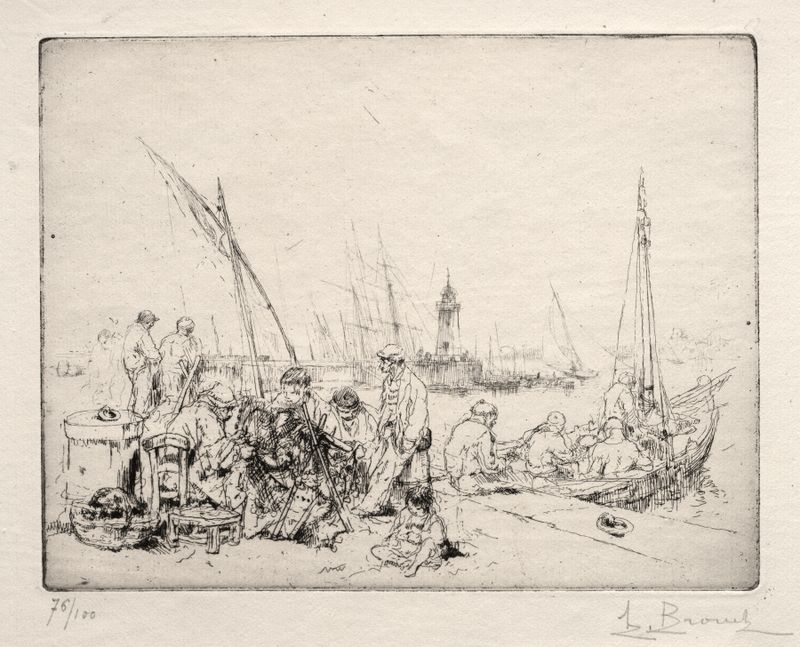
The Net Menders
Auguste Brouet
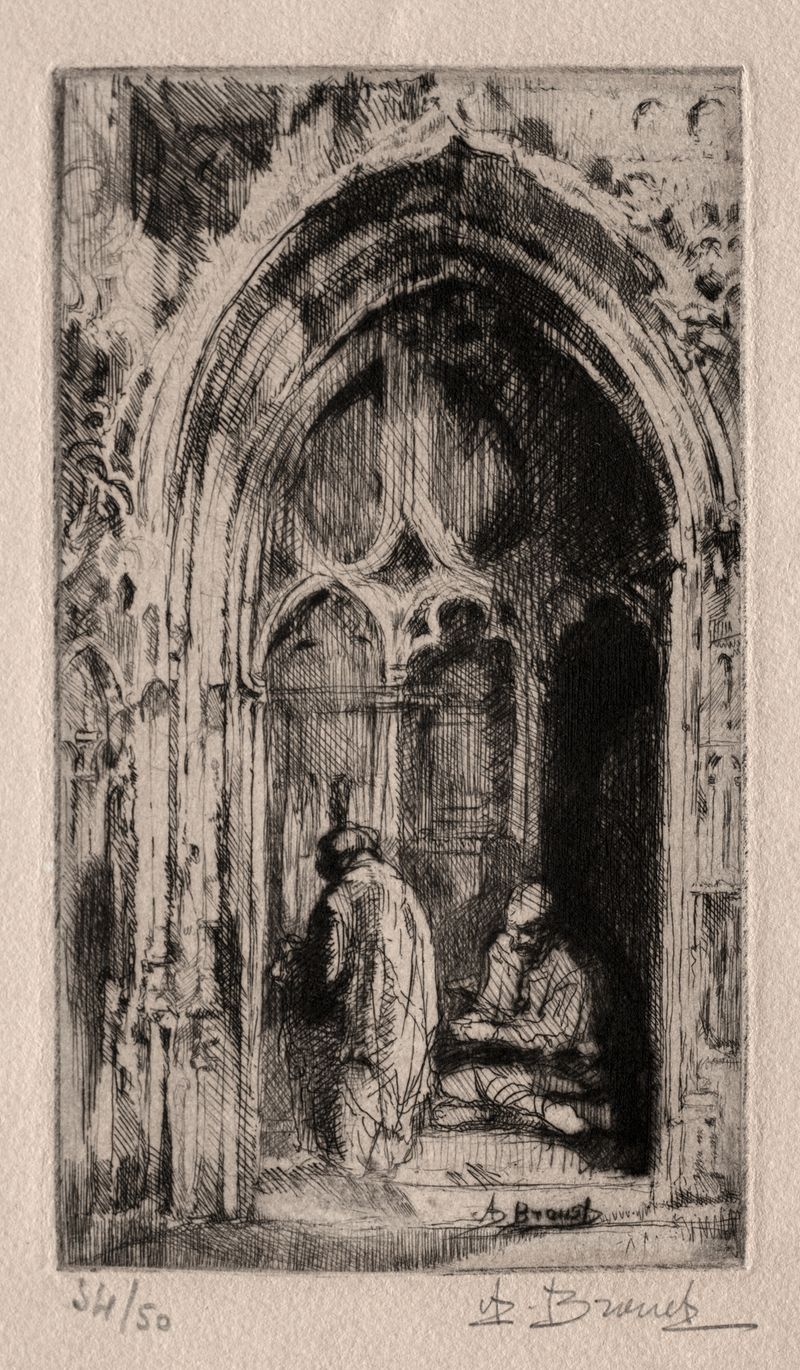
Gothic Doorway
Auguste Brouet
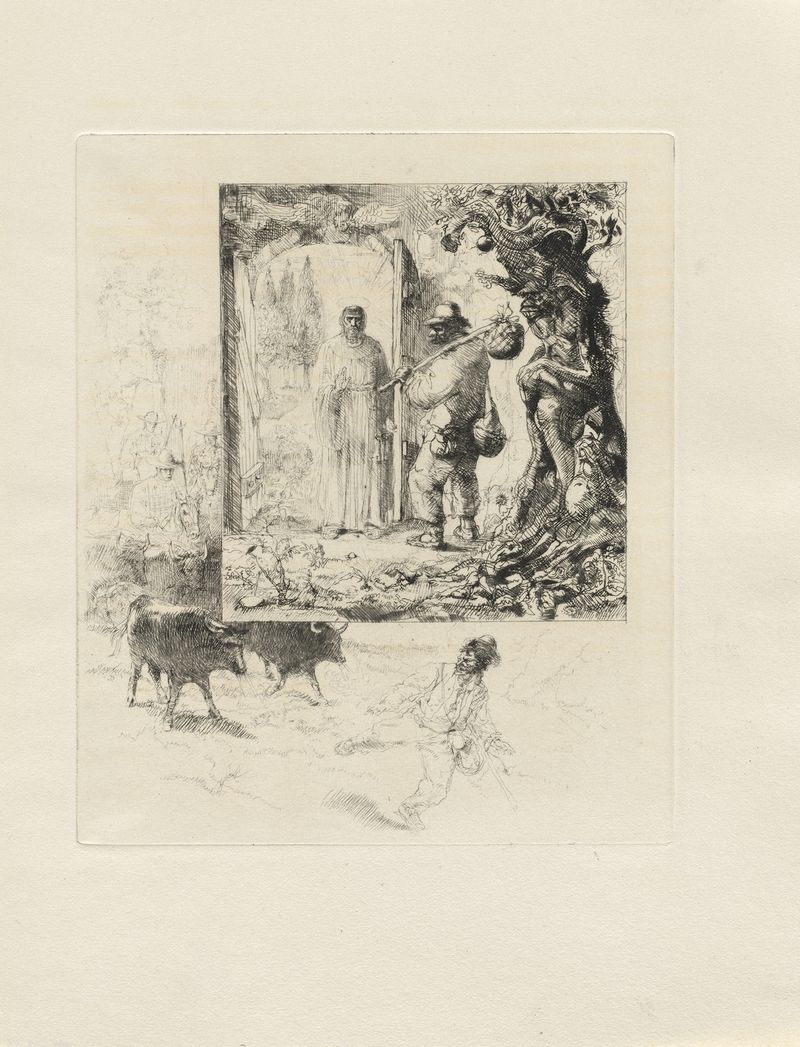
Frédéric Mistral; Mémoires et Recits Pl.08
Auguste Brouet

The Halt at the Village
Auguste Brouet

The Footbridge
Auguste Brouet

Frédéric Mistral; Mémoires et Recits Pl.13
Auguste Brouet

Frédéric Mistral; Mémoires et Recits Pl.12
Auguste Brouet

Frédéric Mistral; Mémoires et Recits Pl.03
Auguste Brouet
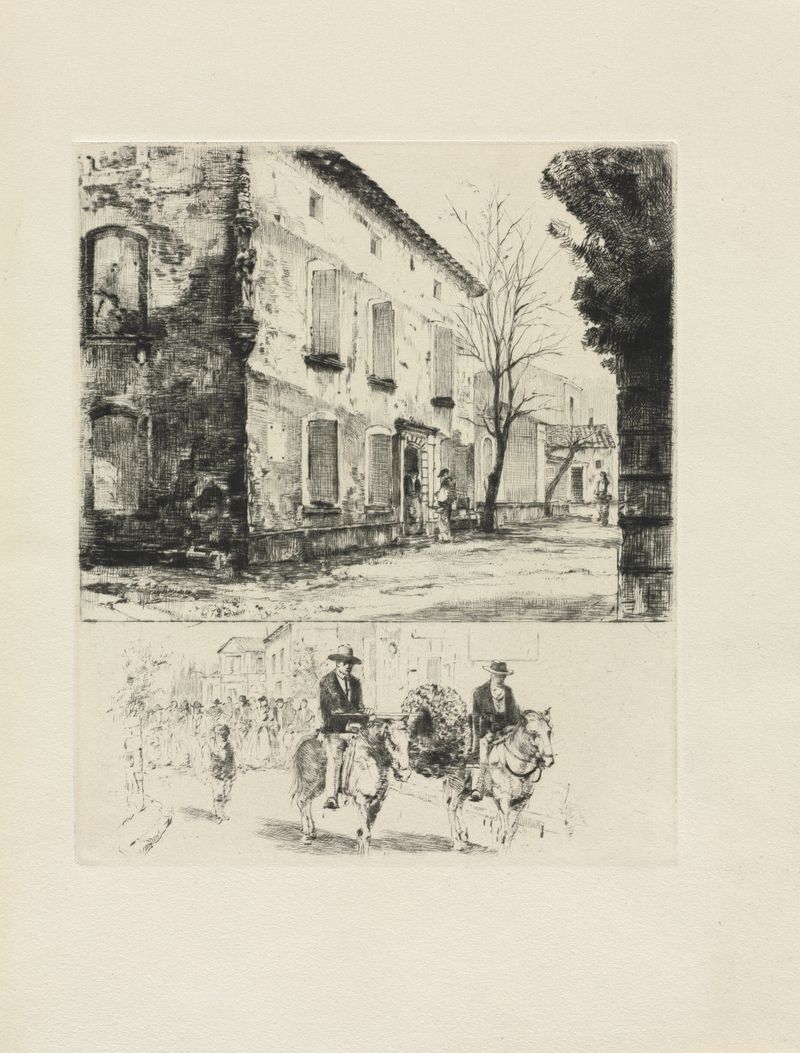
Frédéric Mistral; Mémoires et Recits Pl.14
Auguste Brouet
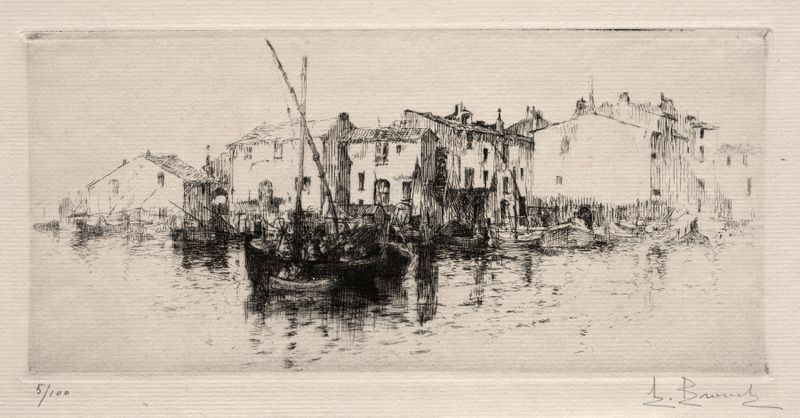
Les Martigues
Auguste Brouet
More Architecture Art
Browse all →
The statue of Liberty
Frédéric Auguste Bartholdi

View of Houses in Delft, Known as ‘The Little Street’
Johannes Vermeer

View of Houses in Delft, Known as ‘The Little Street’
Johannes Vermeer

The Cathedral in Rouen. The portal, Grey Weather
Claude Monet

The yellow house
Vincent van Gogh

The Church in Auvers-sur-Oise, View from the Chevet
Vincent van Gogh