Saltbox — History & Facts
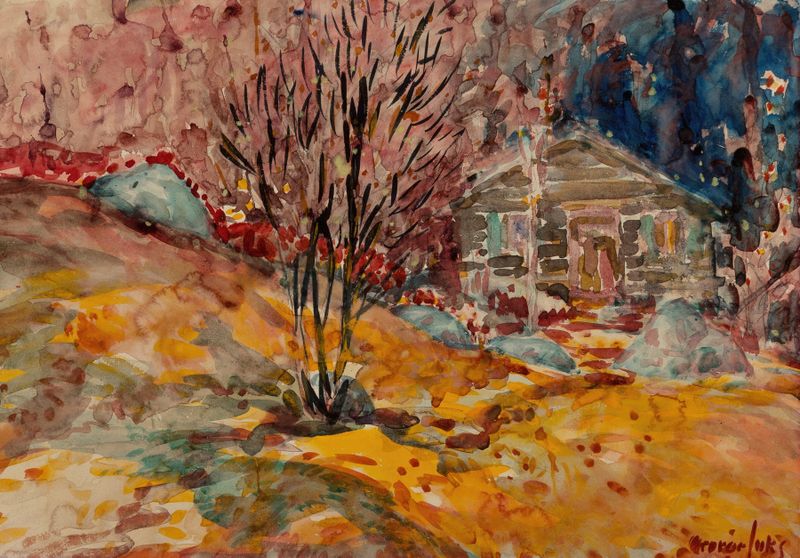
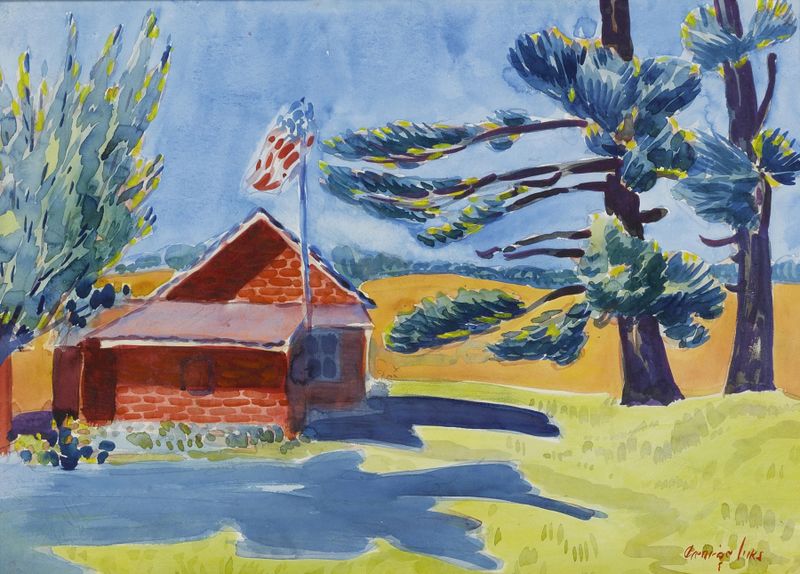
In a world that often overlooks the delicate whispers of innocence, a moment captured in color invites us to pause and reflect. Look to the center of the canvas, where a quaint saltbox house stands in serene solitude, surrounded by a lush expanse of greenery. The brushstrokes are bold yet tender, evoking a sense of warmth through earthy tones of cream and brown, contrasting sharply with hints of vibrant foliage. Notice how the light dances across the roof, casting gentle shadows that play with the viewer's perception, inviting exploration of the intimate details in the windows and doorframe. As your gaze wanders outward, subtle tensions reveal themselves.
The surrounding nature seems to breathe, embodying a sense of nostalgia that both comforts and unsettles. The juxtaposition of the sturdy structure and the delicate, ephemeral grass below hints at the fragility of childhood innocence against the relentless march of time. Every leaf and blade seems to tell a story of fleeting moments, reminding us of what was and what may never be again. Created in 1925, this piece reflects George Luks' fascination with American landscapes and everyday life.
In the backdrop of a post-World War I society, where the echoes of conflict lingered, Luks captured a serene retreat into simplicity. This painting serves as a testament to the artist's belief in the beauty of ordinary experiences, as the art world was increasingly leaning towards modernism and abstraction, pushing against the gentle memories encapsulated in his work.