
Scene from the Ten Days’ Campaign against the Belgian Revolt, August 1831 — History & Facts
In the realm of art, creation is not merely a task; it is a resurrection of moments gone by, a gallery of emotions preserved on canvas. Look closely at the dynamic interplay of light and shadow in the foreground; the soldiers stand poised, their uniforms glinting under the muted sun. Notice how the artist’s meticulous brushwork animates the tension within the scene, the varied hues of ochre contrasting sharply against the deep greens of the landscape. Your gaze should travel upward to the rolling clouds, where a storm threatens, mirroring the turmoil of the rebellion below.
Each detail draws you into the fray, inviting an exploration of the artist's intent and emotional resonance. The work captures not only a military engagement but also the raw essence of human strife and resilience. The expressions of the soldiers are a blend of determination and fear, suggesting a deeper emotional current flowing through this chaotic moment. The juxtaposition of the vibrant colors against the darker undertones speaks to the conflicting nature of war—valor intertwined with despair.
It is a tableau that hints at broader themes of sacrifice and the fragility of peace. Created between 1831 and 1835, this piece emerged during a period of intense political strife in Belgium, marked by the country’s fight for independence. Wouterus Verschuur was revisiting themes of conflict and heroism while navigating a rapidly changing art world, which increasingly favored emotional depth over mere representation. This work reflects not only the turbulence of its time but also a pivotal moment in Verschuur's own evolution as an artist, stepping into the narrative of history through his brush.
More Artworks by Wouterus Verschuur
Browse all →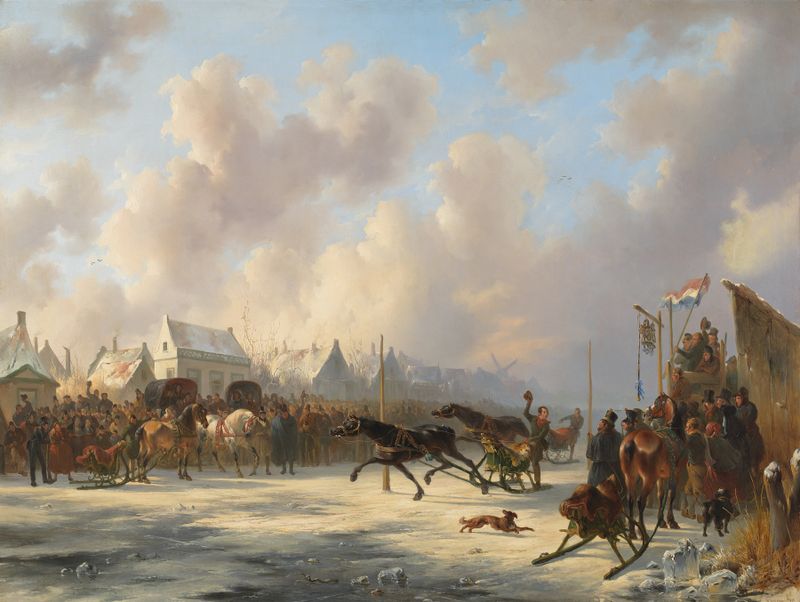
More Historical Art
Browse all →
The Night Watch Militia Company of District II under the Command of Captain Frans Banninck Cocq
Rembrandt van Rijn

Lincoln Memorial
Henry Bacon

The Third of May 1808
Francisco de Goya

Isaac and Rebecca, Known as ‘The Jewish Bride’
Rembrandt van Rijn

The Charge of the Mamelukes (1814)
Francisco de Goya

De vier ruiters van de apocalyps
Albrecht Dürer