Scene in a Cave — History & Facts
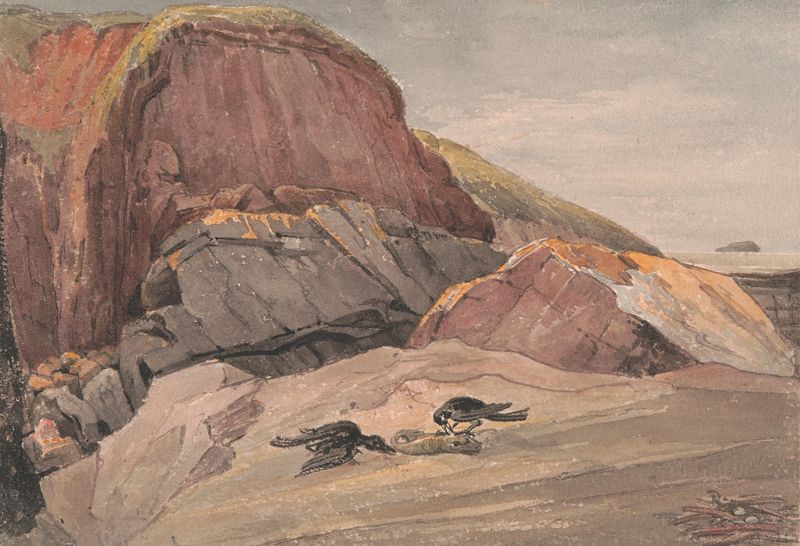
In the depths of the unknown, where light barely penetrates the darkness, there exists a hidden sanctuary where the divine might still whisper. Each stroke holds the weight of forgotten histories, inviting the viewer to contemplate the profound mysteries of existence. Look closely at the right side of the canvas, where a flicker of light breaks through the shadows, illuminating the rugged textures of the cave walls. The interplay of warm ochres and deep umbers creates a sense of depth, drawing your eye inward, as if beckoning exploration.
Notice the delicate brushwork that captures the fluidity of the rock formations, suggesting life in their stony stillness. Each contour is meticulously rendered, evoking both the rawness of nature and the reverence of an ancient ritual space. The cave serves not just as a physical space but as a metaphor for introspection and the search for divinity. The contrast between light and dark symbolizes the eternal struggle between knowledge and ignorance.
Small details, like the subtle glimmer on the cave floor, hint at the presence of water — a source of life and purity — while the looming shadows signify the fears we harbor in the depths of our minds. This duality invites viewers to reflect on their inner landscapes and the divine connections they seek. George Cumberland created Scene in a Cave in an era marked by intense exploration of the natural world and spiritual themes. While little is documented about the specific date of this piece, Cumberland was active in the early 19th century, during a time when Romanticism was gaining momentum.
His work often bridged the gap between nature and spirituality, reflecting a personal quest for understanding amid the rapidly changing landscape of art and society.