Scene in Devonshire — History & Facts
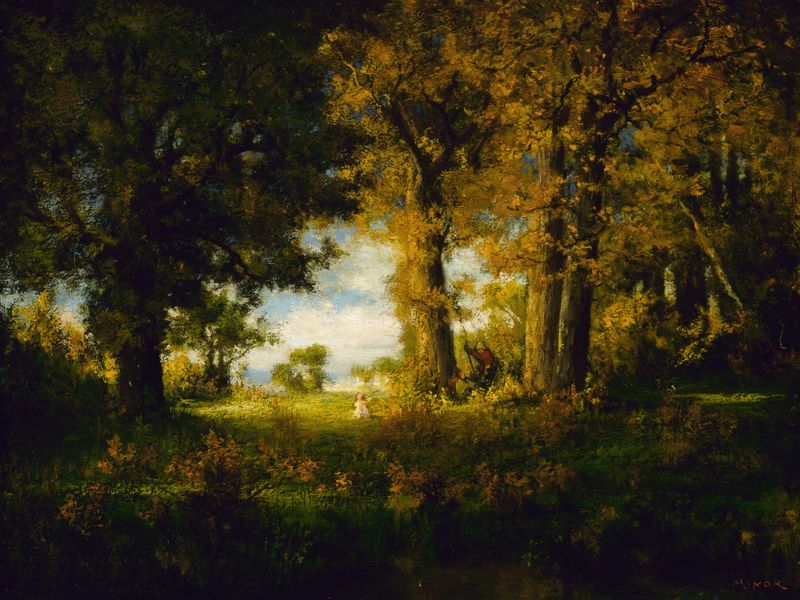
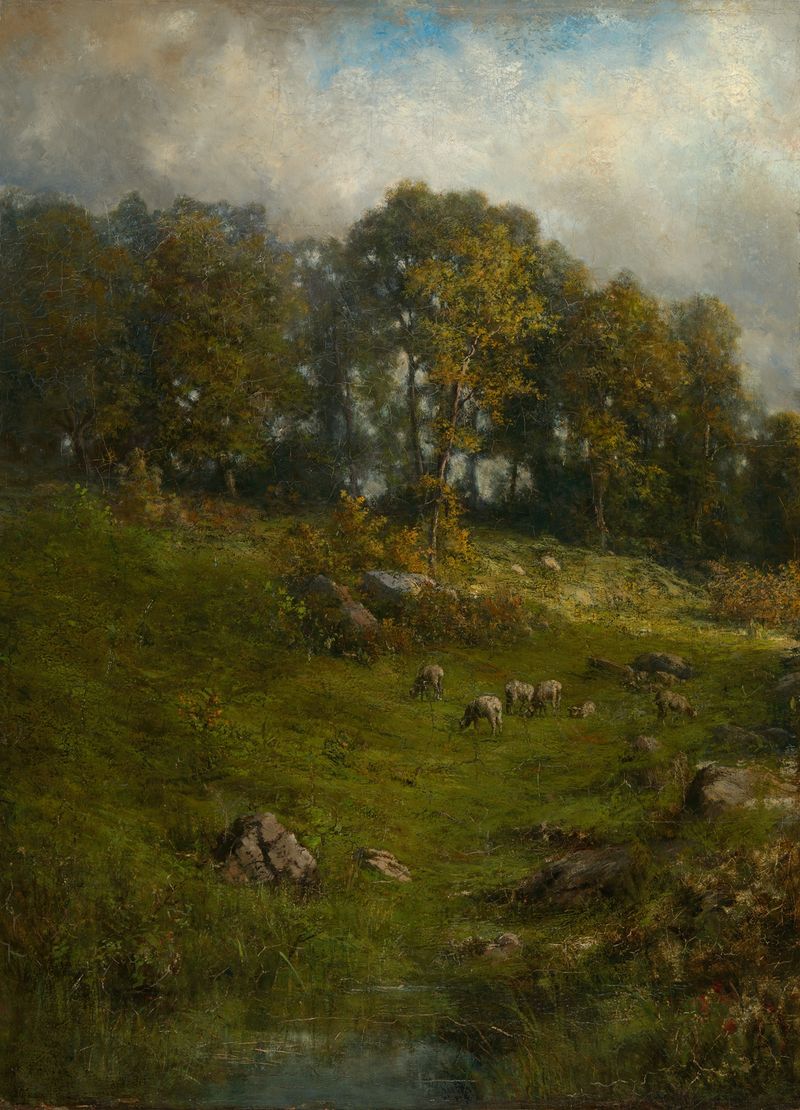
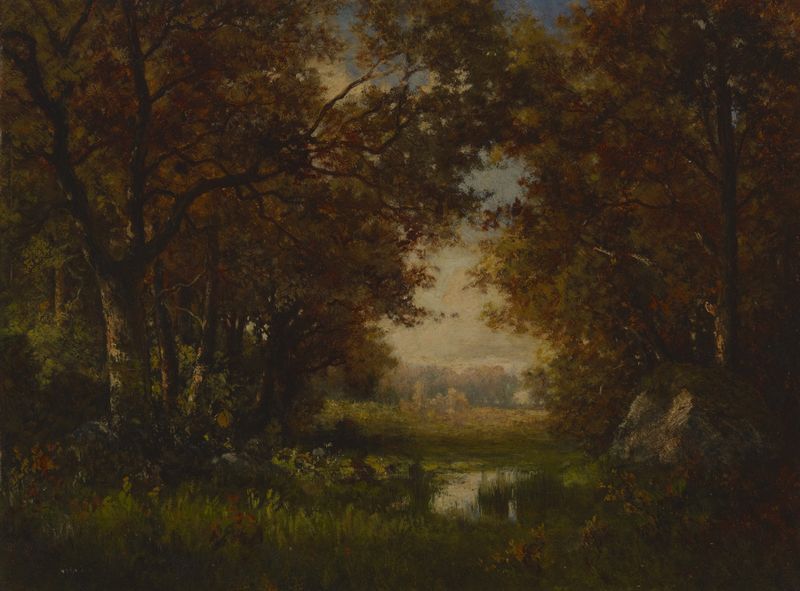
Can beauty exist without sorrow? In Scene in Devonshire, a quiet landscape unfolds, inviting the viewer to ponder the delicate interplay between joy and melancholy. Look to the left, where a winding stream meanders gently through the lush greenery, reflecting the soft hues of a late afternoon sky. The artist's deft brushwork captures the glistening surfaces of the water and the vibrant patches of wildflowers that dance in the breeze. Notice how the sunlight filters through the tree branches, creating dappled patterns on the ground, a testament to the fleeting nature of beauty.
The composition draws the eye across the canvas, leading us from the radiant foreground into the tranquil depths of the landscape. Yet, beneath this idyllic facade lies an undercurrent of tension. The turbulent sky, laden with clouds, hints at an impending storm, suggesting that peace is often transient. The movement of the stream and the swaying flowers illustrates the impermanence of both nature and life.
Each brushstroke conveys a sense of yearning, reflecting a deeper emotional landscape where joy and sorrow coexist. Robert Crannell Minor painted this work between 1880 and 1890, during a time when the Impressionist movement was reshaping the world of art. Living in New York but often traveling through rural England, Minor was inspired by the interplay of light and color in nature. Amidst the rise of modernity, he sought to capture the serenity of rural scenes, creating a dialogue between the beauty of the landscape and the complexities of human emotion.