Scene in the Forest of Fontainebleau — History & Facts
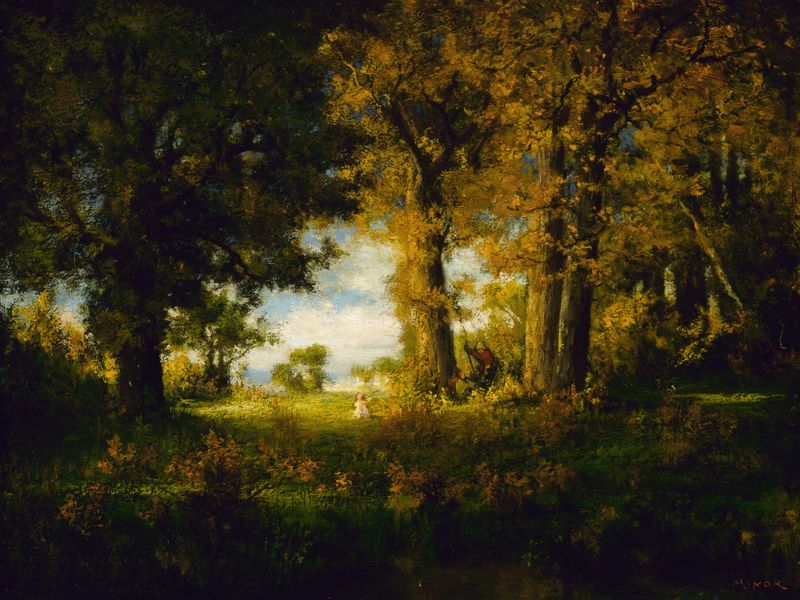
In the quiet of nature, where beauty often conceals deeper truths, how do we confront the shadows lurking between vibrant leaves and sunlight? Look to the left at the slender trunks of towering trees, their bark a tapestry of browns and greens intermingled in an embrace of nature’s artistry. Notice how dappled light filters through the foliage, casting playful patterns on the forest floor, inviting the viewer to step closer and lose themselves amid the tranquil chaos. The painter's use of color exemplifies a chiaroscuro technique, where light and dark coalesce to reveal both comfort and an underlying unease, evoking a space that feels both alive and eerily silent. Deeper within the scene, small details hint at narratives of betrayal and longing.
Observe the way the winding path disappears into the dense underbrush, suggesting a journey interrupted by secrets. The juxtaposition of the serene woodland setting and the hint of hidden turmoil creates a tension that resonates, as if the trees themselves are witnesses to whispered confessions and hidden regrets. Each stroke invites contemplation not only of nature's beauty but also of the human heart's vulnerabilities. During the 1880s, the artist was immersed in the American Impressionism movement while living in France, shaping his unique style.
This period was marked by a fascination with capturing the ephemeral quality of light and atmosphere. While the world around him was experiencing industrial transformation and societal shifts, he found solace in the quiet majesty of the Fontainebleau forest, reflecting a desire to escape and simultaneously confront the emotional landscapes of life.