
Scene in the Catskills — History & Facts
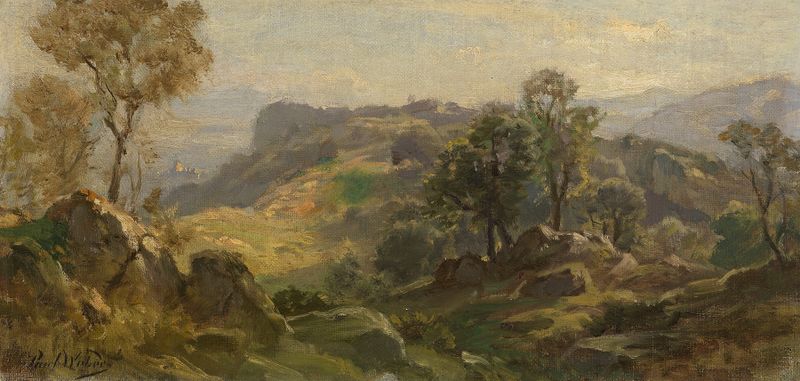
Could beauty survive in a century of chaos? This question echoes through Scene in the Catskills, where the viewer is invited into a moment suspended between tranquility and awakening. Look to the left at the gentle slope of the verdant hills, their rich greens whispering against the deep blues of the sky. The composition is balanced, with a distant mountain range framing the horizon, while the light filtering through the branches creates a dappled effect on the forest floor. Weber’s brushstrokes breathe life into the foliage, giving each leaf a subtle vibrance that captures the essence of nature’s serenity. In this painting, contrasts abound—between the lushness of the landscape and the rugged mountains, between light and shadow, and between the stillness of the scene and the hidden pulse of life within it.
The way the sunlight beckons through the trees suggests a moment of awakening, as if nature herself is taking a breath. The serenity of the Catskills might evoke a sense of nostalgia, reflecting humanity's desire for peace amidst the chaos of the world outside. In 1858, while Weber painted this piece, he was deeply influenced by the burgeoning American landscape tradition and the Romantic movement. Living in a time of rapid industrialization, he sought refuge in the natural world, illustrating the beauty that remained untouched.
This period marked a significant shift in the art world, as artists began to embrace the notion of capturing the American experience, making this painting a quiet yet powerful statement of hope and refuge.
More Artworks by Paul Weber
Browse all →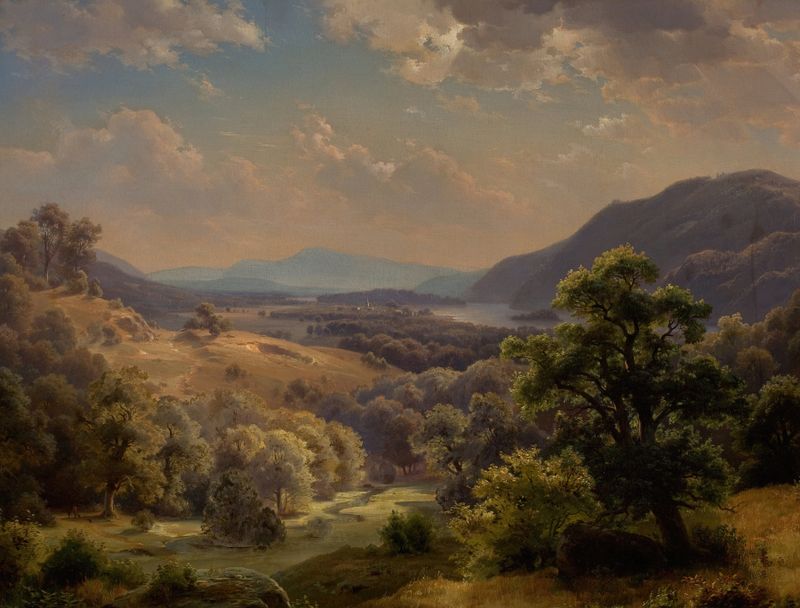
Extensive Landscape with Valley and Mountains (The Susquehanna Valley)
Paul Weber
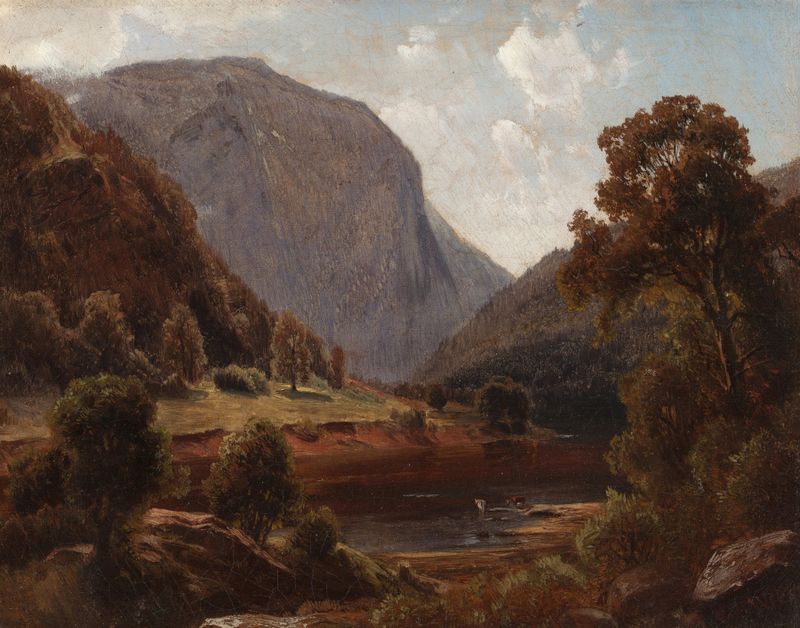
Hudson River Landscape
Paul Weber

Blick auf den Chiemsee (Studie)
Paul Weber
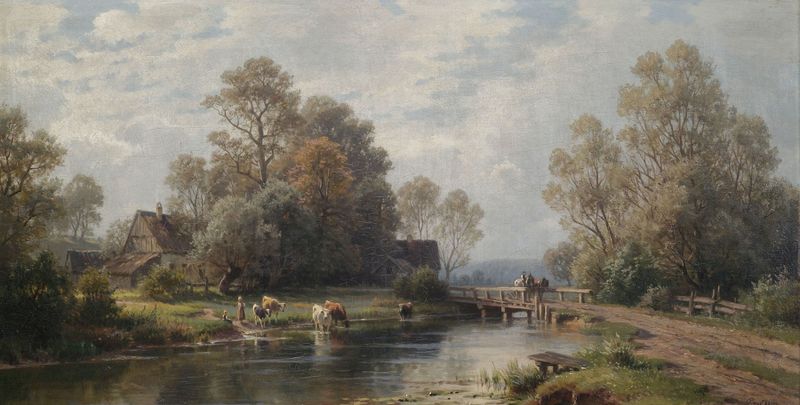
Summer River Landscape near a Farmstead
Paul Weber
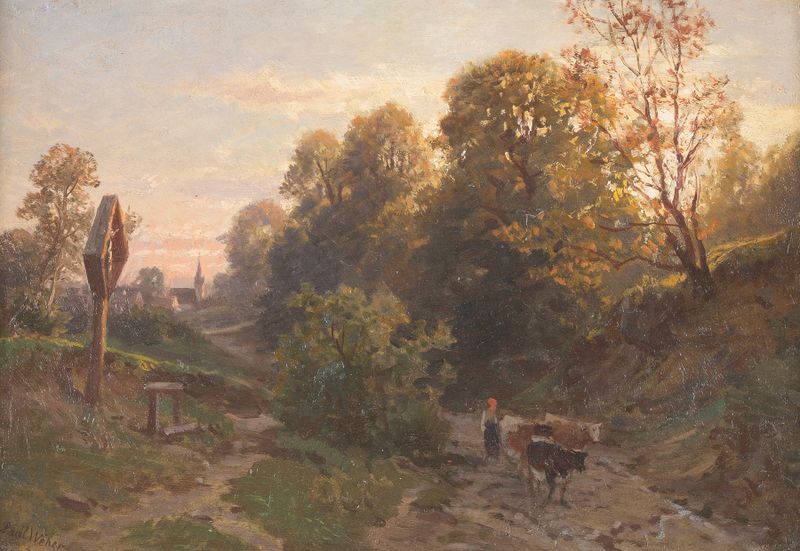
Evening on the countryside
Paul Weber

Sommerlandschaft mit Bauernhaus und Mühle
Paul Weber
Serpentaralandschaft bei Olevano
Paul Weber





