
Serpentaralandschaft bei Olevano — History & Facts
Did the painter know this moment would outlive them? In a world of constant change, the act of capturing a single, fleeting transformation can feel like a defiance against time itself. Focus on the lush greenery that spills across the canvas, drawing your gaze into a landscape alive with motion. The winding road, a serpentine path, leads your eyes through a tapestry of hills and valleys, where dappled sunlight spills over the undulating terrain. The palette, rich with vibrant greens and warm earth tones, breathes life into the scene, while the delicate brushwork evokes a sense of tranquility, inviting you to wander beyond the frame. Yet, beneath this picturesque beauty lies a deeper narrative.
The contrast between the vibrant foliage and the foreboding shadows creates a tension that speaks to transformation — a reminder of nature’s cycles and the impermanence of beauty. The serpentine path mirrors the journey of life, winding through trials and joys, while the distant mountains stand still, observing these ephemeral changes. Each brushstroke captures not just the landscape but also an emotional landscape of transition and growth. In 1860, Paul Weber was residing in Germany, grappling with the rise of Romanticism that emphasized emotion and nature's beauty.
This period marked a shift in his artistic focus, moving toward capturing the sublime essence of landscapes. As the art world embraced the depiction of nature as an emotional experience, Serpentaralandschaft bei Olevano emerged as a testament to both the artist's personal evolution and the era's embrace of transformation.
More Artworks by Paul Weber
Browse all →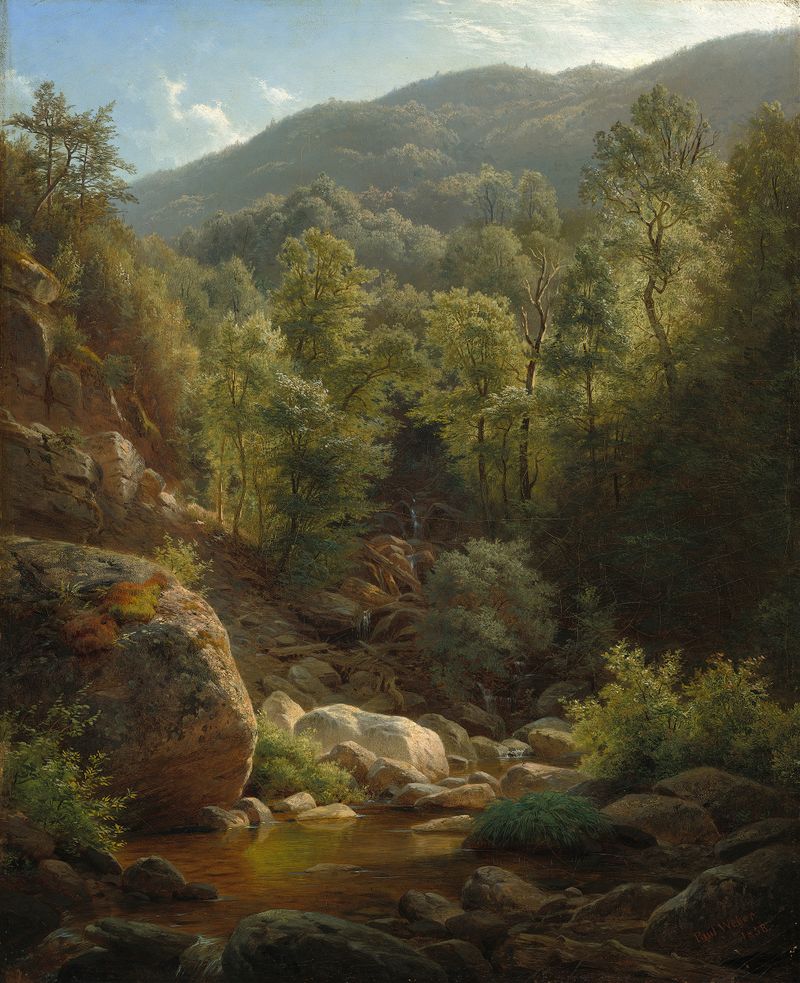
Scene in the Catskills
Paul Weber
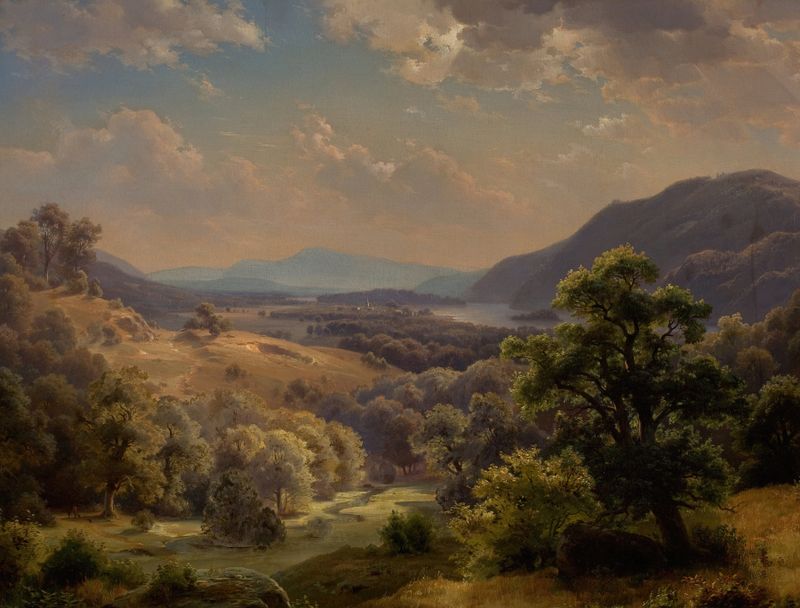
Extensive Landscape with Valley and Mountains (The Susquehanna Valley)
Paul Weber
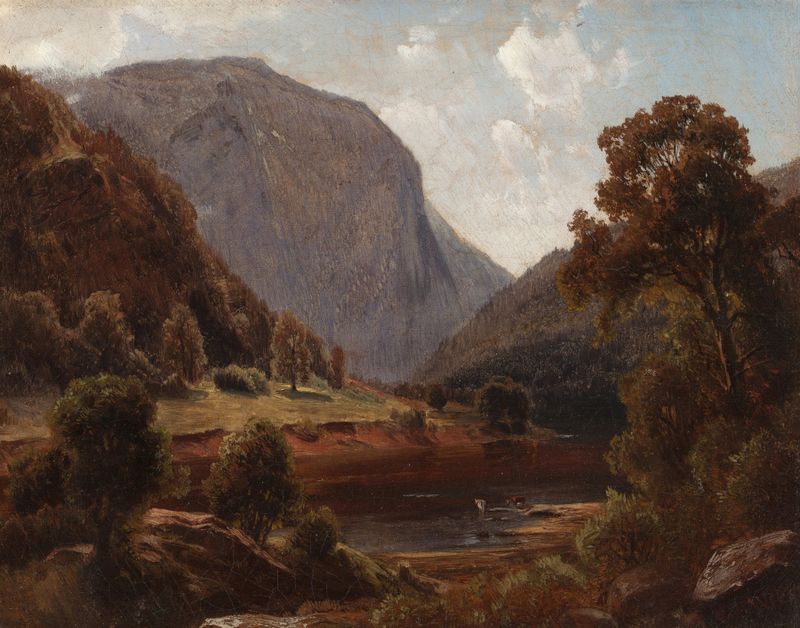
Hudson River Landscape
Paul Weber

Blick auf den Chiemsee (Studie)
Paul Weber
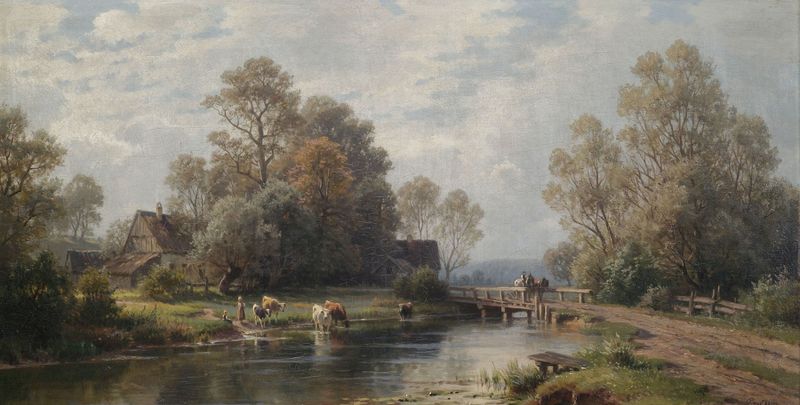
Summer River Landscape near a Farmstead
Paul Weber
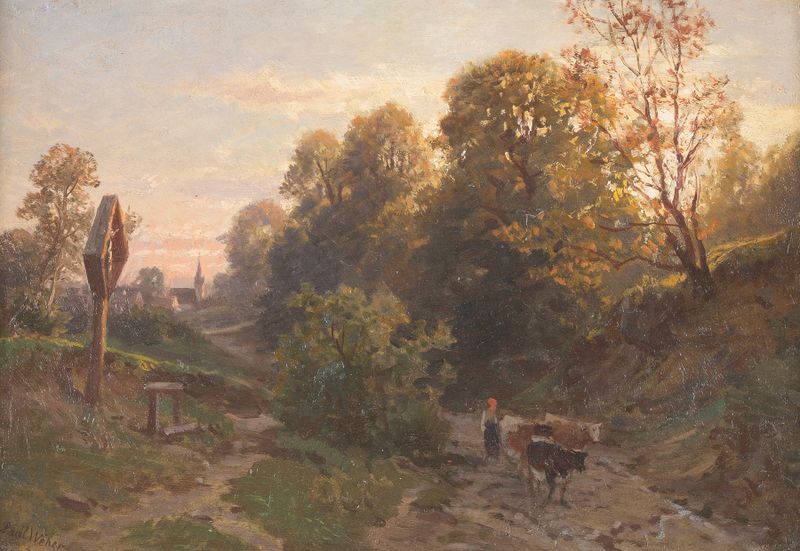
Evening on the countryside
Paul Weber

Sommerlandschaft mit Bauernhaus und Mühle
Paul Weber





