
Schaffhouse — History & Facts
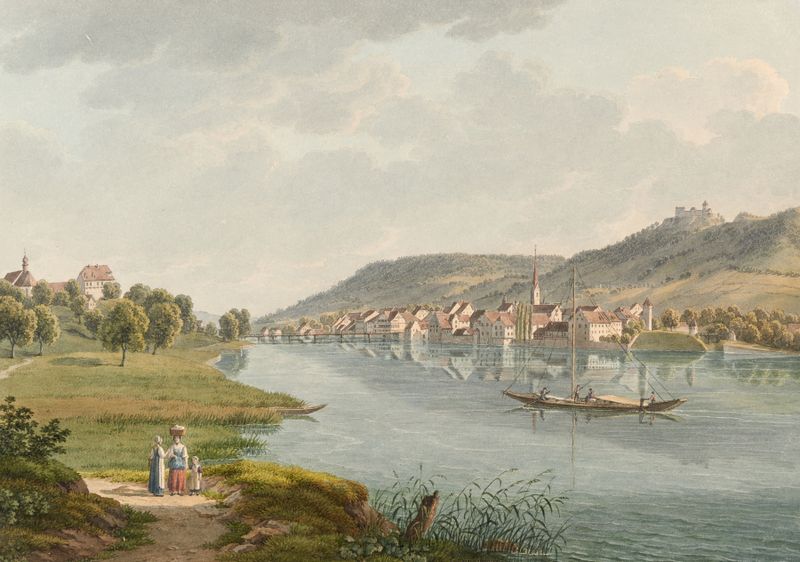
Could beauty survive in a century of chaos? This question lingers in the air, beckoning us to explore the depths of human expression amidst turmoil. Look closely at the delicate brushwork that captures the interplay of light and shadow, revealing contours of the landscape with an almost ethereal glow. Notice how the muted colors create a serene atmosphere, inviting contemplation. The gentle undulations of the hills guide your gaze across the canvas, while a subtle interplay of greens and blues evokes both tranquility and a sense of longing. In the foreground, tiny figures appear as whispers against the vast backdrop, suggesting the insignificance of humanity in the face of nature's grandeur.
The painting speaks to a duality: the beauty of the landscape contrasted with the potential chaos looming beyond its edges. Here, the stillness acts as a refuge, a fleeting moment where awe prevails amidst the uncertainty of existence. Luttringhausen painted during a time when Europe was grappling with significant socio-political upheavals, though the exact date of Schaffhouse remains elusive. Active in the late 19th century, his work reflects a shift towards romanticism and an appreciation for nature's sublime beauty, resonating with the era’s desire for solace and inspiration in the face of change.
More Artworks by Johann Heinrich Luttringhausen
Browse all →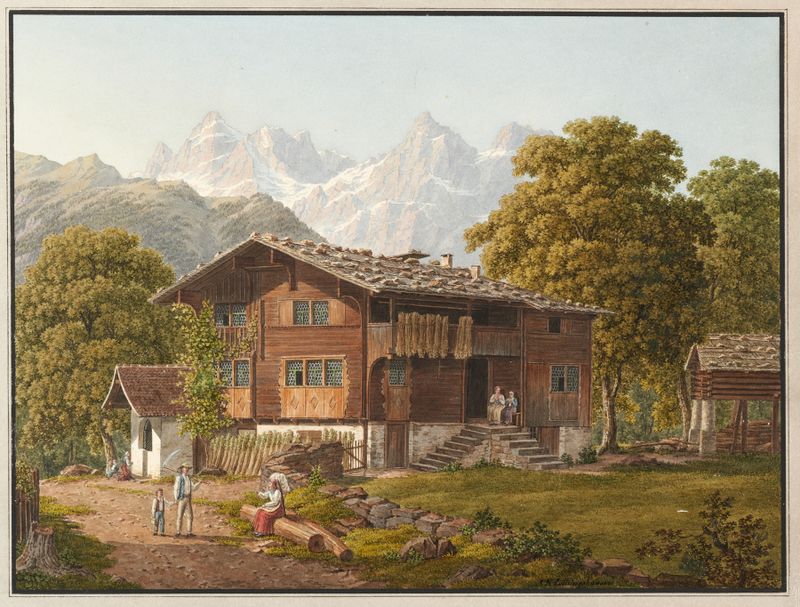
Ansicht eines Urner Bauernhauses
Johann Heinrich Luttringhausen

Village de Hinter Rhin et source du Rhin
Johann Heinrich Luttringhausen

Rheinau
Johann Heinrich Luttringhausen
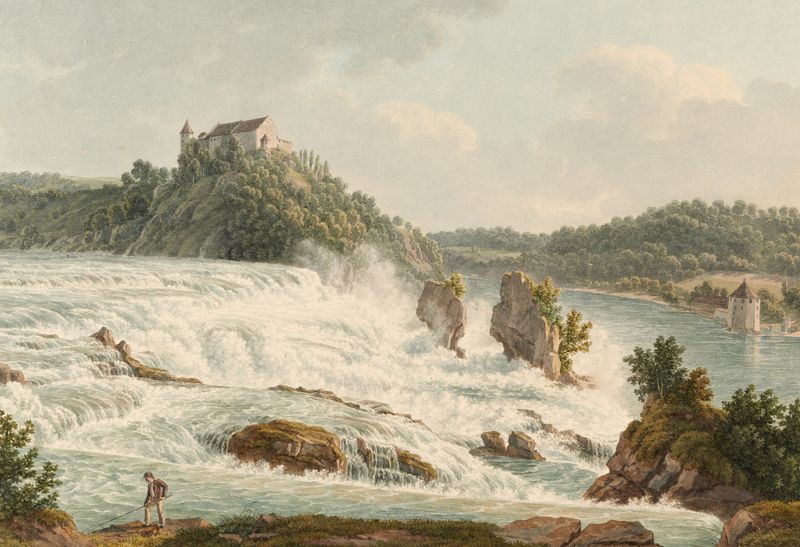
Chute du Rhin 2
Johann Heinrich Luttringhausen
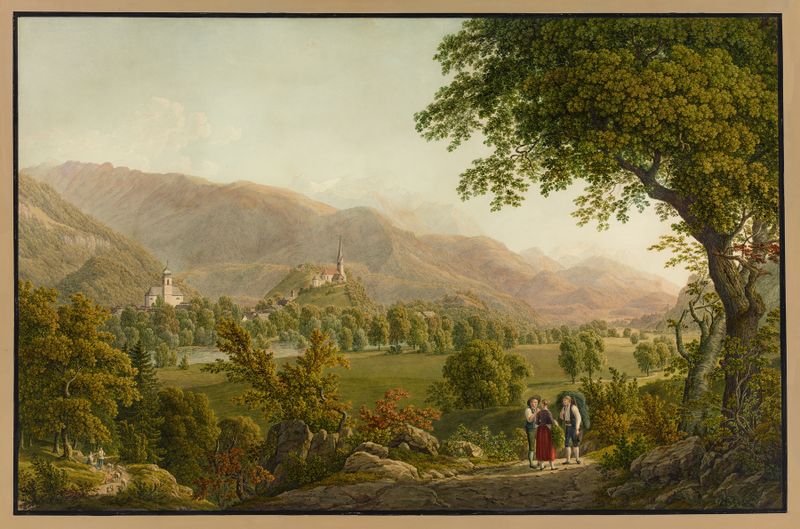
Ansicht von Domat
Johann Heinrich Luttringhausen

Basle Côté du levant
Johann Heinrich Luttringhausen
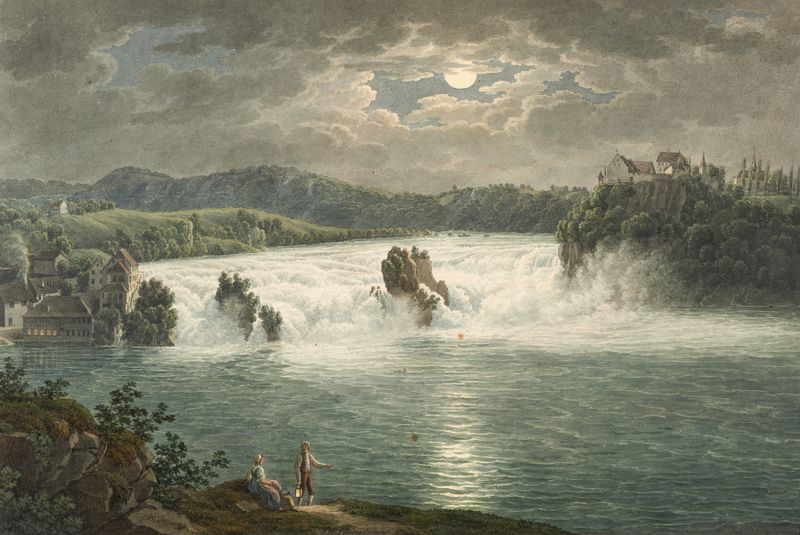
Chute du Rhin
Johann Heinrich Luttringhausen

Laufenburg
Johann Heinrich Luttringhausen
Vue de Stein
Johann Heinrich Luttringhausen

Schaffhouse.
Johann Heinrich Luttringhausen





