
Schilderij door Aert Pietersz, Anatomische les van Dr. Sebastiaen Egbertsz de Vrij — History & Facts
It holds the weight of truth and deception, a reminder that every revelation carries its shadows. In the world of medicine and art, the duality of discovery and betrayal plays out in delicate strokes and vivid hues. Focus your gaze on the solemn figure at the center, the doctor poised with careful precision as he gestures towards the dissected body. The stark contrast of the pale flesh against the dark, rich background heightens the tension of the scene, drawing attention to the vulnerability of the human form.
Notice how the light illuminates the doctor's face, casting dramatic shadows that hint at a moral struggle — the pursuit of knowledge against the ethics of life. Beneath the surface, the painting speaks of the betrayal inherent in the act of dissection. The lifeless body, once a vessel of dreams and aspirations, now lays bare, stripped of its identity. The onlookers, a mix of curiosity and horror etched on their faces, embody the conflict between scientific advancement and the respect for human dignity.
Each detail — the doctor’s furrowed brow, the students’ rapt attention — encapsulates the tension between enlightenment and the loss of the essence of life. Created between 1890 and 1910, this work emerged during a period of rapid medical progress and ethical scrutiny. The artists, Vinkenbos and Dewald, were part of a broader movement that sought to intertwine art and science, reflecting the tumultuous exploration of human anatomy in a time when such practices were both revolutionary and controversial. This painting captures not only an anatomical lesson but also the charged atmosphere of a society grappling with the implications of its own advancements.
More Artworks by Vinkenbos & Dewald
Browse all →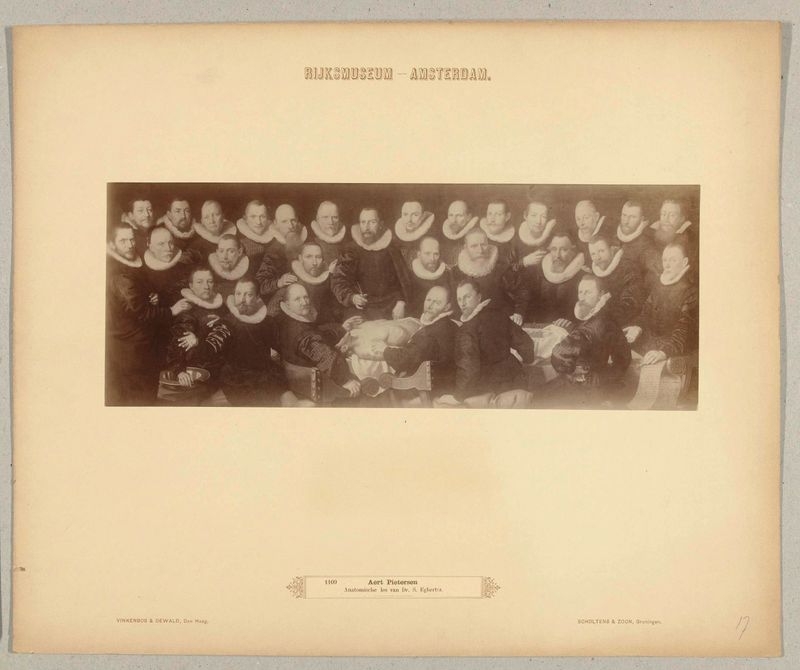
Schilderij door Aert Pietersz, Anatomische les van Dr. Sebastiaen Egbertsz de Vrij
Vinkenbos & Dewald
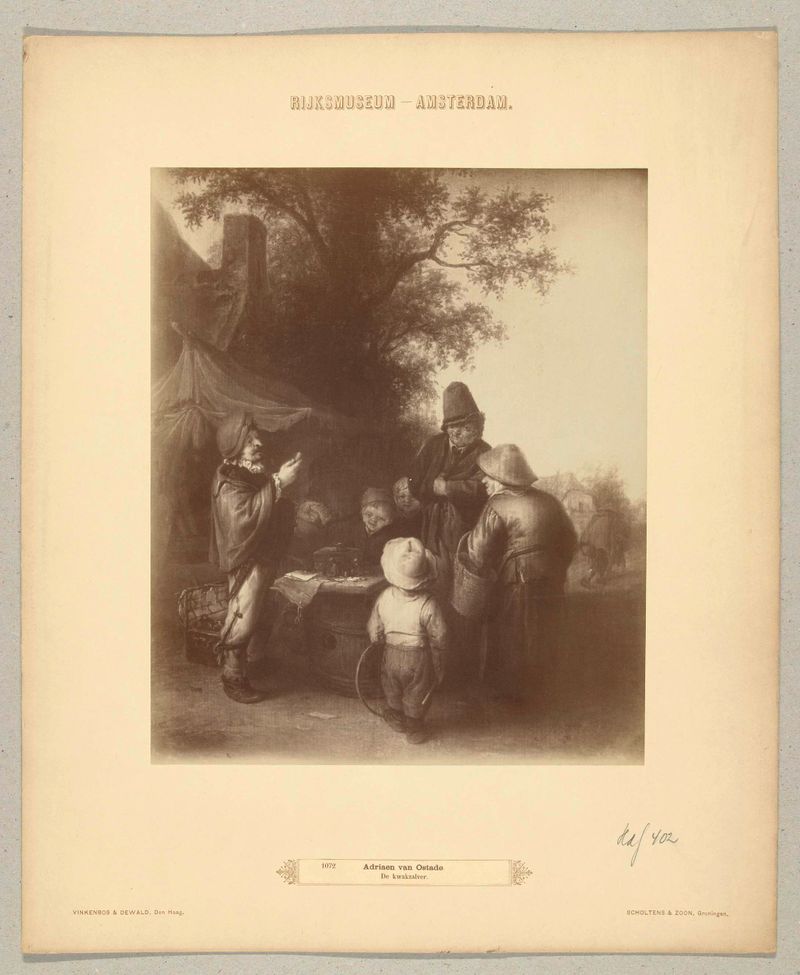
Schilderij door Adriaen van Ostade, De kwakzalver
Vinkenbos & Dewald

Schilderij door Paulus Potter, De berejacht
Vinkenbos & Dewald

Schilderij door Nicolaas Bertin, Suzanne in het bad
Vinkenbos & Dewald

Schilderij door Pieter van der Werff, De jonge Hercules
Vinkenbos & Dewald
More Historical Art
Browse all →
The Night Watch Militia Company of District II under the Command of Captain Frans Banninck Cocq
Rembrandt van Rijn

Lincoln Memorial
Henry Bacon

The Third of May 1808
Francisco de Goya

Isaac and Rebecca, Known as ‘The Jewish Bride’
Rembrandt van Rijn

The Charge of the Mamelukes (1814)
Francisco de Goya

De vier ruiters van de apocalyps
Albrecht Dürer