Scène bergère aux environs de Lausanne — History & Facts
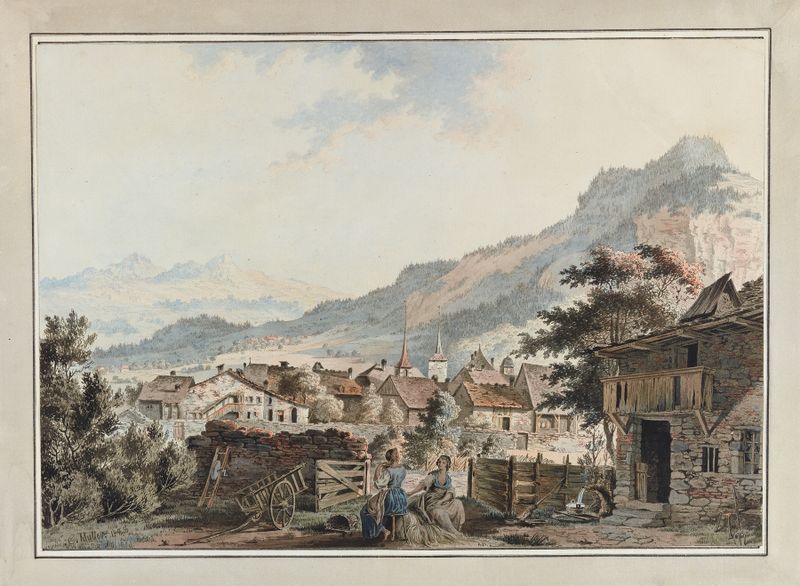
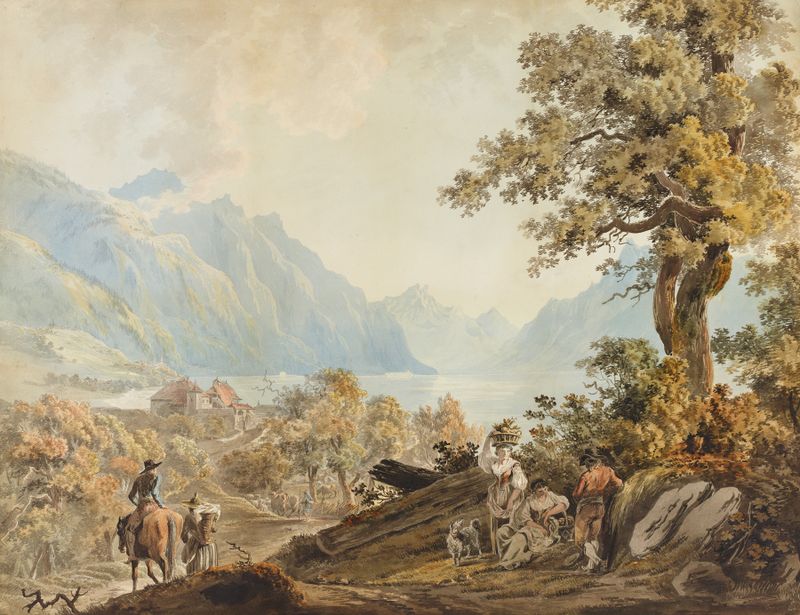
Can paint confess what words never could? Beneath the tranquil surface of Scène bergère aux environs de Lausanne, layers of fear and uncertainty resonate, inviting the viewer to explore the unsaid. Look to the serene pastoral scene, where gentle hills cradle a shepherdess, her gaze distant and contemplative. Notice how the soft hues of green and blue envelop her figure, yet an undercurrent of darkness lurks in the corners of the canvas. The light, almost ethereal, bathes her in a fleeting warmth, contrasting with the shadows that hint at a deeper unease, a sense of isolation that echoes through the landscape.
The simple act of her tending to sheep becomes a poignant reflection on solitude and the weight of unspoken thoughts. Consider the juxtaposition of the idyllic surroundings with the shepherdess's expression. Her slight frown and furrowed brow speak volumes of an internal struggle, perhaps a fear tethered to the vastness of the world around her. The delicate balance of color and form serves not only to depict serenity but to expose the fragility of the moment; a stillness that could shatter with the whisper of a breeze.
This tension transforms the scene from merely picturesque to an exploration of emotional depth, inviting an uncomfortable intimacy with her plight. Müllener painted this work during a time when the Romantic movement was gaining momentum, focusing on individual experience and nature's emotional landscape. The exact date remains uncertain, but it embodies the era's sensitivity to the intricate dance between tranquility and turmoil. Living in Switzerland, he found inspiration in his natural surroundings, crafting scenes that captured beauty while subtly revealing the anxieties of human existence.