Vuë de la Ville d’Aigle sur la route des Sallines — History & Facts
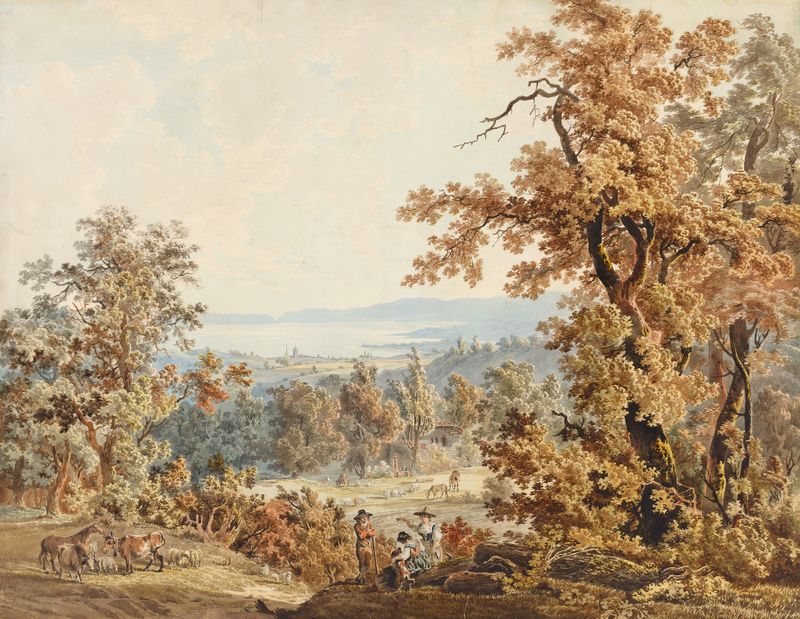
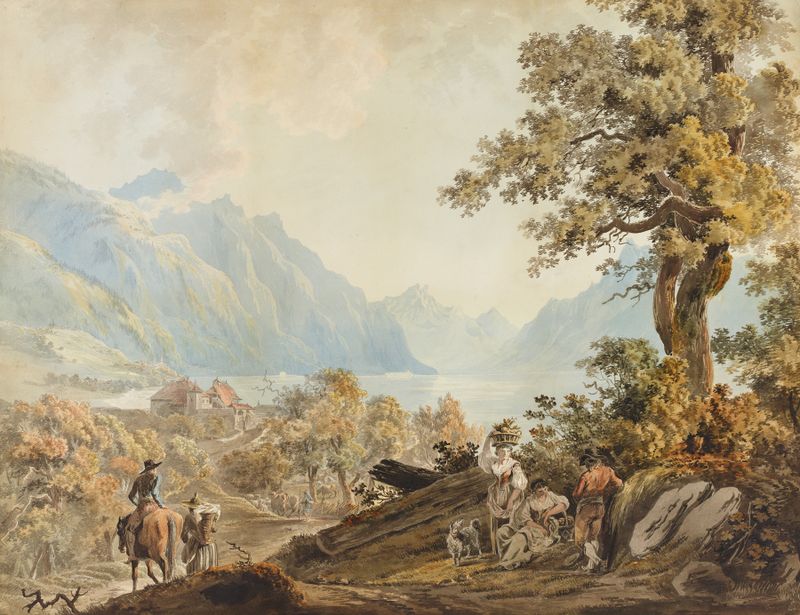
In the vibrant yet tender embrace of nature, innocence finds a sanctuary, cradled by the pastoral charm of a small town. Look to the foreground, where a soft, rolling landscape unfolds beneath a serene sky. The delicate hues of green and golden fields invite your gaze, while the meticulously rendered architecture of the town glimmers in the dappled sunlight. Notice how the artist employs a pastel palette, blending earth tones and gentle blues to evoke the tranquility of this hidden gem, creating a sense of harmony between humankind and nature. Yet, delve deeper into the subtle contrasts at play.
The juxtaposition of the quaint buildings against the expansive, open fields speaks to the tension between civilization and the wild. The scattered figures, seemingly absorbed in their daily routines, reflect a sense of innocence and simplicity, almost untouched by the complexities of the outside world. Each brushstroke echoes a longing for the slower rhythms of life, a stark contrast to the cacophony of industrialization burgeoning in the artist's era. Created during a time when Romanticism was flourishing, Vuë de la Ville d’Aigle sur la route des Sallines reflects Johann Karl Müllener’s deep appreciation for the natural world.
The precise date remains unrecorded, but it is believed he painted this serene landscape in the early 19th century while residing in Switzerland, amidst a growing sentiment that sought solace in the beauty of untouched landscapes amidst the industrial upheaval of Europe.