Vuë du Chateau d’Aigle — History & Facts
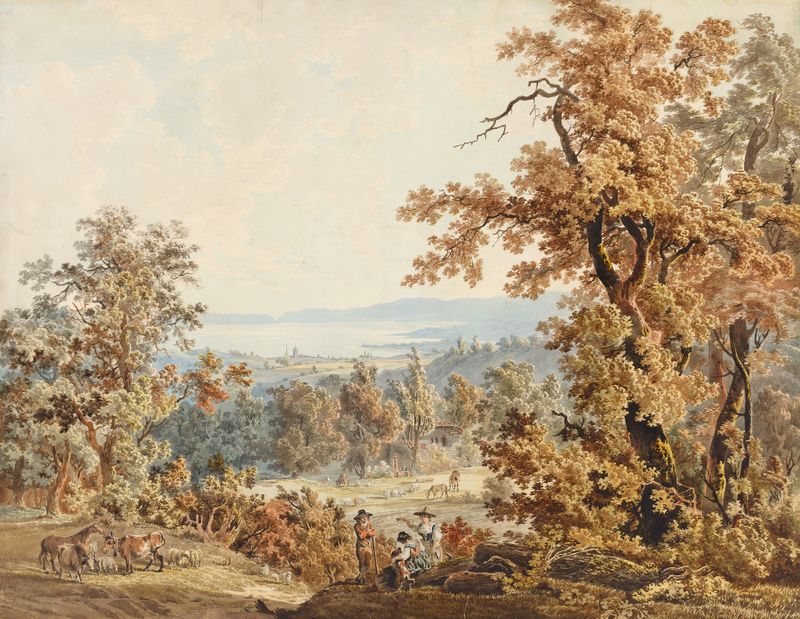
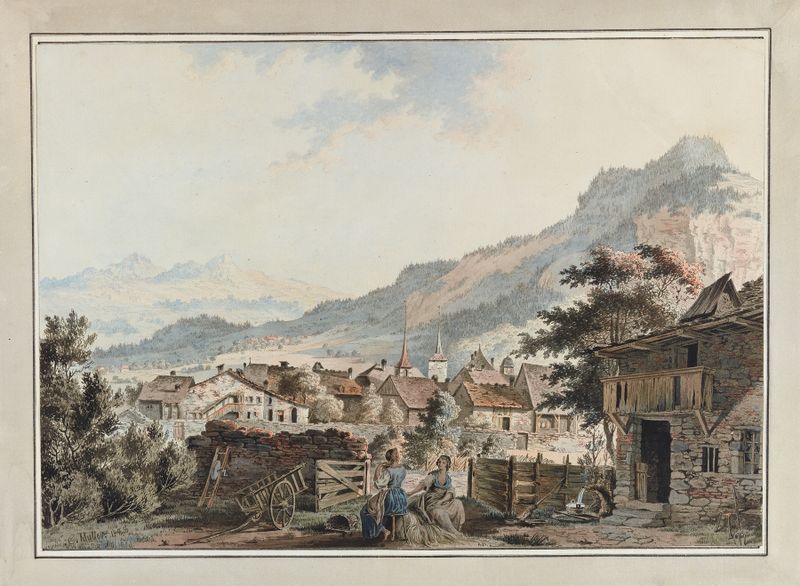
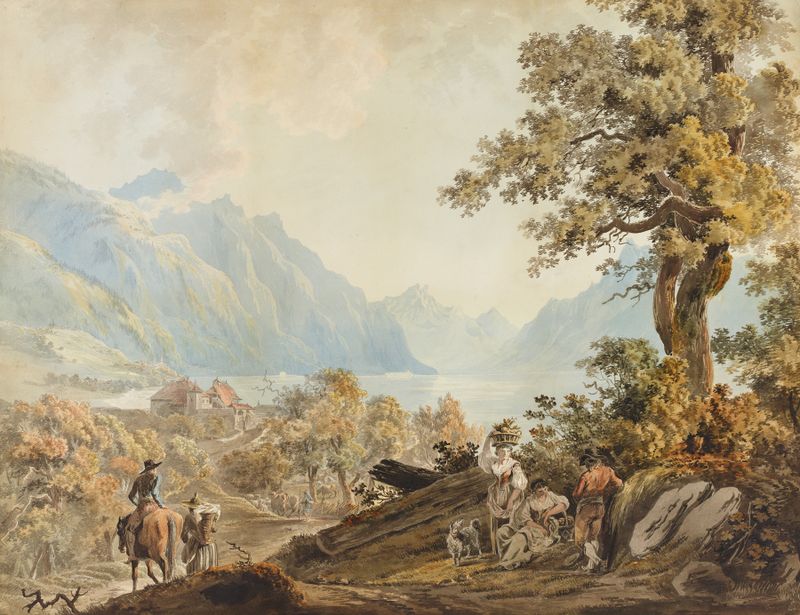
Could beauty survive in a century of chaos? Look closely at the interplay of light and shadow in Vuë du Chateau d’Aigle, where a tranquil landscape unfolds before you. The castle stands resolutely atop its perch, surrounded by lush greenery that seems to cradle it in a protective embrace. Notice how the warm hues of the setting sun illuminate the weathered stones, casting a golden glow that evokes a sense of nostalgia for an era long past. Yet, the contrast between the serene foreground and the tumultuous mountains in the background tells a different story.
The towering peaks, shrouded in mist, hint at challenges lurking beyond the idyllic scene. As you explore the composition, the vivid greens and soft blues harmonize, drawing your gaze from the castle’s sturdy silhouette to the flowing river, a symbol of time's relentless passage. It’s as if the painting captures a fleeting moment, inviting you to reflect on the layers of history embedded within the landscape. Müllener created this piece during a period marked by upheaval and transformation in Europe.
While the precise date of this artwork remains unknown, the artist was active in the late 18th and early 19th centuries, a time when Romanticism began to flourish, emphasizing emotion and the sublime in nature. His work mirrors the yearning for stability and beauty amidst the chaos of shifting political landscapes and societal change, allowing viewers a moment to revel in the tranquility life can offer despite external turmoil.