Südliche Ansicht im Abendrot — History & Facts
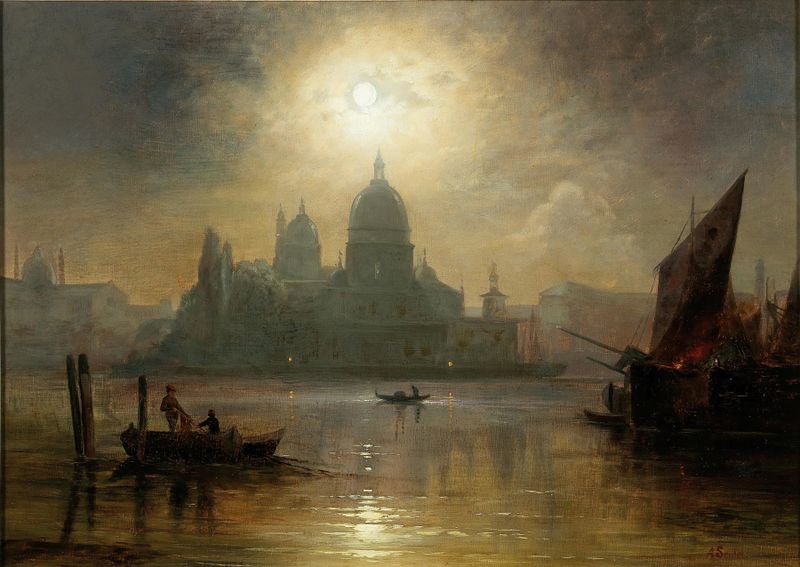
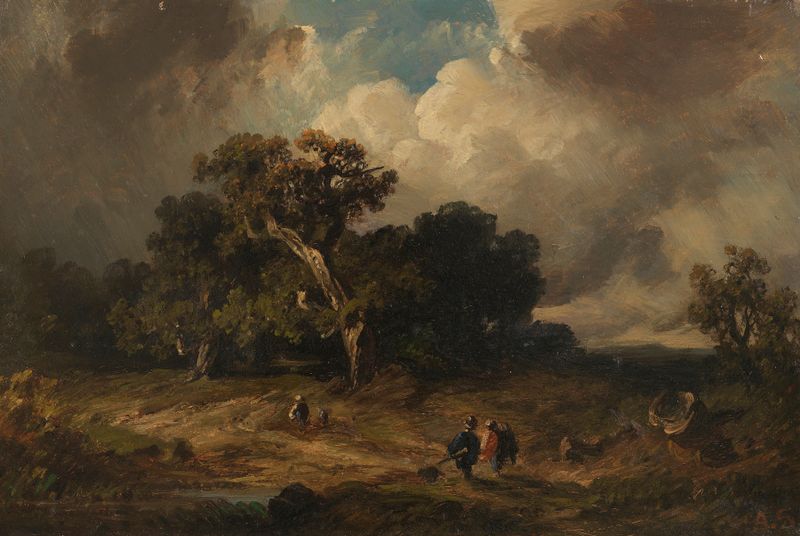
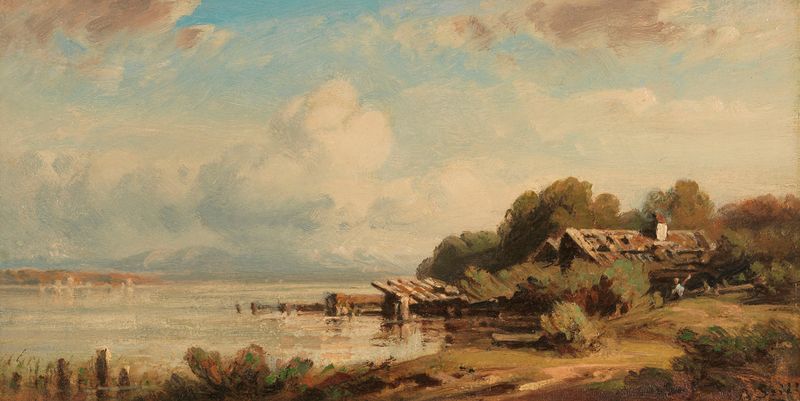
Could a single brushstroke hold eternity? In Südliche Ansicht im Abendrot, the convergence of light and color beckons us to explore the divine presence within the natural world. Look to the horizon, where the sky melts into hues of crimson and gold, casting a shimmering glow across the landscape. Notice how the soft, swirling clouds seem to cradle the fading sun, their delicate forms echoing the tranquility of twilight. The painter employs a palette rich with warm tones, seamlessly blending them to create a sense of harmony and serenity, inviting the viewer to linger in this ephemeral moment. Yet, beyond the beauty lies a tension between the fleeting nature of the scene and the eternal cycle of day turning to night.
The juxtaposition of the vibrant sky against the darkening land evokes a sense of peace entwined with melancholy, a reminder of life's transience. Small details, like the silhouetted trees at the fore, ground the ethereal quality of the sky, suggesting a connection between the earthly and the divine. August Seidel created this work during a time when Romanticism was flourishing in the art world, emphasizing emotion and the sublime beauty of nature. Although the exact date remains unknown, his focus on capturing the essence of the landscape reflects his personal journey and the broader cultural shift toward appreciating the spiritual aspects of nature in the late 19th century.
This painting stands as a testament to that transformative era, urging viewers to contemplate the divine in daily existence.