Sea View Of Cape Poge Lighthouse — History & Facts
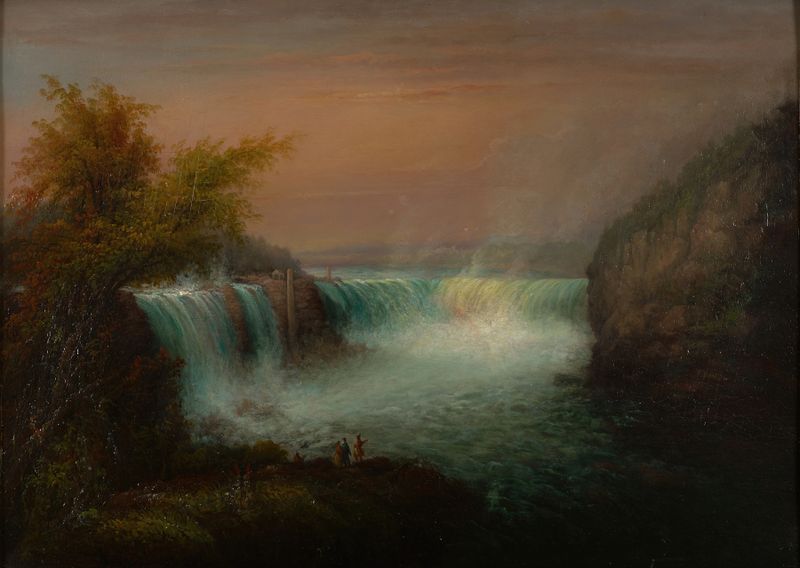
Who listens when art speaks of silence? In Sea View Of Cape Poge Lighthouse, a haunting serenity envelops the canvas, inviting contemplation amidst the tumult of existence. Look to the left, where the lighthouse stands sentinel against a brooding sky. The brushwork captures the relentless motion of the waves, their frothy edges curling like whispers of an unseen threat. The palette transitions from deep cobalt blues to soft grays, a reflection of both calm and chaos, while the lighthouse beams a stark white—an emblem of hope cutting through the darkness.
Notice how the light subtly contrasts with the horizon, suggesting an unsettling tension between tranquility and the violent forces of nature. Hidden within this maritime landscape are signs of conflict, both external and internal. The turbulent sea evokes feelings of unease, hinting at the violence that lies beneath the surface—nature's fury ready to erupt. Furthermore, the solitary figure of the lighthouse keeper stands resolute; he is a silent witness to nature's power and the fragility of human existence.
The juxtaposition between the towering lighthouse and the tumultuous waves serves as a reminder of the delicate balance between safety and peril. During the 1840s, Charles Hubbard painted this work while navigating a world marked by change and uncertainty, both in his personal life and the broader art community. Emerging from a period of Romanticism, artists were beginning to explore the complexities of nature and human emotion. Hubbard's engagement with the volatile coastal scene reflects not only his artistic evolution but also a societal grappling with the untamed forces of the world around them.