View of Goat Island and Niagara Falls — History & Facts
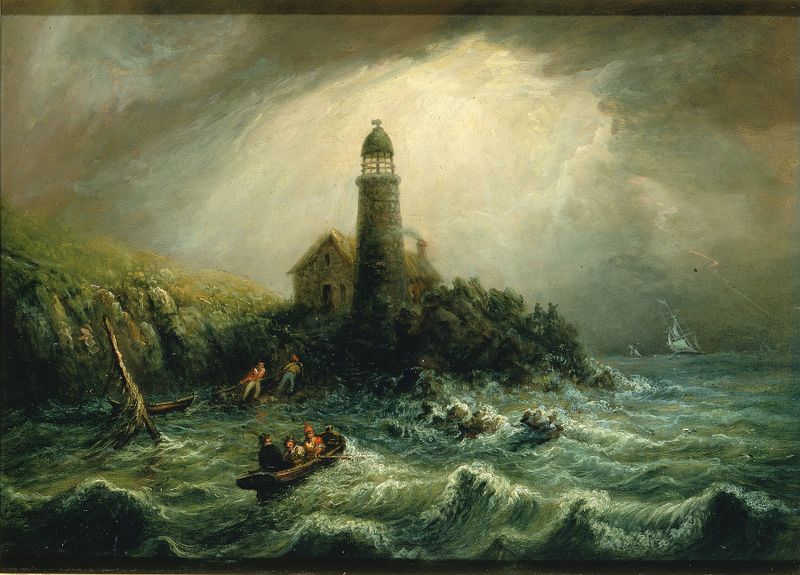
What if beauty was never meant to be finished? In the heart of nature, the delicate dance between water and land reveals both allure and unrest, as if the artist captured a moment that teeters on the brink of transformation. Look closely at the foreground, where lush greenery unfolds against the majesty of cascading waters. The foliage, painted in vibrant greens, frames the scene with an inviting embrace, guiding your gaze toward the tumultuous flow of the falls. Notice how the light strikes the rushing water, creating dazzling splashes of white against the deep blues and greens.
This dynamic contrast captures the raw power of nature, hinting at the beauty that lies in its untamed state. Beneath the surface beauty, there exists a tension. The juxtaposition of the serene island and the chaotic falls suggests an underlying betrayal of tranquility; nature, in its splendor, is unpredictable and dangerous. The idyllic portrayal evokes a sense of fleeting perfection, as if the very essence of beauty is bound to change, reminding us of the ephemeral nature of life itself. Created in 1846, the artwork emerged during a period marked by fascination with the sublime in nature, reflecting the Romantic ideals of the time.
Charles Hubbard, working in America, found inspiration in the grandeur of the natural world as it was being increasingly explored and celebrated. His depiction not only showcases the raw majesty of Niagara Falls but also serves as a testament to a burgeoning appreciation for the contrasts inherent in nature and human experience.