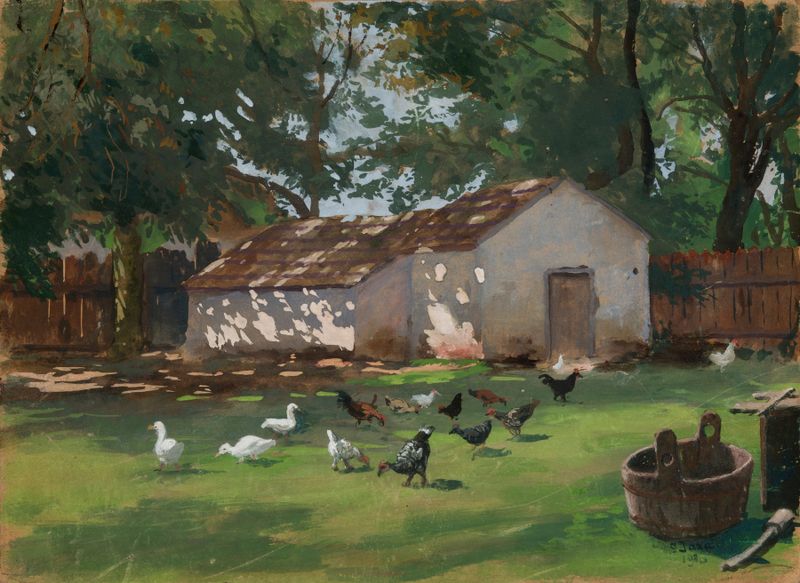
Seascape — History & Facts
How can mere strokes of pigment conjure a world that feels both tumultuous and serene? In the realm of abstraction, illusion dances at the edges of reality, evoking a profound sense of wonder and introspection. Look to the center of the canvas, where swirling blues and greens intermingle to create a vibrant sea. The brushwork is both frenetic and delicate, capturing the essence of water in motion. Notice how the horizon line blurs, a seamless blend of sky and ocean, inviting the viewer to question where one ends and the other begins.
The interplay of light and shadow enhances the illusion, allowing waves to froth realistically while also defying the constraints of representation. Upon closer inspection, the viewer may observe subtle hints of turmoil hidden within the fluidity—a tension between tranquility and chaos. Each brushstroke tells a story, a burst of emotion that resonates with the viewer’s own inner workings. The colors, though seemingly harmonious, possess an underlying discord that speaks to the complexity of nature and existence, inviting contemplation on the balance of forces both within ourselves and in the world around us. Soter August Jaxa-Małachowski painted Seascape amid the turbulent backdrop of 1941, a year marked by war and uncertainty across Europe.
Residing in Poland, he experienced the struggle of his nation while navigating the shifting tides of modern art. This painting reflects not only his personal journey but also the broader transformation in the artistic landscape, moving towards abstraction as an expression of emotional depth and perception.