Segelschiffe und Fischerboote am bretonischen Strand — History & Facts
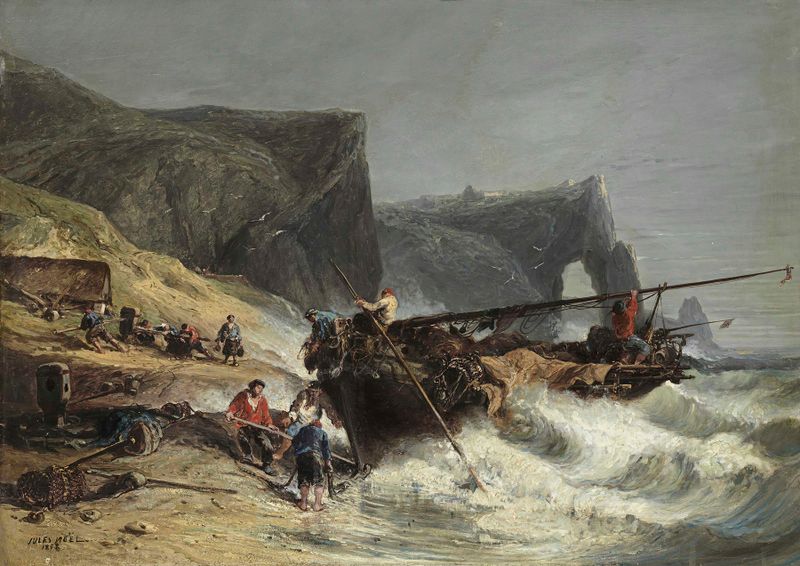
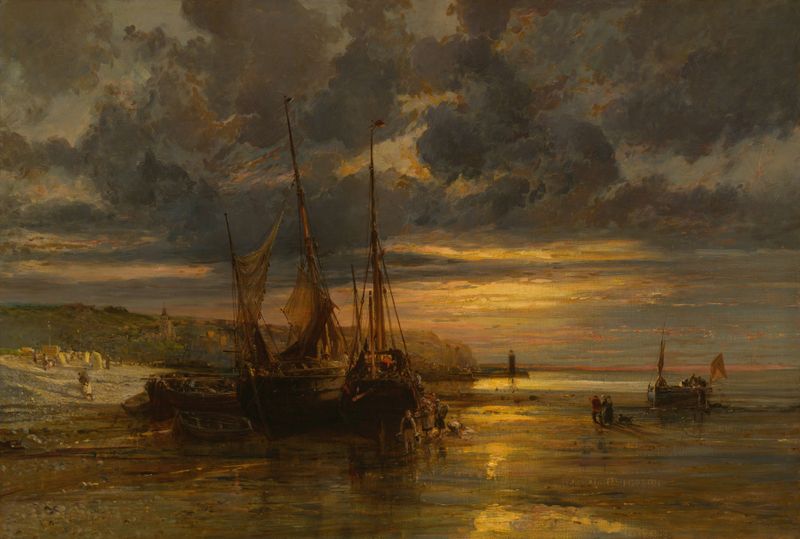
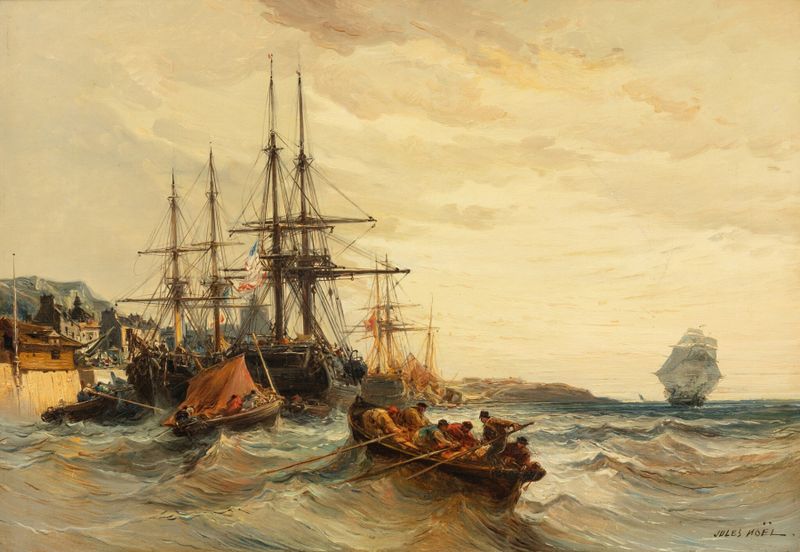
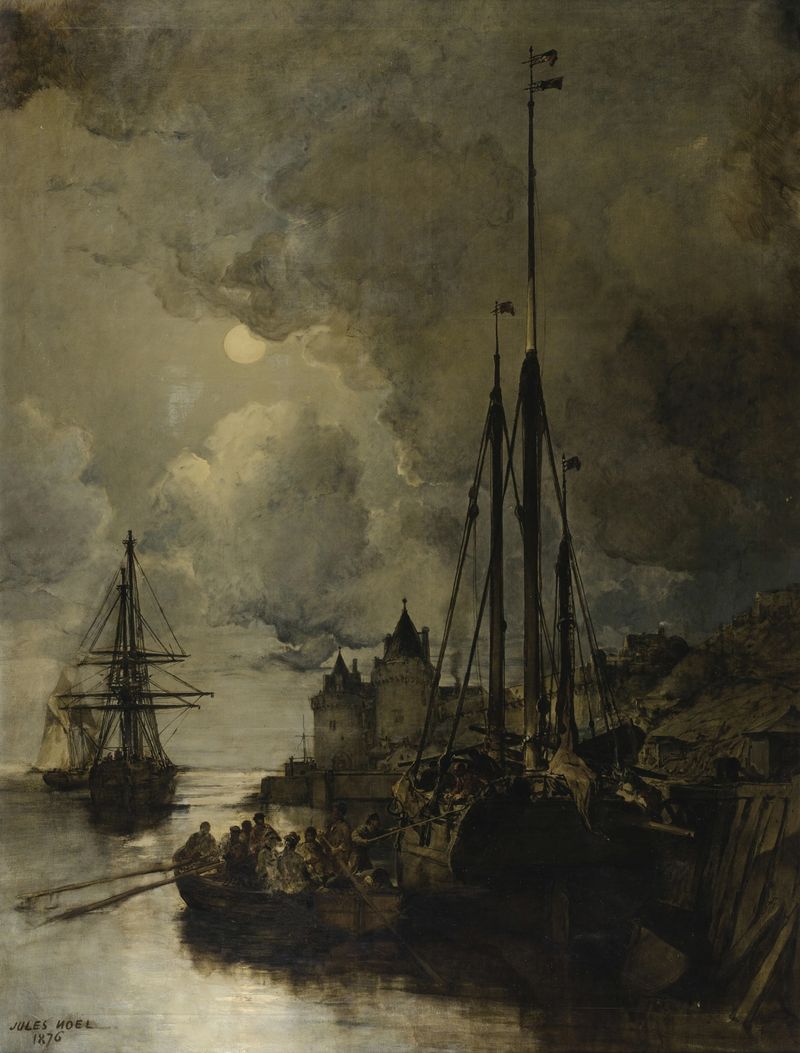
In the heart of the 19th century, the world was shifting, each stroke of a brush a silent cry for transformation. How does one capture the struggle and beauty amidst a revolution of ideas? Look closely at the horizon where the sea meets the sky; there, the artist masterfully blends blues and greens to create a sense of tranquility in turbulent times. Notice the vibrancy of the sails, billowing with a gust of wind, contrasting against the soft, golden sands where fishermen prepare their nets.
The meticulous details of the boats, each uniquely crafted, draw you into the everyday lives of those who work at the water’s edge, suggesting a harmony between man and nature amidst the chaos of societal change. Delve deeper into the juxtaposition of activity and stillness. The boats, representing hope and resilience, are poised against the backdrop of expansive sea and sky, each element symbolizing freedom and potential. The interplay of light and shadow reveals emotional nuances—the fishermen’s toil illuminating the strength required to navigate life’s uncertainties.
In this landscape, the revolutionary spirit of the age whispers through the undulating waves, urging a reexamination of the familiar. During the years 1860 to 1870, Jules-Achille Noël painted this serene coastal scene while living in France, a country in the midst of political upheaval and artistic experimentation. This era witnessed a push against traditional artistic boundaries, as Impressionism began to take shape, marking a decisive moment in the evolution of modern art. Noël's work captures not just the beauty of the Breton coast but also echoes the sentiments of a society on the brink of transformation.