Scène de plage — History & Facts
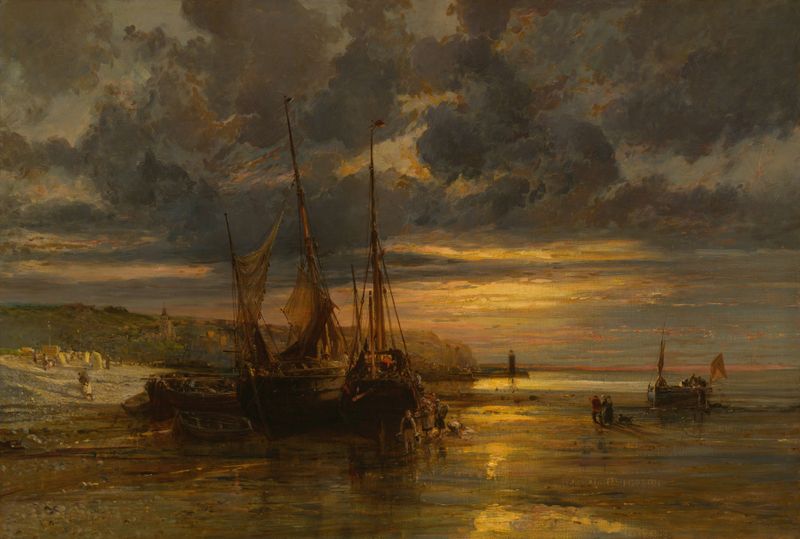
Can paint confess what words never could? In the soft strokes of this beach scene, an aching longing unfolds, whispering the unsaid truths of human connection and solitude. Focus on the tranquil waves painted in hues of azure and emerald, where the water meets the shore, mirroring the delicate interplay of yearning and fulfillment. Look to the left at the solitary figure walking down the beach, their silhouette slowly merging with the horizon, suggesting a journey both physical and emotional. The gentle light spilling across the canvas creates an inviting warmth, while the contrasting shadows hint at an introspective melancholy, evoking the complexity of human experience. As you take in the elements of the work, consider the emotional tension between solitude and companionship.
The distant figures lounging on the sands, absorbed in their own worlds, suggest a collective experience, yet each individual remains isolated, hinting at the unfulfilled desires that dwell within. The vibrant colors of the beach juxtaposed against the muted tones of the sky reinforce the theme of longing—a paradise that feels just beyond reach, invoking a bittersweet awareness of the present. Created during a time of artistic exploration in France, the artist painted this piece amidst the shifting currents of the late 19th century, where realism and impressionism danced together. In a world grappling with rapid industrial change and searching for new forms of expression, the artist sought to capture the essence of human emotion, leaving a timeless reflection on the complexities of longing that resonates even today.