
Seki — History & Facts
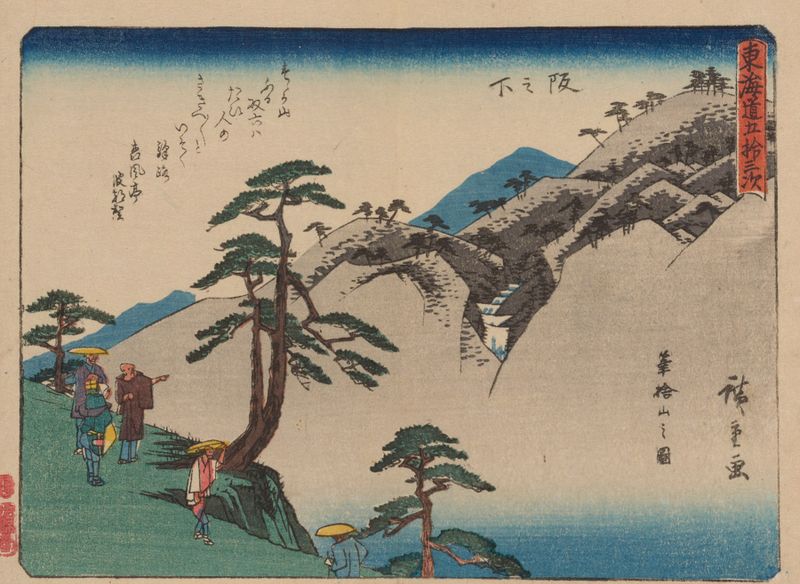
In Seki, the world unfolds like a story waiting to be whispered, each stroke revealing layers of revelation that echo through time. Look to the left at the gently undulating hills, where Hiroshige's delicate lines create a harmonious landscape. Focus on the subtle gradation of blues and greens that breathe life into the scene, guiding your eye to the two travelers making their way over the bridge. Notice how the vibrant red of the bridge contrasts against the serene backdrop, pulling you into the intimacy of their journey.
The careful placement of figures amidst nature evokes a sense of tranquility and purpose, allowing the viewer to feel both the weight of their passage and the beauty of the surroundings. In this work, the juxtaposition of travelers against the expansive landscape speaks to the transient nature of human experience. The bridge symbolizes connection, while the distant mountains hint at the unknown challenges that lie ahead. Hiroshige captures the quiet tension between human endeavor and the vastness of nature, suggesting that revelation often comes in small, intimate moments.
Every detail, from the rising mist to the figures’ postures, contributes to an overarching narrative about the dual paths of discovery and solitude. Created in 1855, during the Edo period in Japan, the artist was deeply influenced by the growing appreciation for landscape prints. At this time, Hiroshige was already celebrated for his skill in capturing the beauty of the natural world, and Seki reflects a maturation of his style amidst a flourishing artistic environment. The world was changing around him, but his focus remained steadfast on the poetic intersections of humanity and nature.
More Artworks by Utagawa Hiroshige
Browse all →
Sudden Shower over Shin Ohashi Bridge and Atake (Ohashi Atake no yudachi), from the series "One Hundred Famous Views of Edo (Meisho Edo hyakkei)"
Utagawa Hiroshige
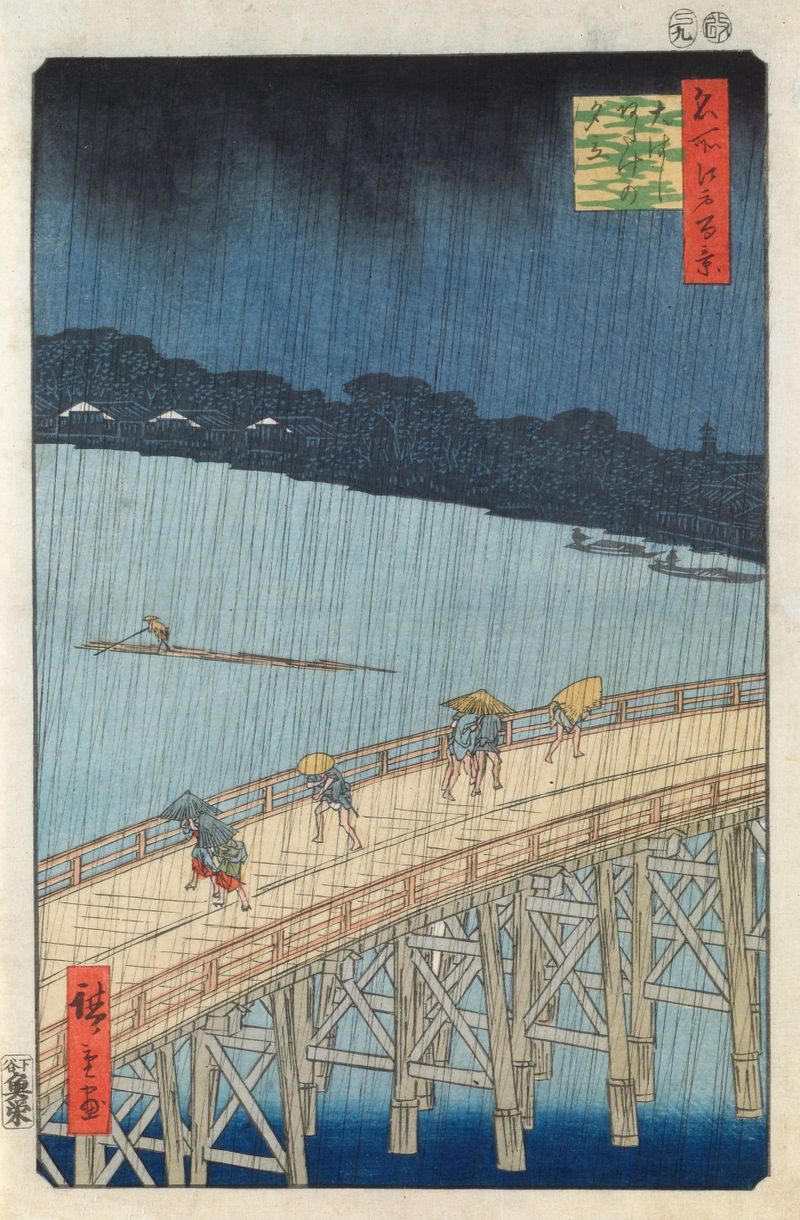
Sudden Shower Over Ohashi Bridge and Atake
Utagawa Hiroshige
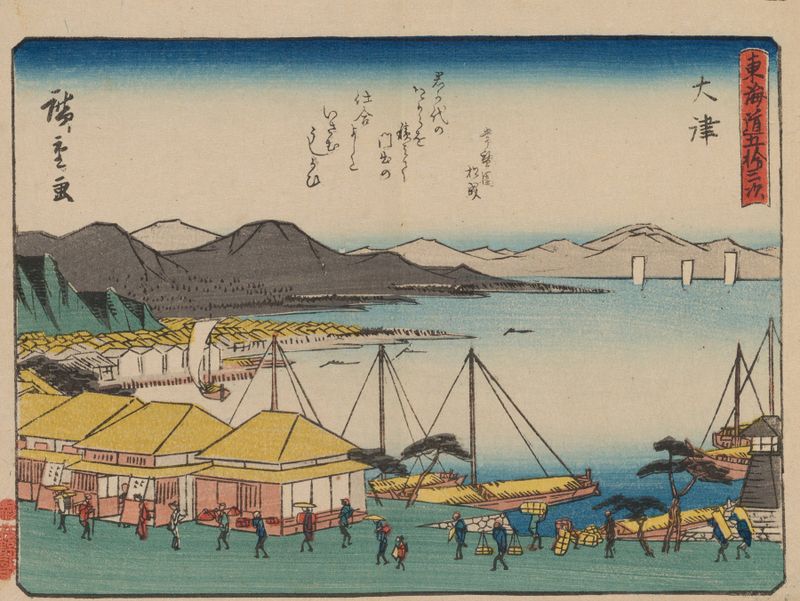
Tokaido gojusantsugi, Pl.54
Utagawa Hiroshige
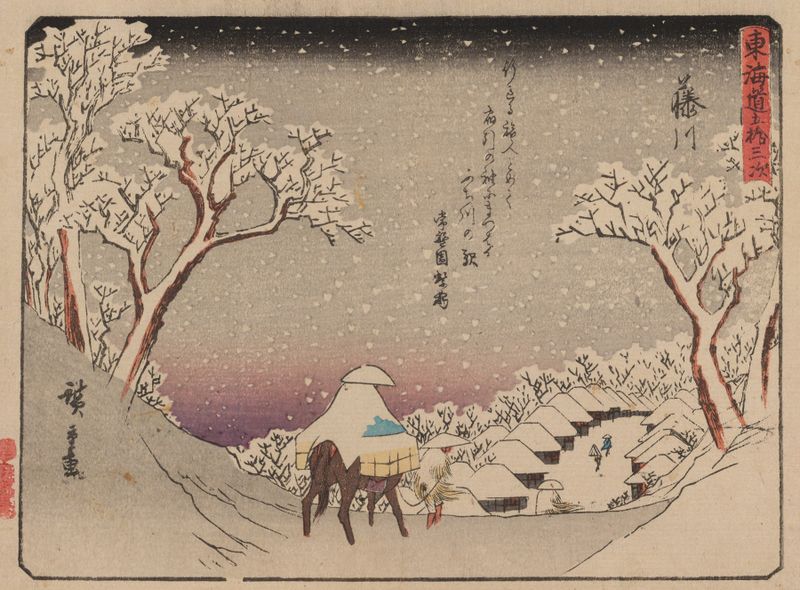
Tokaido gojusantsugi, Pl.38
Utagawa Hiroshige
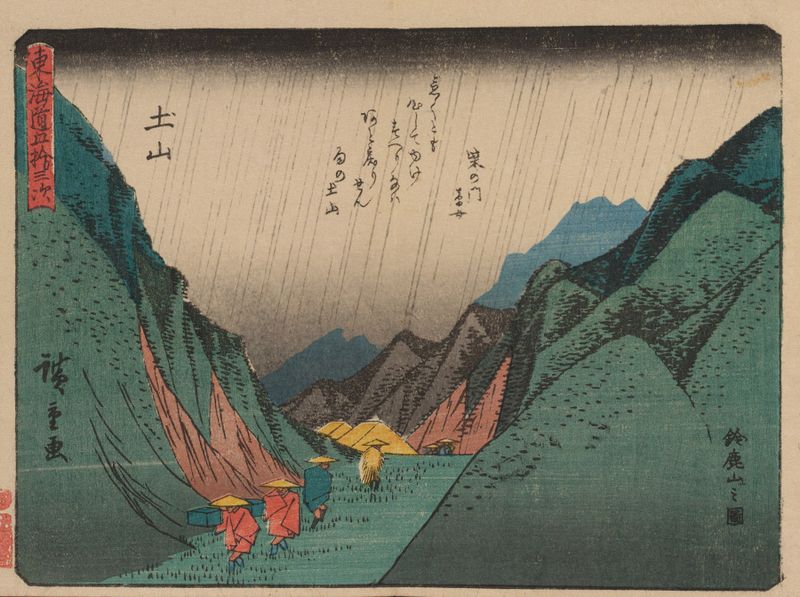
Tokaido gojusantsugi, Pl.50
Utagawa Hiroshige
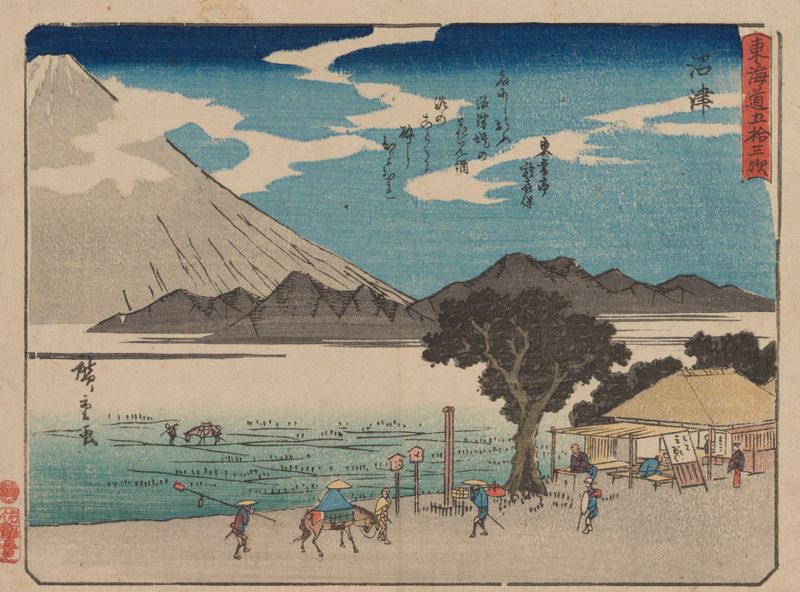
Tokaido gojusantsugi, Pl.13
Utagawa Hiroshige
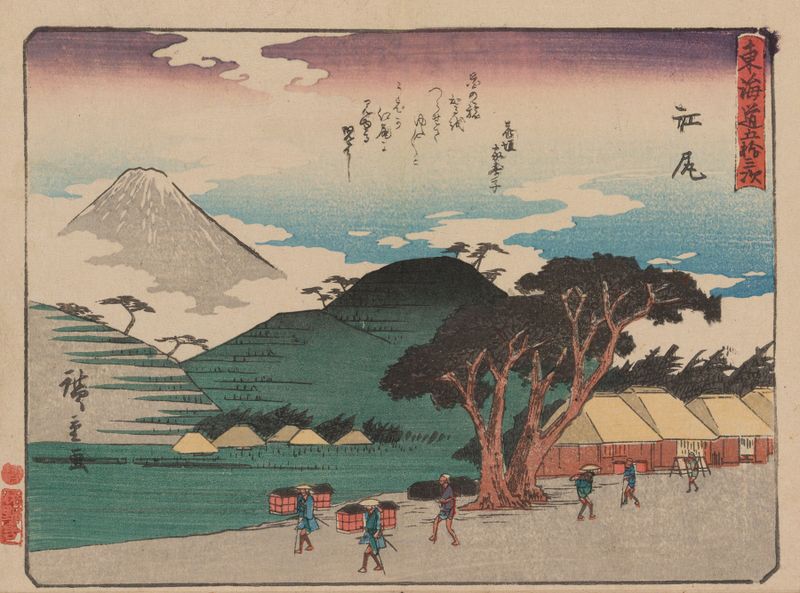
Tokaido gojusantsugi, Pl.19
Utagawa Hiroshige
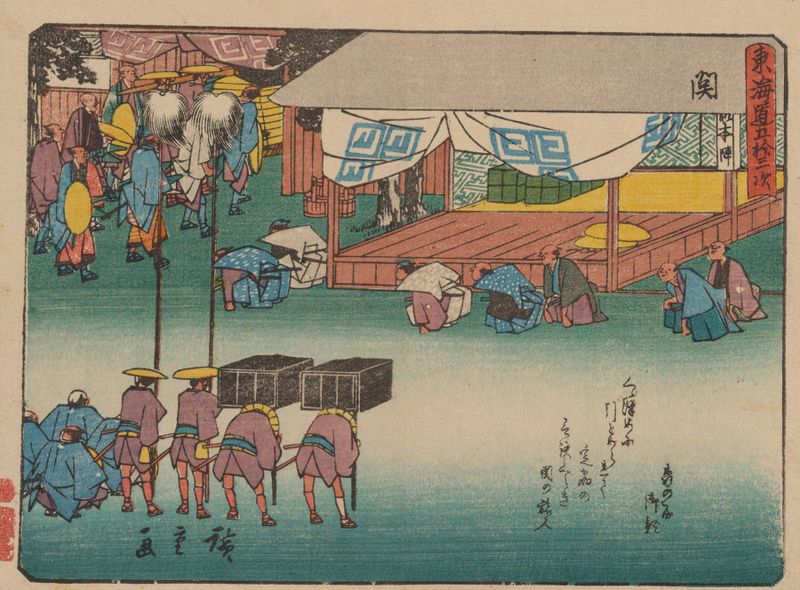
Tokaido gojusantsugi, Pl.48
Utagawa Hiroshige
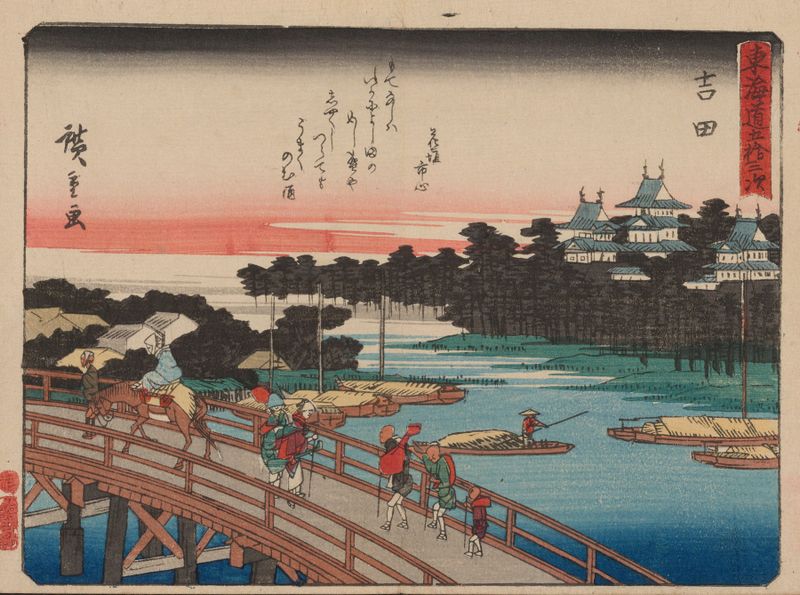
Tokaido gojusantsugi, Pl.35
Utagawa Hiroshige
Tokaido gojusantsugi, Pl.49
Utagawa Hiroshige





