September Night — History & Facts
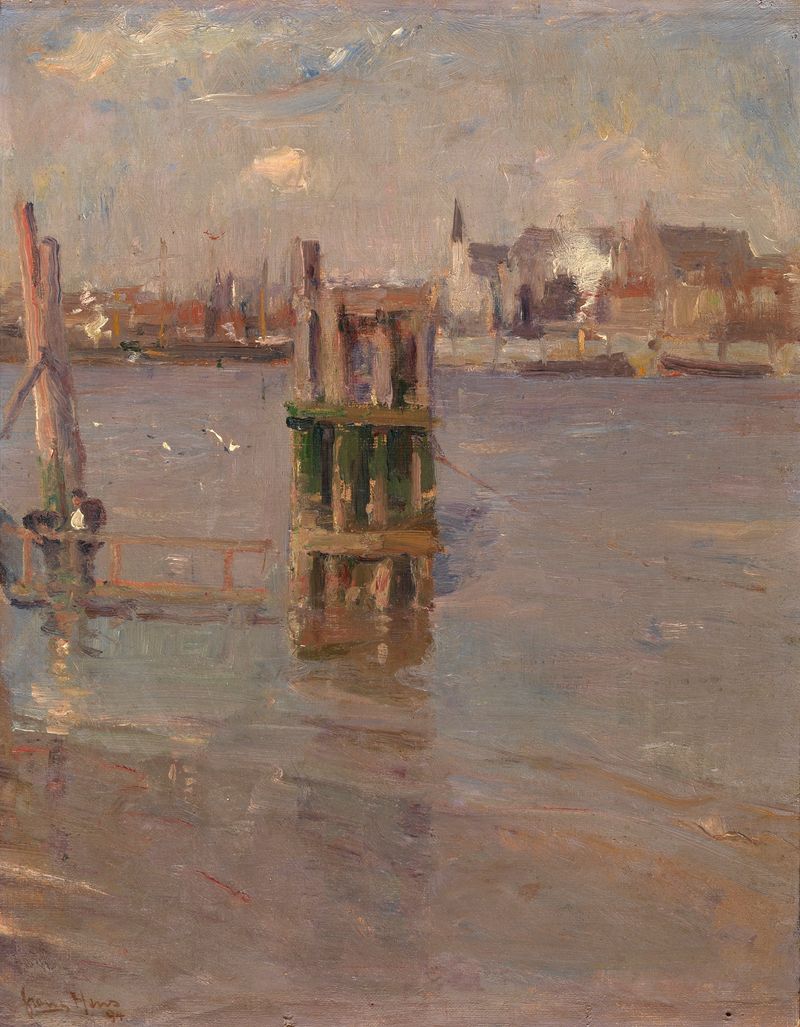
In the quiet folds of dusk, the canvas whispers of rebirth, capturing the delicate transition between day and night. Here lies a moment suspended in time, where the world seems to breathe anew, embodying both reflection and hope. Look closely at the vibrant hues that radiate from the center, drawing your gaze into a tapestry of rich oranges and deep blues. The horizon blurs softly, melting into a gentle gradient, creating a visual echo of twilight.
Notice how the trees on the left stand as silent sentinels, their silhouettes dark against the fiery sky, offering a stark contrast that elevates the feelings of calm and contemplation. Every stroke is deliberate, capturing the essence of a fleeting moment, yet inviting the viewer to linger longer. Delve into the emotional layers embedded within the composition. The juxtaposition of warmth and coolness speaks to the complexity of change—perhaps symbolizing the end of a season or the enduring spirit of life.
Each flicker of light seems to suggest the renewal that follows darkness, emphasizing a cycle that encourages growth even in the face of endings. It's a poignant reminder that every dusk heralds the promise of dawn. Frans Hens painted September Night in 1901 during a period of personal change and artistic exploration. Living in a time when the art world was shifting towards modernism, Hens sought to capture the fleeting beauty of nature while also reflecting the emotional truths of existence.
This work was created amidst a growing fascination with color and light, marking a significant phase in his evolution as an artist.