The Quay at the Steen — History & Facts
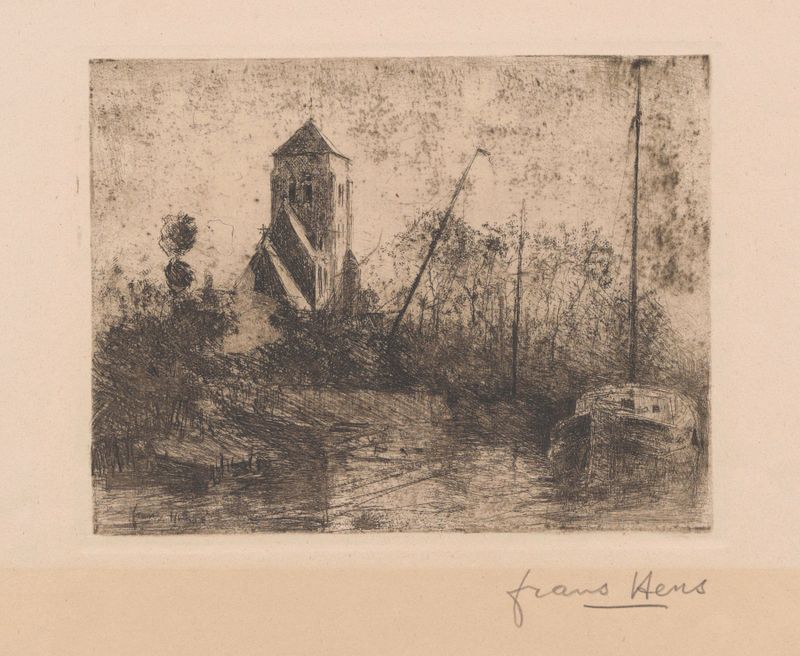
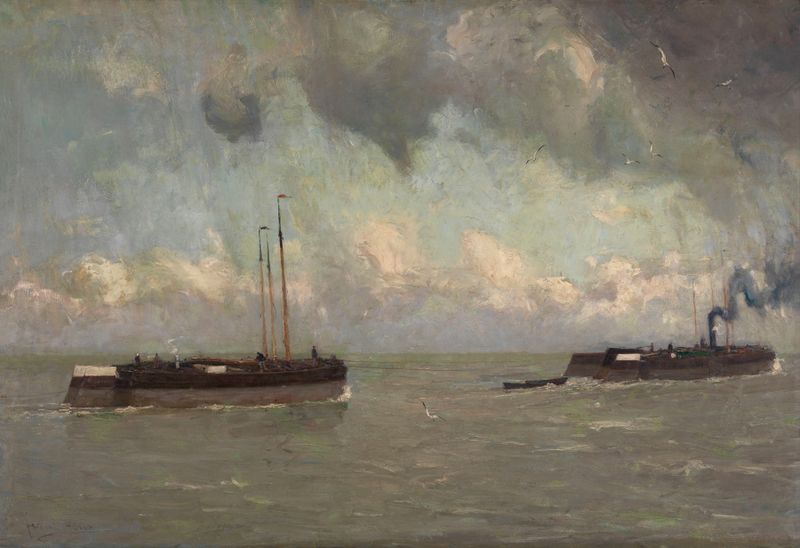
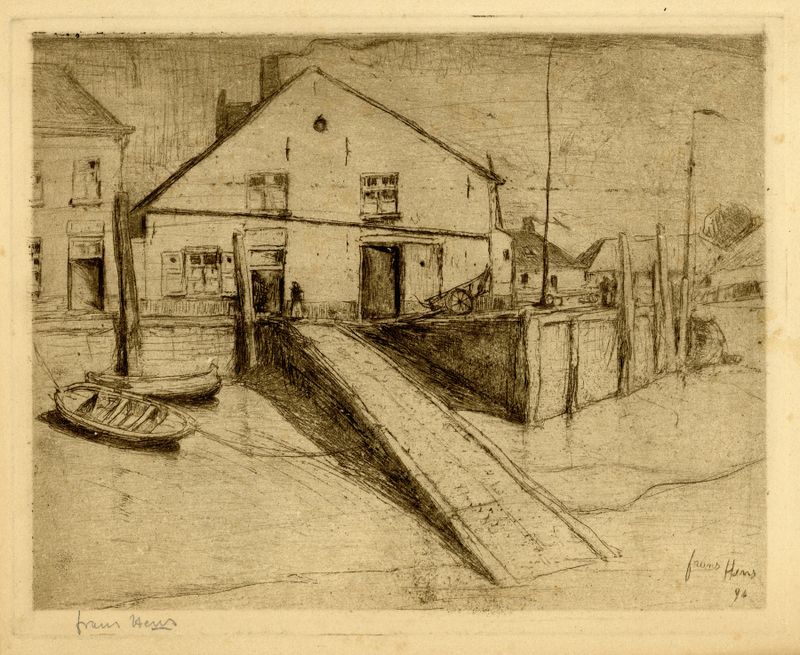
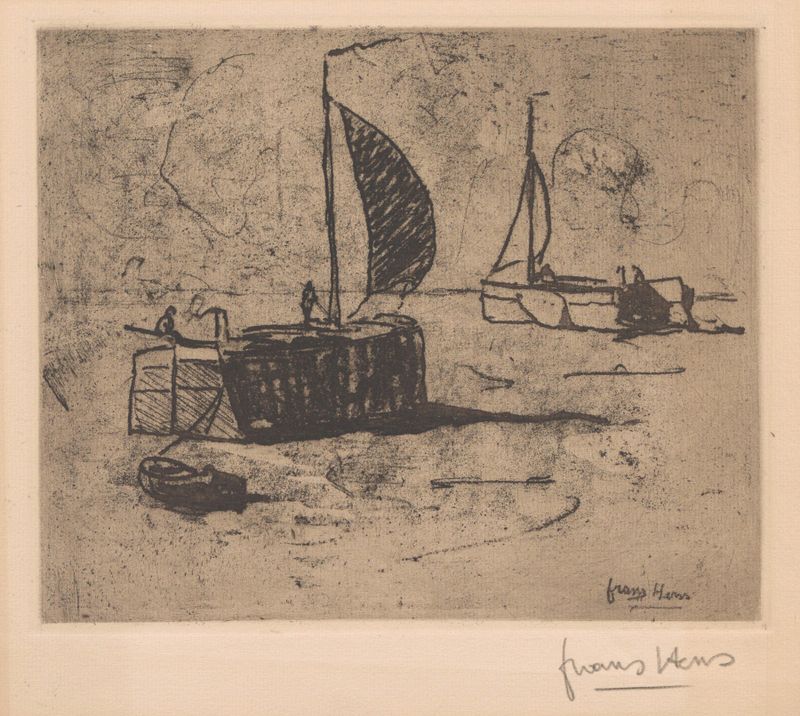
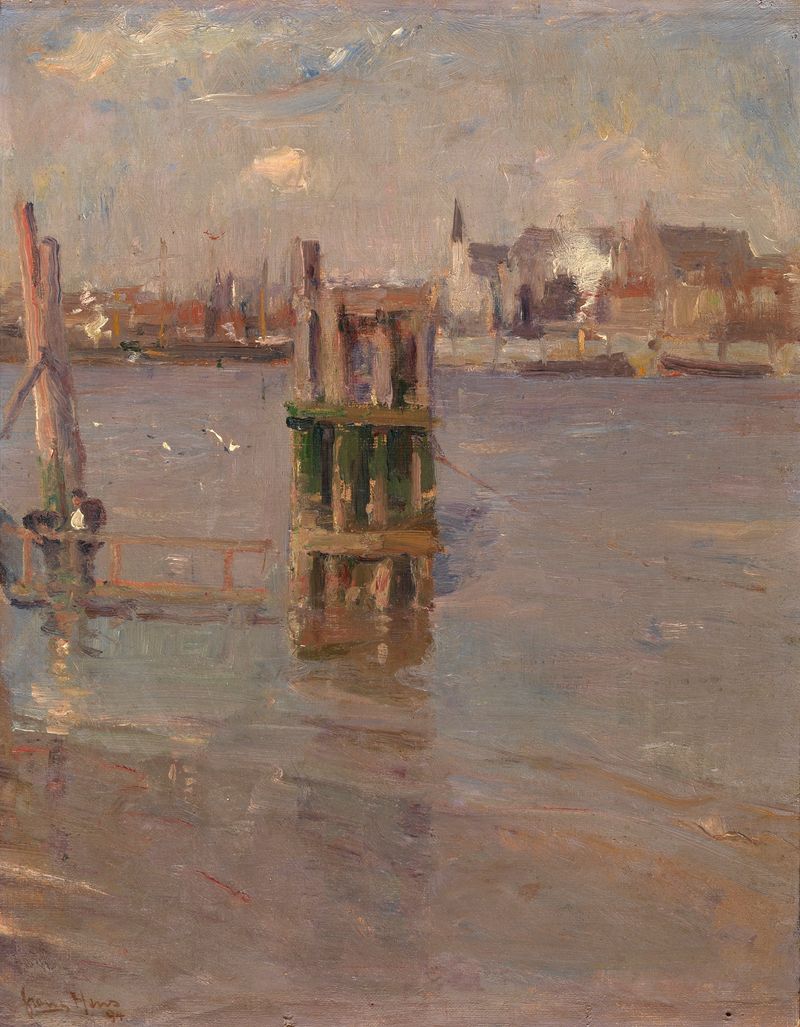
Can paint confess what words never could? In The Quay at the Steen, silence speaks volumes, echoing the void between the seen and the unseen, crafting a poignant narrative of everyday life suspended in stillness. Look to the left at the soft contours of the canal, where water mirrors the muted colors of the buildings that flank its banks. The palette is composed of cool blues and warm earth tones, drawing the eye into a gentle interplay between shadow and light. Notice how the architecture appears to lean into the scene, almost as if it wishes to share its stories with the viewer.
The figures, though small against this grand backdrop, are positioned in a way that suggests their lives are forever intertwined with the rhythm of the water. Beneath this serene surface lies an emotional tension—the juxtaposition of human existence against the immensity of nature. The boats, gently bobbing, carry not just goods but the weight of untold journeys, while the stillness of the quay evokes a sense of longing for connection. Each brushstroke reveals the artist’s intent: to capture not just the scene but the silence that envelops the lives lived here, hinting at the ephemeral nature of existence itself. Frans Hens painted this work during a time when the Dutch Golden Age was flourishing, characterized by intricate detail and a profound appreciation for realism.
Working in the late 17th century, Hens was part of a vibrant artistic community in Antwerp, where commerce and culture thrived. His paintings reflect not just the visual beauty of his surroundings but also the emotional depth that accompanies the mundane, inviting viewers to contemplate the stories of those who inhabit the spaces he lovingly rendered.