
Seta no Sekisho. Sunset, Seta. Lake Biwa — History & Facts
What if beauty was never meant to be finished? Seta no Sekisho. Sunset, Seta. Lake Biwa invites us to contemplate this very idea, as it captures an ephemeral moment in time where nature and humanity coexist in a delicate harmony. Look to the lower right at the serene figure of a boatman, silhouetted against the warm, fading light of the setting sun.
The delicate brushstrokes create a soft, flowing texture in the sky, radiating hues of orange and purple that bleed into one another, evoking the transient nature of twilight. Notice how the rippling water mirrors this glow, a reflection of both the sky's magnificence and the daily toil of those who navigate its surface. The composition draws your eye towards the horizon, suggesting a journey toward infinity, yet grounding us with the tangible presence of the figures. The painting reveals deeper insights into the relationship between people and nature.
The solitary boatman embodies the simplicity of existence amid the grandeur of the landscape, hinting at both isolation and connection. The luminous sky captures the fleeting beauty of the moment, suggesting that every sunset is a reminder of life’s impermanence. The interplay of light and shadow adds an emotional tension, highlighting the transient joys that come with daily life, thus transcending mere representation. In 1835, Utagawa Hiroshige was in the midst of a prolific period, creating stunning landscapes influenced by the Ukiyo-e movement.
This was a time of great change in Japan, as the country opened up to foreign influence while still deeply cherishing its traditions. Hiroshige’s work reflects his keen observation of nature and human life, resonating with the tranquil yet profound essence of the world around him.
More Artworks by Utagawa Hiroshige
Browse all →
Sudden Shower over Shin Ohashi Bridge and Atake (Ohashi Atake no yudachi), from the series "One Hundred Famous Views of Edo (Meisho Edo hyakkei)"
Utagawa Hiroshige
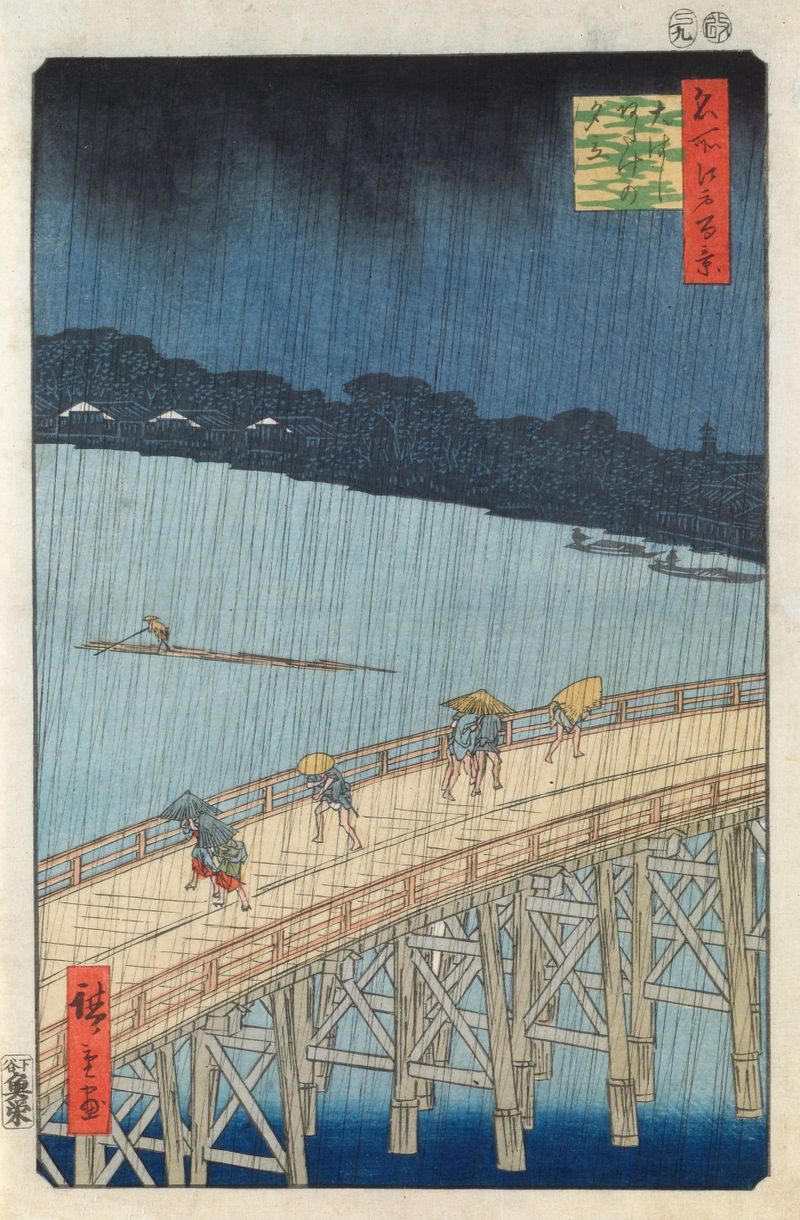
Sudden Shower Over Ohashi Bridge and Atake
Utagawa Hiroshige
Tokaido gojusantsugi, Pl.54
Utagawa Hiroshige
Tokaido gojusantsugi, Pl.38
Utagawa Hiroshige
Tokaido gojusantsugi, Pl.50
Utagawa Hiroshige
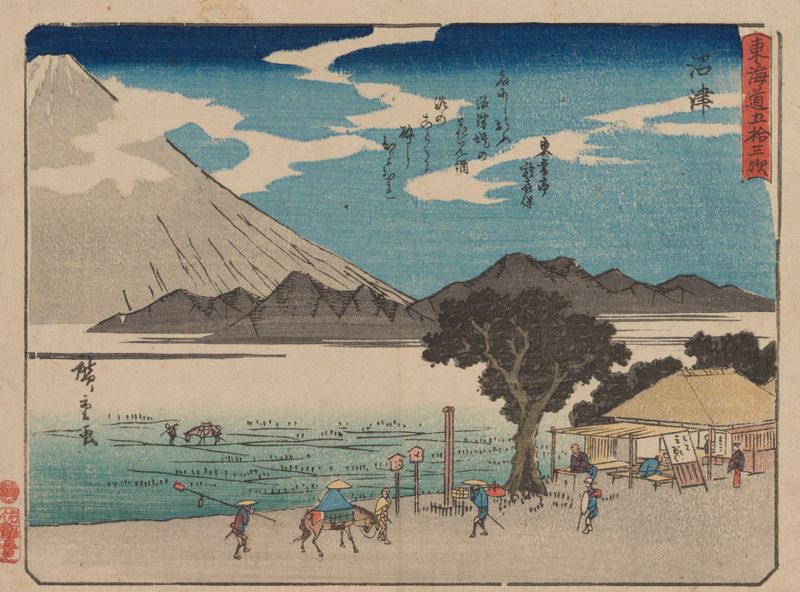
Tokaido gojusantsugi, Pl.13
Utagawa Hiroshige
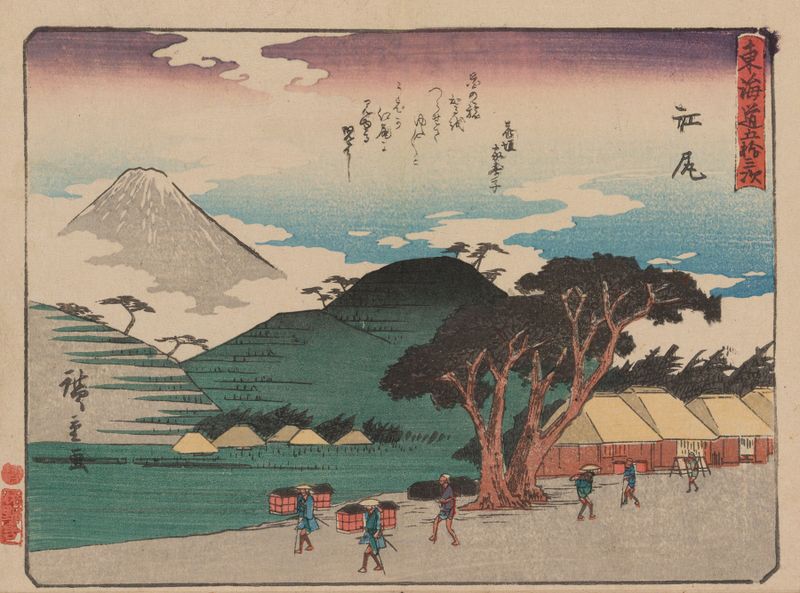
Tokaido gojusantsugi, Pl.19
Utagawa Hiroshige
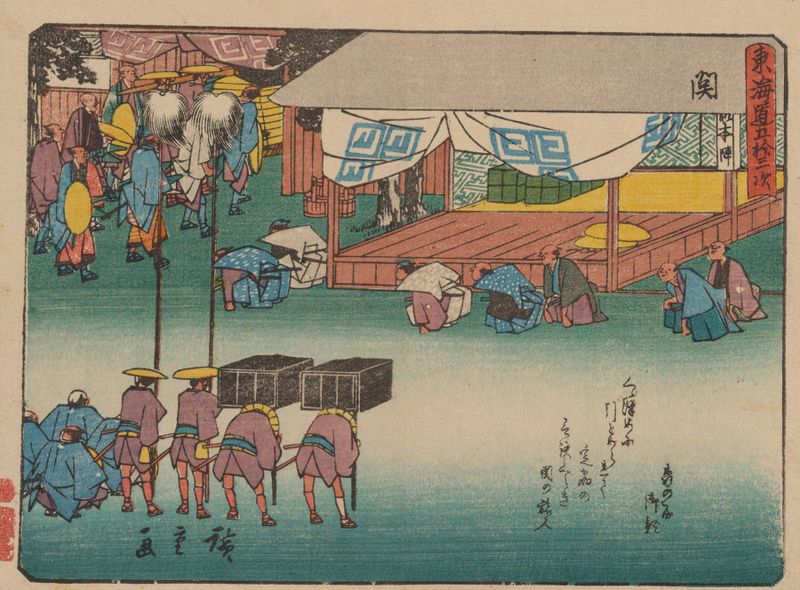
Tokaido gojusantsugi, Pl.48
Utagawa Hiroshige
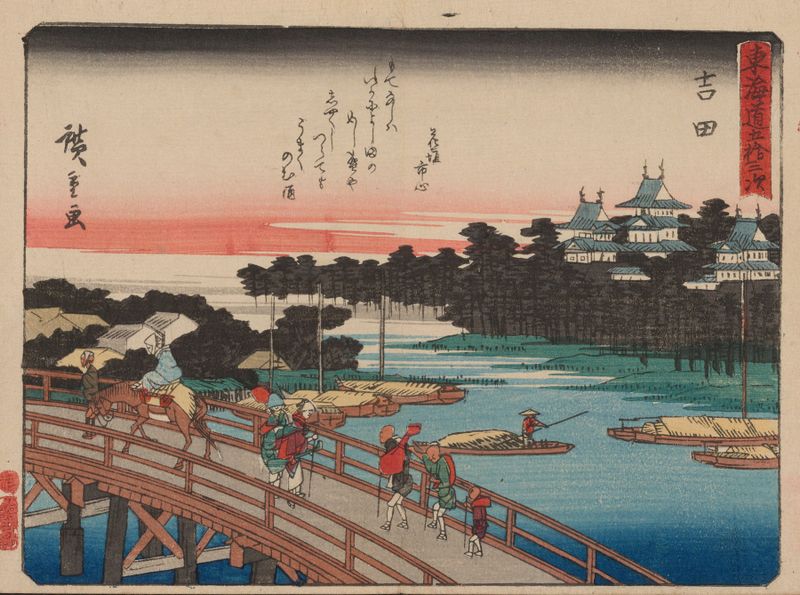
Tokaido gojusantsugi, Pl.35
Utagawa Hiroshige
Tokaido gojusantsugi, Pl.49
Utagawa Hiroshige





