
Sevillanas (Ladies of Seville) — History & Facts
A woman stands at the threshold of a dark doorway, her figure draped in a long black shawl that envelops her head and body, leaving only her face and a hand visible. Her hand rests on her hip, fingers splayed, while her face turns outward with a subtle, direct smile that meets the viewer. Beside her, a younger woman crouches low, her white dress scattered with dark polka dots and trimmed in ruffles, the fabric rendered in loose, energetic brushstrokes.
The younger figure’s head tilts upward, her eyes bright and her lips parted in a lively expression, as if caught mid-laughter or conversation. A vivid orange scarf drapes over her shoulders, its color striking against the pale tones of her dress and the muted, earthy hues of the wall behind. Both women are positioned against a flat, ochre-yellow wall, the surface painted in broad, visible strokes that suggest sunlight and warmth.
To the right, a patch of white paint marks the edge of a window or architectural detail, its rough, gestural handling contrasting with the more carefully modeled faces. The lower part of the wall shifts to a cool, bluish-grey, grounding the figures and providing a subtle counterpoint to the golden upper section. Light falls from the left, illuminating the faces and the swirling skirts, while the doorway behind the standing woman recedes into shadow, deepening the sense of depth and enclosure.
The paint is applied with a confident, fluid touch, especially in the skirts and wall, where quick, layered strokes evoke movement and texture. The composition is tightly framed, focusing attention on the interaction between the two women and the play of light across their forms. Small details, such as the delicate shoes peeking from beneath the ruffled hem and the subtle blush on the cheeks, reveal the artist’s sensitivity to character and atmosphere.
More Artworks by Joaquín Sorolla

Sad Inheritance
Joaquín Sorolla
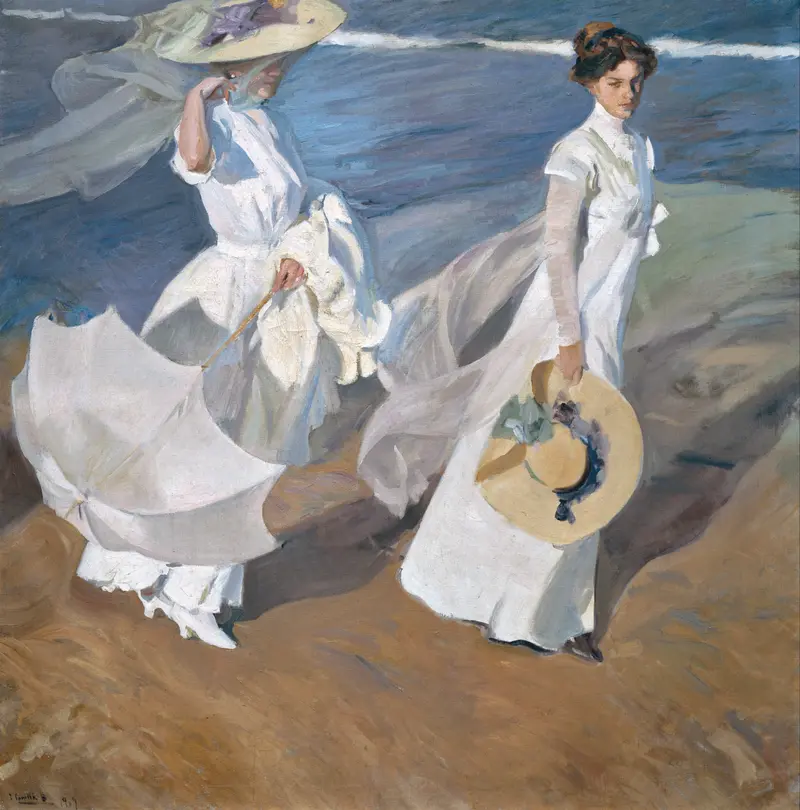
Walk on the Beach
Joaquín Sorolla

Mother
Joaquín Sorolla
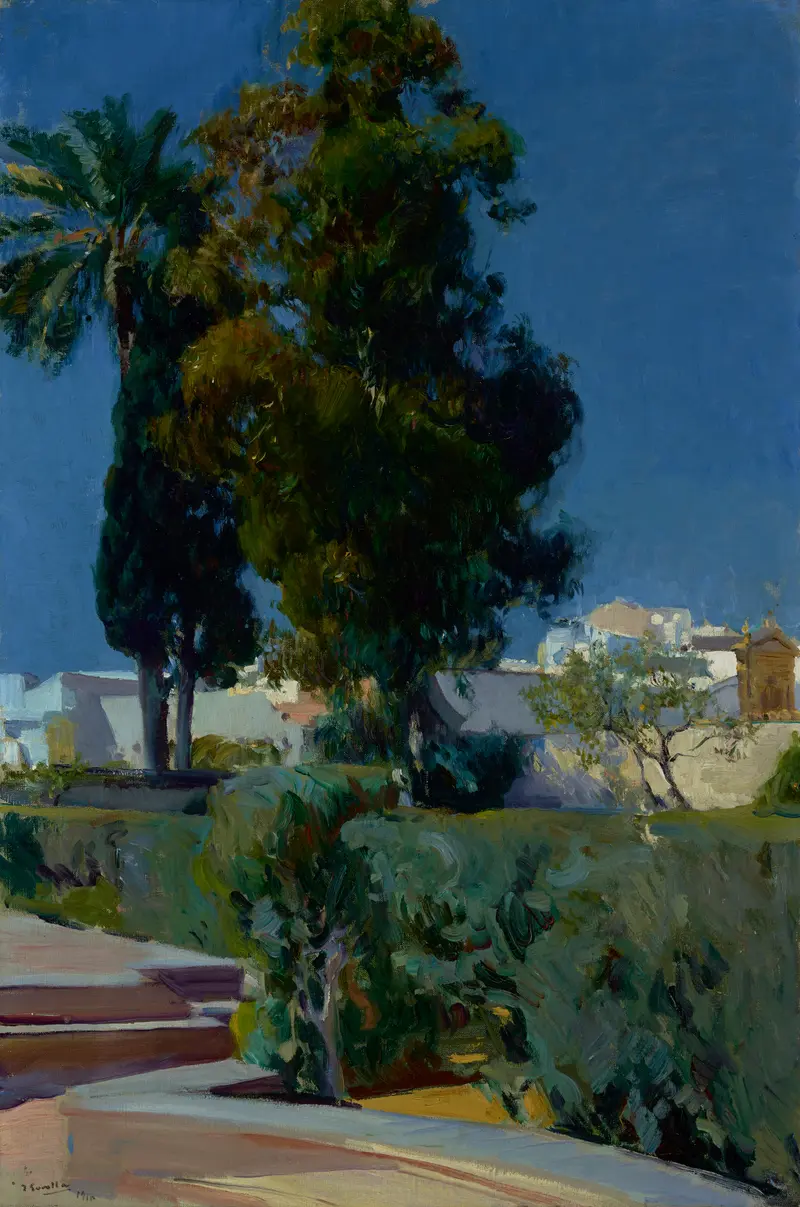
Corner of the Garden, Alcazar, Sevilla
Joaquín Sorolla

Fishing Boats On The Beach, Valencia
Joaquín Sorolla
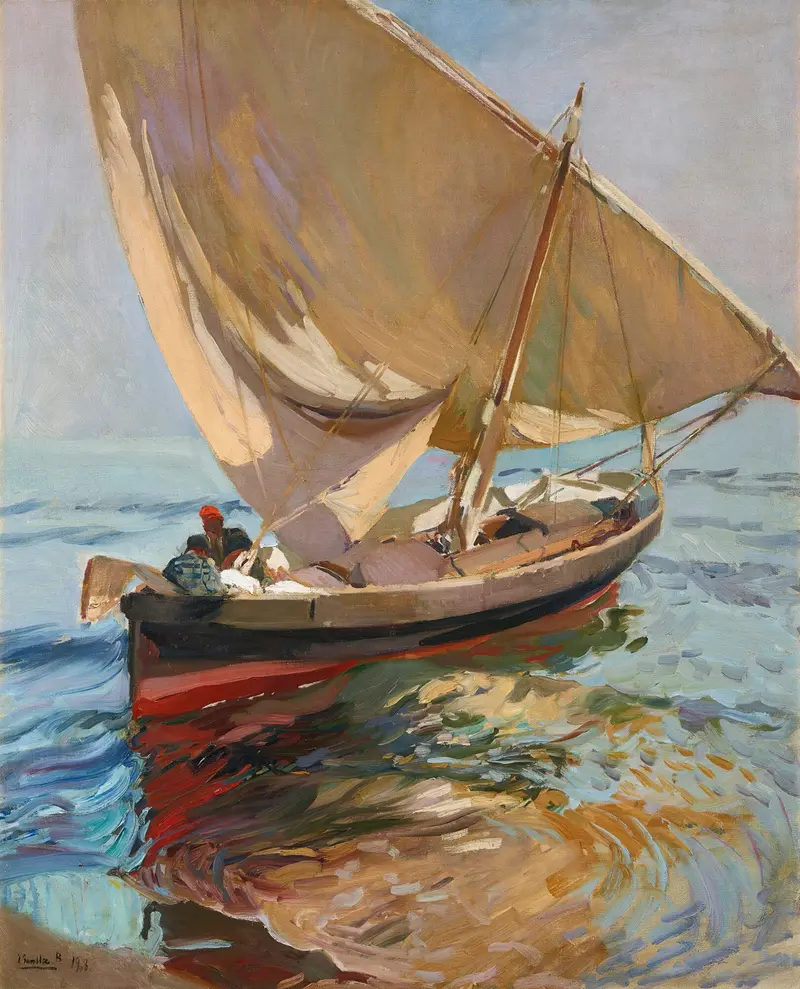
Camino De La Pesca. Valencia (Setting Out To Sea. Valencia)
Joaquín Sorolla
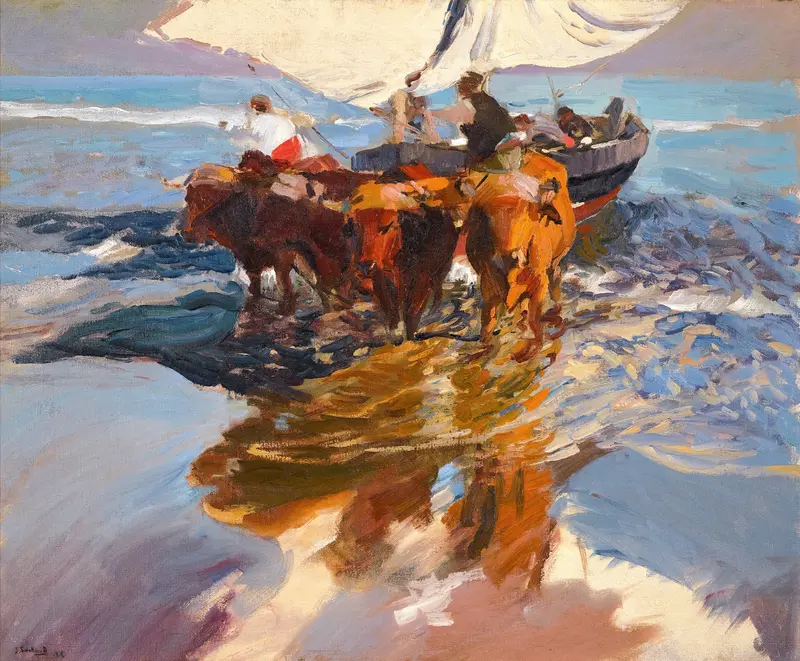
Vuelta De La Pesca. Playa De Valencia (The Return From Fishing, Valencia Beach)
Joaquín Sorolla
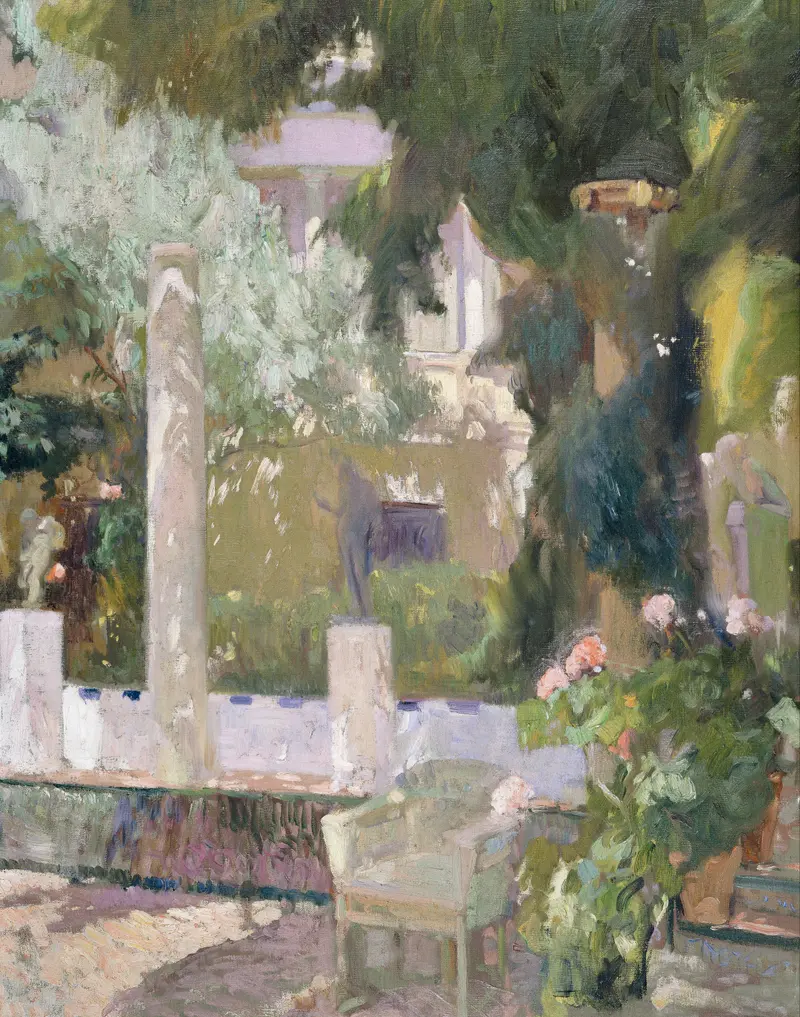
The Gardens at the Sorolla Family House
Joaquín Sorolla
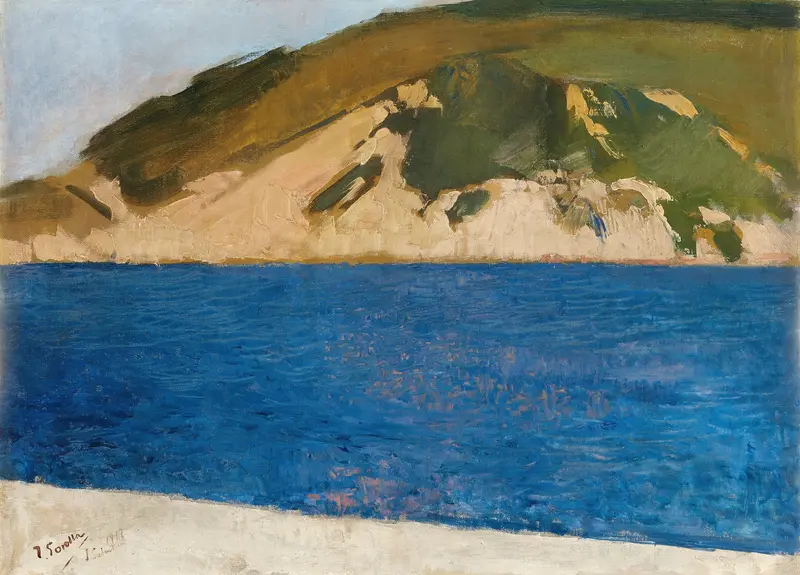
Monte Ulía, San Sebastián
Joaquín Sorolla

Barcas En La Playa
Joaquín Sorolla
More Genre Scene Art

Banquet of the Officers of the St George Civic Guard
Frans Hals

Rembrandt and Saskia in the Scene of the Prodigal Son
Rembrandt van Rijn

Bal du moulin de la Galette
Pierre-Auguste Renoir

Quadrille at the Moulin Rouge
Henri de Toulouse-Lautrec

A Burial at Ornans
Gustave Courbet

When Will You Marry?
Paul Gauguin