
Shakespeare Cliff, Dover — History & Facts
Could beauty survive in a century of chaos? In Shakespeare Cliff, Dover, a timeless panorama invites contemplation, where nature and the human spirit intertwine in an eternal embrace of ecstasy and serenity. Look to the left at the rugged cliffs rising majestically from the tumultuous sea, their surfaces kissed by sunlight. The artist's brush captures the verdant greens and earthy browns of the land, contrasting with the deep blues of the ocean. Notice how the light cascades over the cliff's edge, illuminating the delicate wildflowers that cling to its precipice, symbolizing resilience amidst harshness.
This harmonious composition draws the viewer into a world where nature's splendor reigns supreme. Amidst the tranquil beauty, one can sense the tension between the calm above and the chaos below, as waves crash against the shore, suggesting the relentless passage of time. The cliffs serve as a metaphor for stability against the backdrop of life's unpredictabilities. The lone figure perched on the cliff's edge gazes out, perhaps searching for meaning or solace, embodying the human longing for connection with the sublime. Samuel Atkins created this work in 1800, a period marked by both romantic nostalgia and the stirrings of modernity.
Living in England during the aftermath of the French Revolution, he witnessed a world grappling with change and upheaval. This painting reflects not only the stunning natural beauty of Dover but also an artistic response to the tumult surrounding him—a yearning for harmony in a time of discord.
More Artworks by Samuel Atkins
Browse all →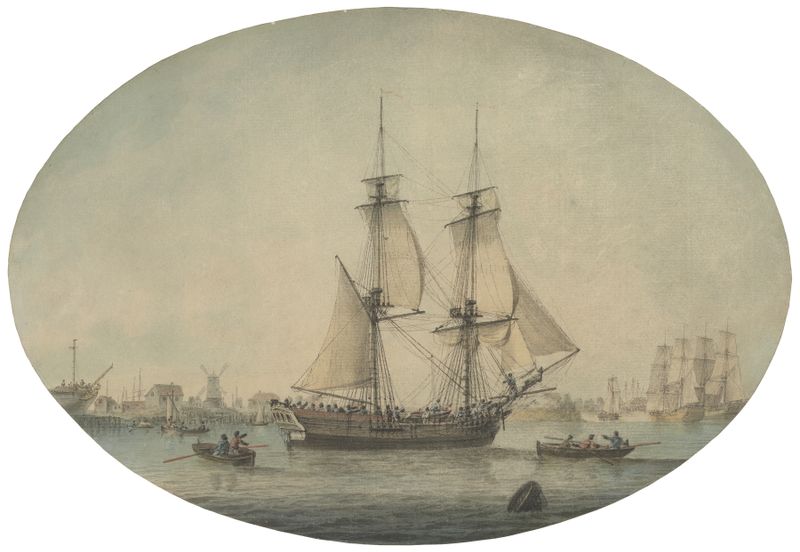
A Trading Brig Preparing to Set Sail on the Thames, Warships Running Down the Estuary Beyond
Samuel Atkins
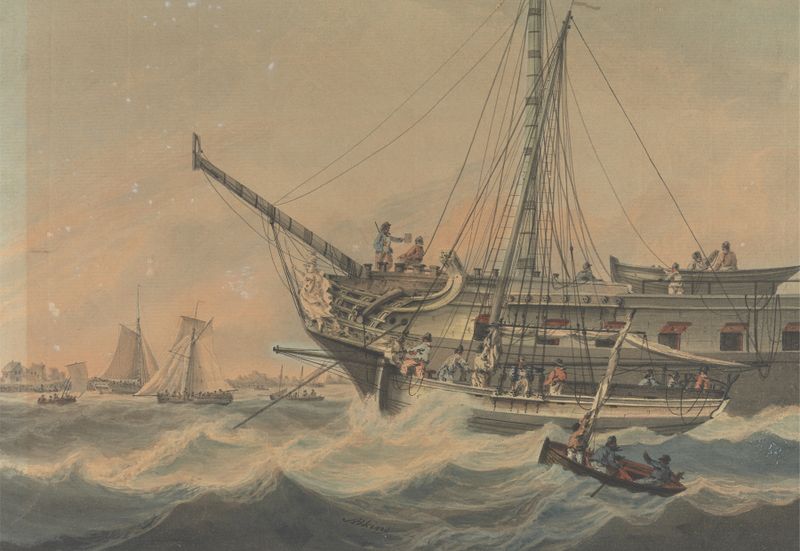
Man-of-War and Shipping off the Coast
Samuel Atkins
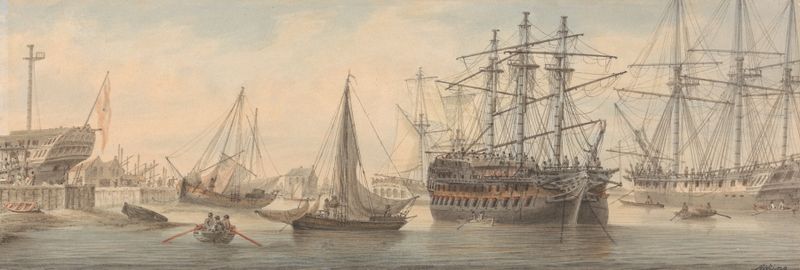
Men-of-War and other Shipping on the Thames
Samuel Atkins

Figures embarking from a quay
Samuel Atkins
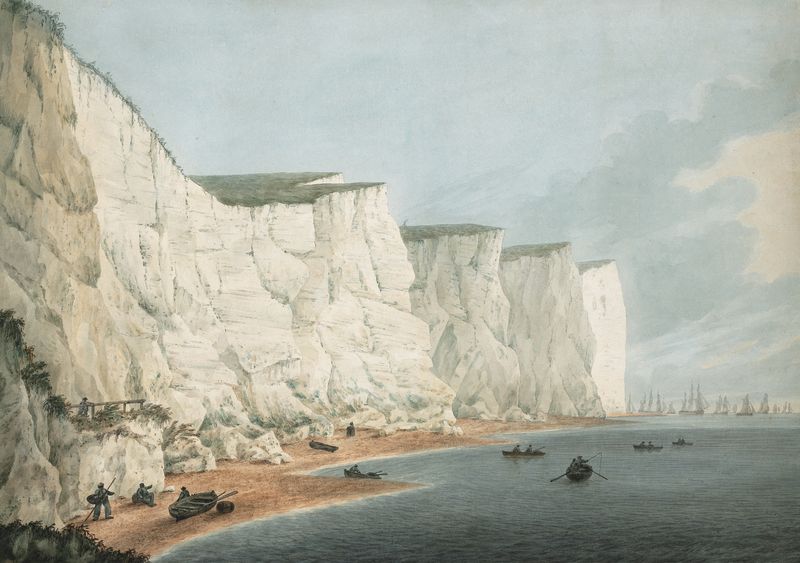
The Fleet Off the Coast, Beachy Head
Samuel Atkins
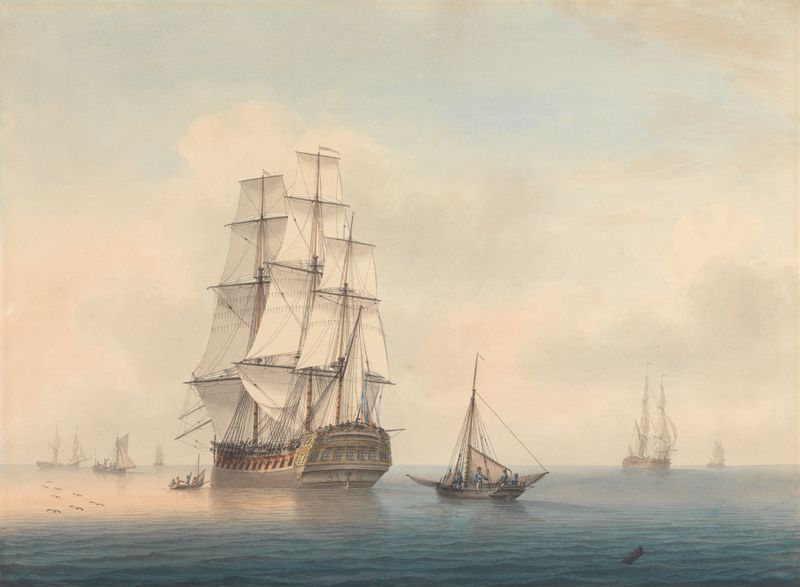
A Warship Preparing to Leave the Anchorage
Samuel Atkins
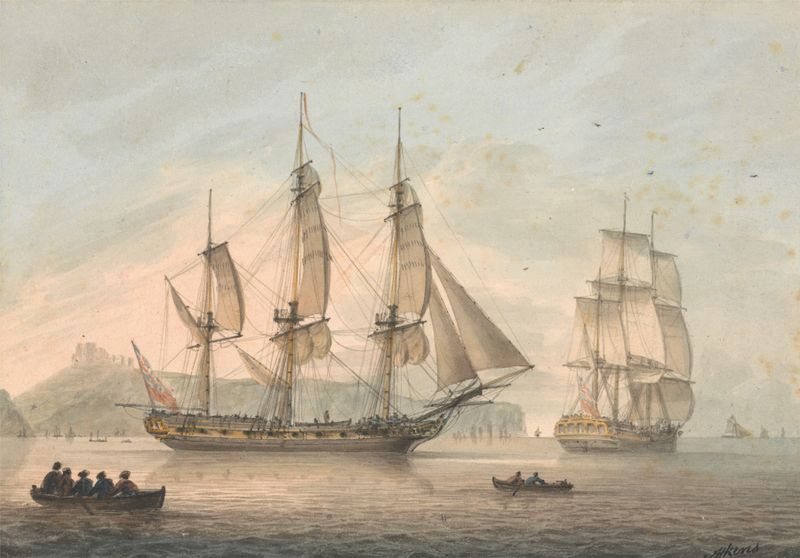
Ships of the Line off Dover
Samuel Atkins
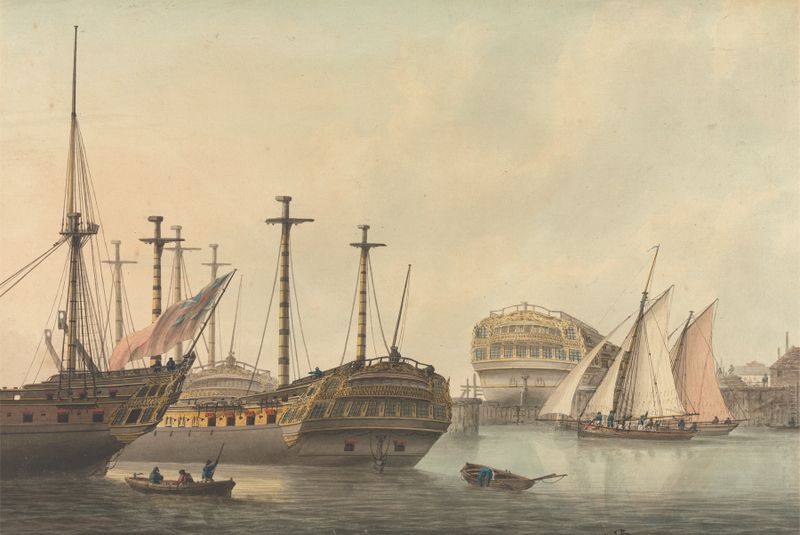
Man-of-War being Refitted
Samuel Atkins
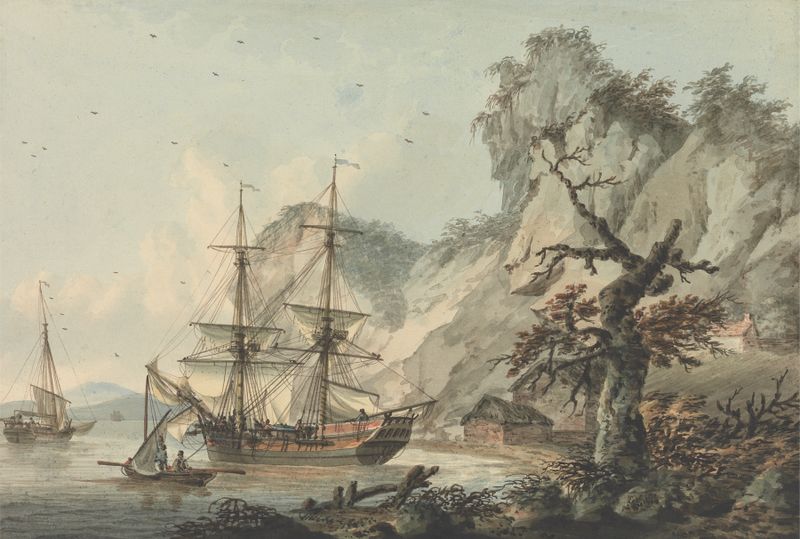
Merchant Ship off Shore
Samuel Atkins





