Shepherd’s cart — History & Facts
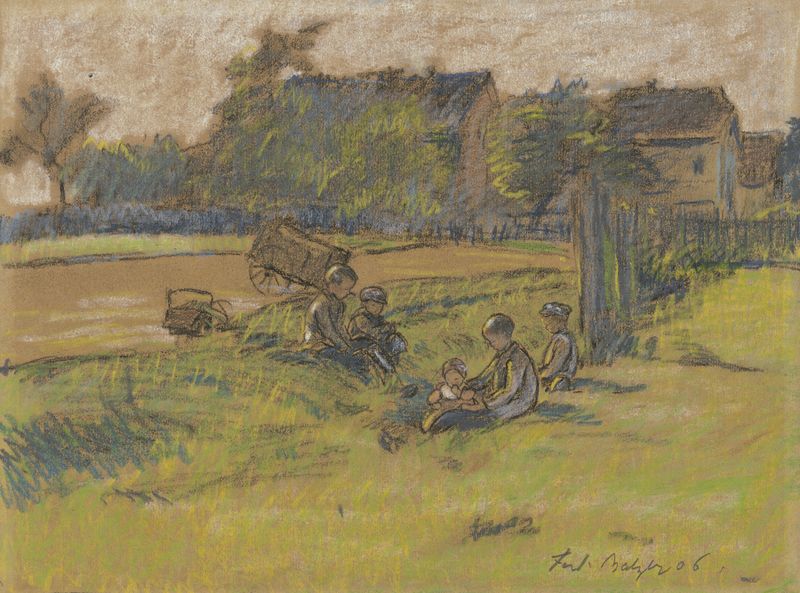
Is this a mirror — or a memory? In Shepherd’s cart, the boundary between past and present blurs, inviting us into a world imbued with longing and nostalgia. Look to the right at the humble, weathered cart, its wheels sunk slightly into the earth, suggesting the weight of time and labor. The muted earth tones — browns and ochres — speak of the landscape, while patches of brilliant green hint at life thriving amidst the plainness. Notice how the light falls upon the aged wood, creating textures that almost seem to breathe, revealing the stories held within every crack and crevice.
The gentle, sweeping horizon offers a promise of adventure just beyond the canvas, drawing viewers into a tranquil yet uncertain journey. In the details, emotional tensions simmer beneath the surface. The shepherd's absence embodies solitude, perhaps a reflection of lost connections or unfulfilled dreams. The cart, though stationary, feels like it could set off at any moment, suggesting a yearning for exploration and the unknown.
The play of light and shadow mirrors the contrasts of joy and melancholy, reminding us of the fleeting nature of pastoral life, where serenity is often interlaced with uncertainty. Ferdinand Balzer painted Shepherd’s cart in 1901, during a time when the world of art was transitioning into modernity, yet he clung to rustic themes that resonated with the heart. Living in Germany, he was surrounded by movements that sought to challenge traditional forms, yet he remained rooted in the landscapes and narratives of simpler times. This piece, rich with emotional resonance, reflects both a personal and collective yearning for connection to nature and history amidst the rapid changes of the early 20th century.