Children at the stream — History & Facts
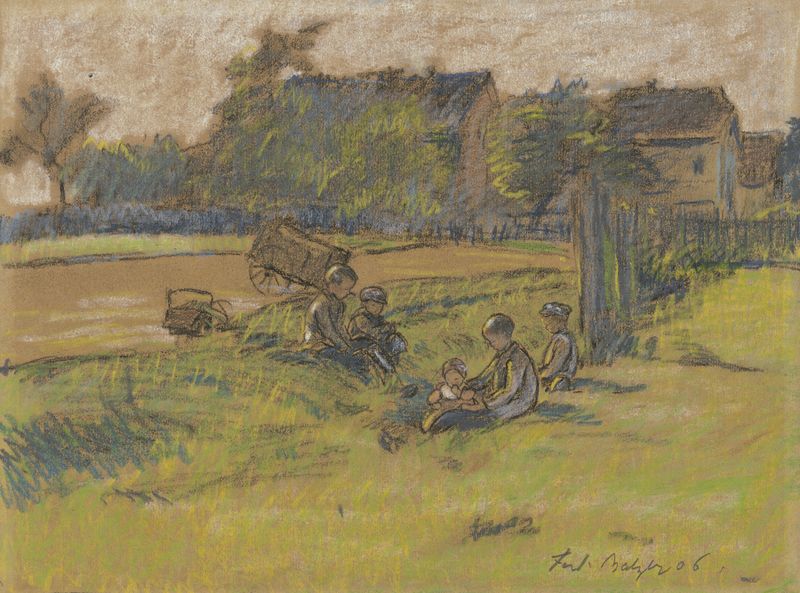
Who listens when art speaks of silence? In Children at the Stream, the stillness of the moment carries an illusion that invites reflection on innocence lost and the passage of time. Look to the right at the gentle slope where two children, lost in their own world, play along the water's edge. The soft greens and blues of the landscape blend seamlessly, while the warm hues of the children’s skin contrast with the cool depth of the stream. Notice how the light dances upon the water's surface, creating a shimmering illusion that captivates the eye and draws attention to the fleeting nature of childhood joy. Delve deeper into the composition, and you’ll find that the children's postures evoke a sense of playful curiosity yet hint at an underlying solitude.
The way one child kneels, reaching out toward the water, reflects a longing for connection, perhaps a yearning that echoes through the years. The stillness surrounding them amplifies this emotional tension, suggesting momentary bliss within an ever-uncertain world. Ferdinand Balzer painted this piece in 1907 during a time when the art world was evolving with movements such as Impressionism and Post-Impressionism. Living in Germany, he was influenced by the burgeoning modernist ideas that encouraged a departure from realism, seeking instead to capture the essence of moments.
This painting reflects not only his artistic journey but also the societal shifts of his time, where the innocence of youth stands in stark contrast to the complexities of adult life.