Hohlweg mit sandigem Boden, auf welchem ein kleines Mädchen schreitet — History & Facts
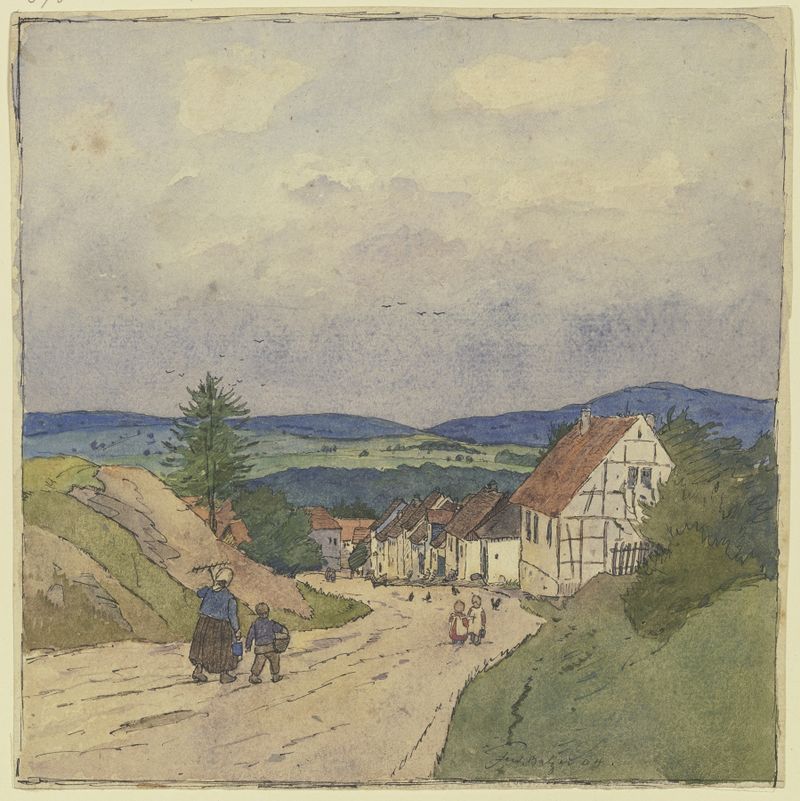
What if beauty was never meant to be finished? In this moment captured by Balzer, we find ourselves drawn into the essence of a child’s journey, where innocence and faith intertwine. Look to the left, where a narrow path meanders through the landscape, its sandy surface inviting each step to resonate with nature. The greens of the surrounding foliage frame the scene, while hints of sunlight filter through the leaves, casting a gentle glow on the little girl’s figure. Her presence, slight yet profound, is a focal point, as she appears to tread lightly, almost as if she is in conversation with the earth beneath her feet.
The soft palette of earthy tones evokes warmth and tranquility, enhancing the sense of serenity that envelopes the scene. As you delve deeper, consider the contrast between the girl’s delicate form and the robust surroundings that cradle her. This juxtaposition suggests a harmony between vulnerability and strength. The path she walks symbolizes a journey of faith, one that is both personal and universal, where every grain of sand beneath her foot holds the weight of potential.
The subtle brushstrokes hint at movement, as if the landscape holds breathlessly still, watching as she takes her steps, embodying both hope and the fleeting nature of childhood. Created in 1907, this piece reflects Balzer's exploration of innocence amid the shifting tides of early 20th-century art. During this time, artists were beginning to embrace modernism, seeking to convey emotional truths through simplicity. Balzer, however, chose to anchor his work in the pastoral traditions, crafting a moment that celebrates the purity of childhood and the inexorable beauty found in faith’s quiet journey.