Shepherds Resting With Their Flock At The Edge Of A Wood — History & Facts
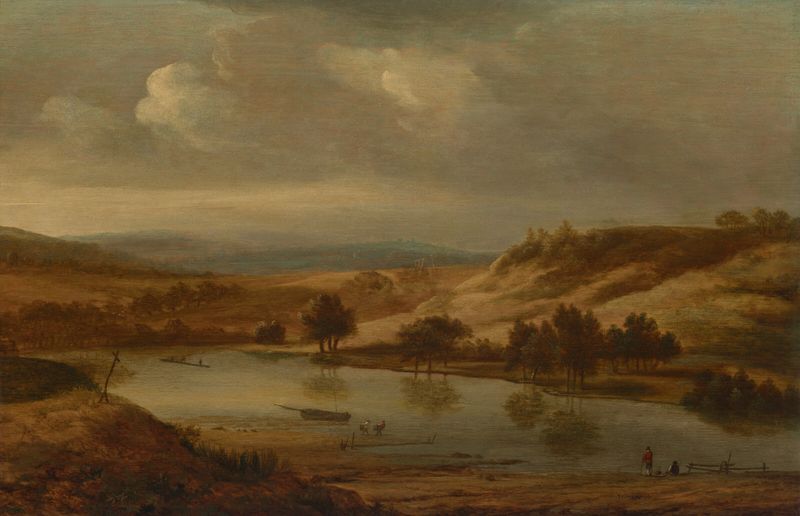
Who listens when art speaks of silence? In the gentle embrace of nature's tranquility, innocence finds its voice amid the rustling leaves and the soft murmur of sheep. Focus on the serene figures in the foreground, their bodies relaxed yet alert, contrasting with the stillness surrounding them. The shepherds, captured with delicate brushwork, seem lost in communion with their flock. Notice how the dappled sunlight filters through the trees, creating a play of light and shadow that accentuates their contemplative expressions.
The lush greens and earthy browns evoke a profound sense of harmony, inviting the viewer to linger in this moment of reprieve. Dive deeper into the composition, where the juxtaposition of the lush woodland and the worn path hints at the tension between wilderness and domesticity. The shepherds’ postures convey a blend of weariness and watchfulness, encapsulating the duality of their existence. Each sheep, distinct and animated, symbolizes the innocence of pastoral life, while the looming shadows of the trees suggest an ever-present, silent world waiting just beyond the edge—a reminder of life’s transient nature. Jan van der Meer the Younger painted this piece during a time when rural life was rapidly changing in the Netherlands.
Although the exact date remains unknown, it is believed to be created in the late 17th century, a period marked by an emerging interest in genre scenes and landscapes. As he explored the simplicity of pastoral life, the artist reflected a longing for a connection to nature amidst the encroaching modernity of his time.