Ship in rocky fjord — History & Facts
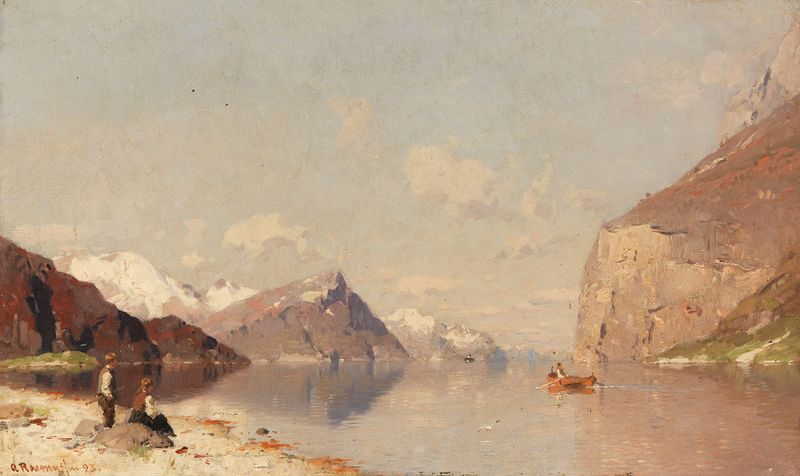
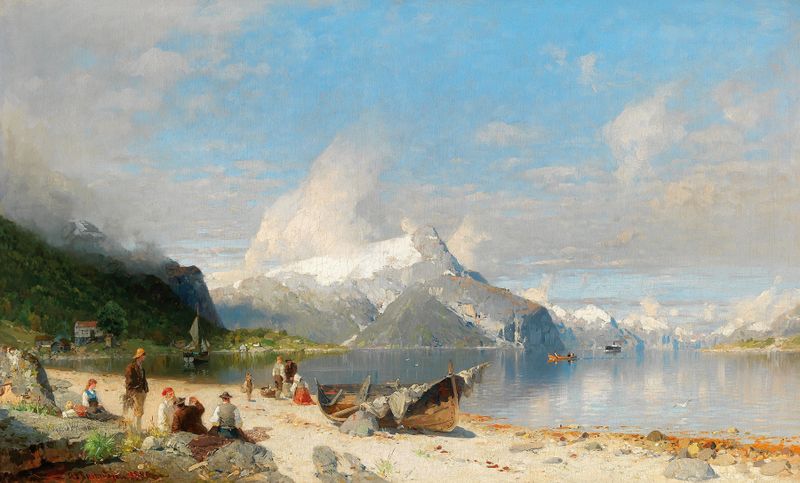
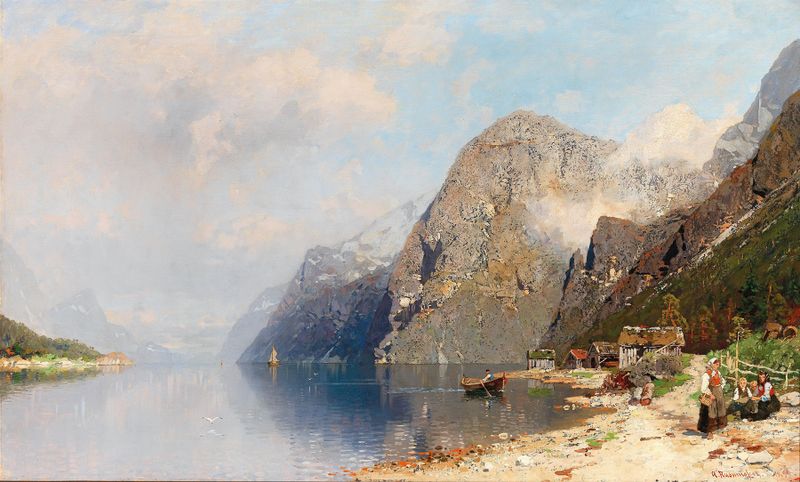
In its stillness, it reveals our own fragility against nature's grandeur. Focus on the rugged coastline as you first survey the painting. The contours of the rocky fjord command attention, jagged formations jutting towards the heavens, while gentle waves lap at their feet in shimmering blues and greens. Notice how the vessel, a lone ship, rests precariously within the embrace of this formidable landscape, its white sails contrasting starkly against the dark hues of the surrounding rocks.
The interplay of light and shadow adds depth, illuminating the ship's delicate structure while casting ominous shadows, hinting at the lurking dangers of the tempestuous waters. Hidden within this tranquil moment lies a profound tension—the juxtaposition of human ambition against nature's vast, indifferent forces. The ship, though seemingly sturdy, is small and vulnerable, a striking reminder of mortality in the face of nature's might. This fragility is echoed in the play of light; it dances upon the water like fleeting hope, suggesting the transient nature of life itself.
The rocky landscape, steadfast and unyielding, serves as a counterpoint, embodying permanence in a world otherwise governed by impermanence. Georg Anton Rasmussen painted this piece in 1875, during a time when Norway was experiencing a resurgence in national pride and artistic exploration. He was captivated by the natural beauty of his homeland, often capturing the interplay between man and the dramatic Nordic landscapes. The artist sought to showcase both the charm and peril of his environment, reflecting the broader Romantic movement's fascination with nature and the sublime, as well as the internal struggles of human existence.