A fjord landscape — History & Facts
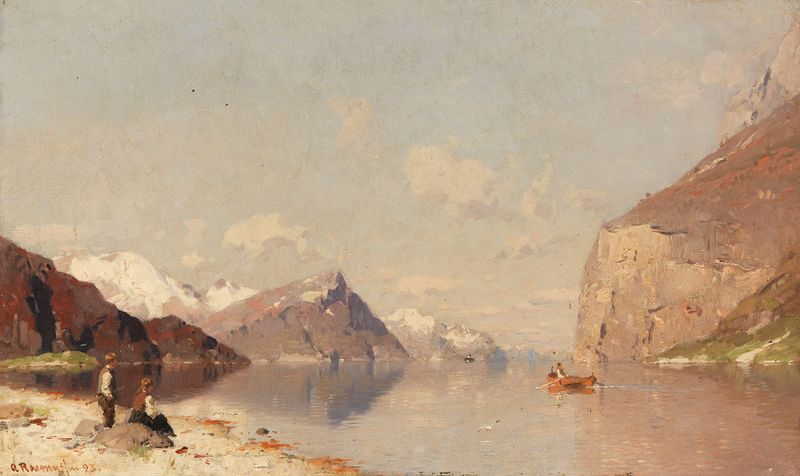
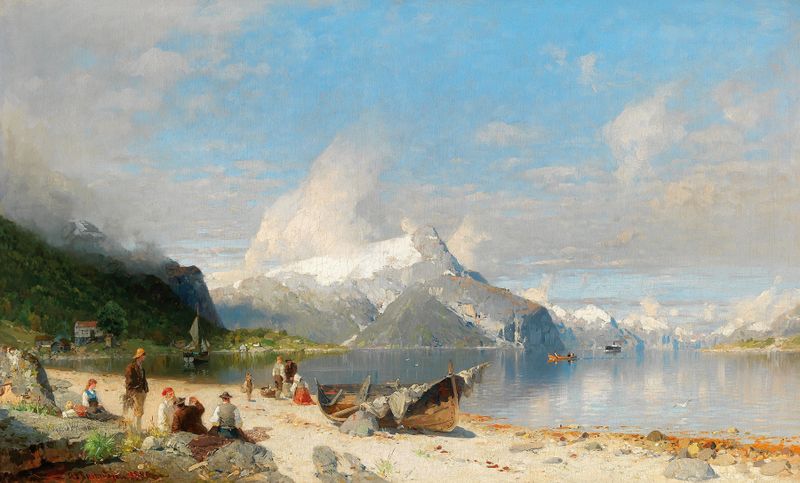
The quietude of a fjord landscape evokes a profound sense of introspection, where the very light itself seems to hold whispered secrets. Each brushstroke reflects a dialogue between the seen and the unseen, inviting viewers to ponder the stories embedded in the stillness of nature. Look to the center of the composition, where the shimmering water mirrors the jagged silhouettes of mountains rising majestically against the horizon. Notice how the soft, dappled light dances across the surface, creating a harmonious blend of cool blues and warm golds that beckon the eye deeper into the scene.
The meticulous layering of colors not only captures the physical beauty of the fjord but also enhances the emotional weight of isolation and serenity present in the landscape. Hidden within this serene vista are contrasts that deepen its narrative. The stark cliffs, imposing yet softened by the glow of sunset, speak to the duality of nature's grandeur and fragility. As the light fades, shadows creep into the scene, suggesting the passage of time and evoking a sense of longing.
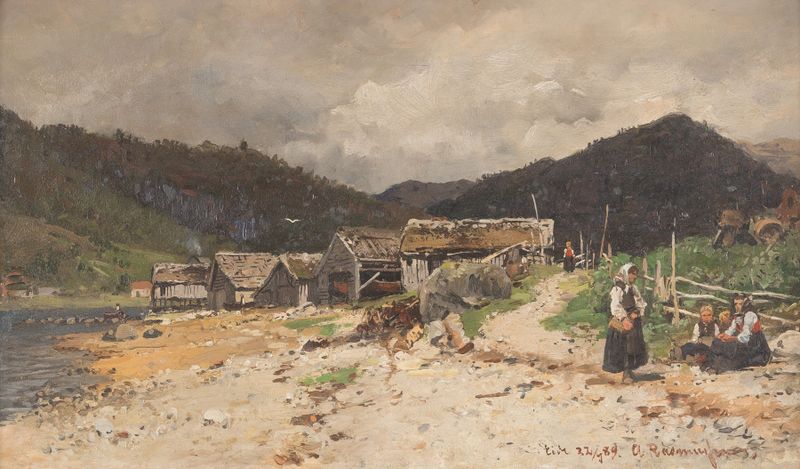
It is a space where the weight of silence is palpable; every element concedes to the vast expanse, prompting reflections on solitude and connection. Created during a period when the artist was immersed in the regional beauty of Norway, this landscape emerged from Rasmussen's explorations in the late 19th century. As he sought to capture the breathtaking vistas of his homeland, the burgeoning movement of Romanticism was influencing artists across Europe, encouraging them to find inspiration in the raw, untamed beauty of nature. The artwork encapsulates a moment in time where the artist’s brush became a conduit for expressing the profound relationship between light, landscape, and emotion.