Shipping In An Estuary, With Windmills In The Background — History & Facts
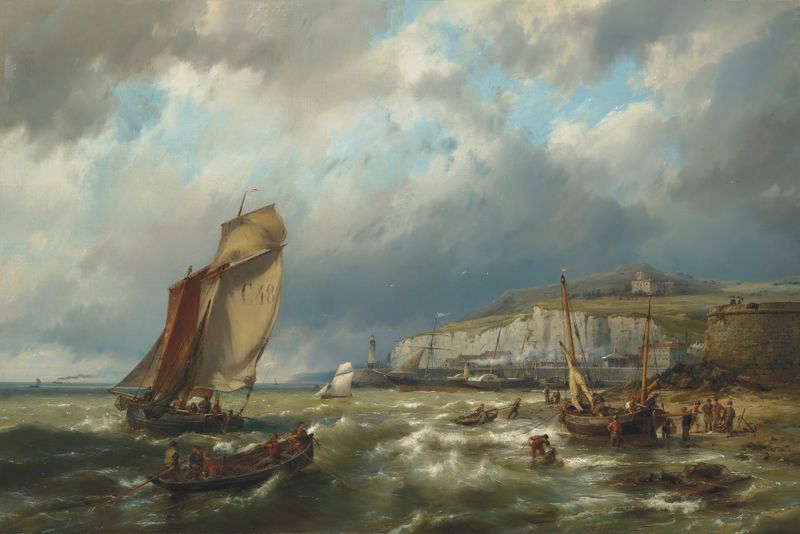
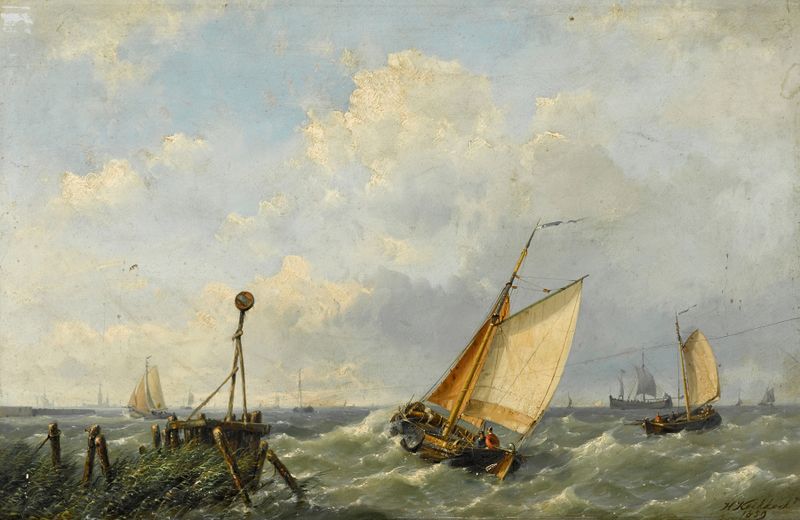
In the vastness of an estuary, where water meets sky, the weight of solitude lingers in the air. A lone ship, navigating through the gentle lapping waves, becomes a poignant symbol of isolation amid the tranquil beauty of nature. Look to the left, where the ship sails serenely against the backdrop of looming windmills, their blades poised as if caught in time. The play of light dances on the water’s surface, creating shimmering reflections that evoke a sense of stillness.
Notice the muted palette of blues and greens, contrasted by the earthy tones of the windmills, suggesting both harmony and disconnection. Each brushstroke carries a weight of contemplation, inviting viewers to ponder their own place in the world. As you delve deeper, consider the contrasting emotions portrayed: the ship, although progressing, appears disconnected from the distant land, a reminder of the loneliness that accompanies movement. The windmills stand as silent sentinels, witnesses to the passage of time yet devoid of life, reflecting a stillness that feels almost haunting.
This tension between nature’s beauty and the solitary vessel encapsulates the duality of existence—where progress meets the inevitable contemplation of isolation. In the year 1864, when this work was created, the artist found himself immersed in a world of burgeoning industrialization and romantic landscapes. Living in the Netherlands, Koekkoek was part of a generation grappling with the interplay of nature and human endeavor, capturing this delicate balance in his art. The piece reflects not only his technical prowess but also the emotional landscape of an era marked by both progress and solitude.